Xi Calls for Rule of Law in Middle East Conflict
China’s President Xi Jinping emphasized that international law must be respected to ensure peace and stability in the Middle East. His remarks come amid ongoing tensions surrounding the U.S.-Israeli military actions against Iran, which Beijing has previously criticized as unlawful.
Limited Public Comments Amid Rising Tensions
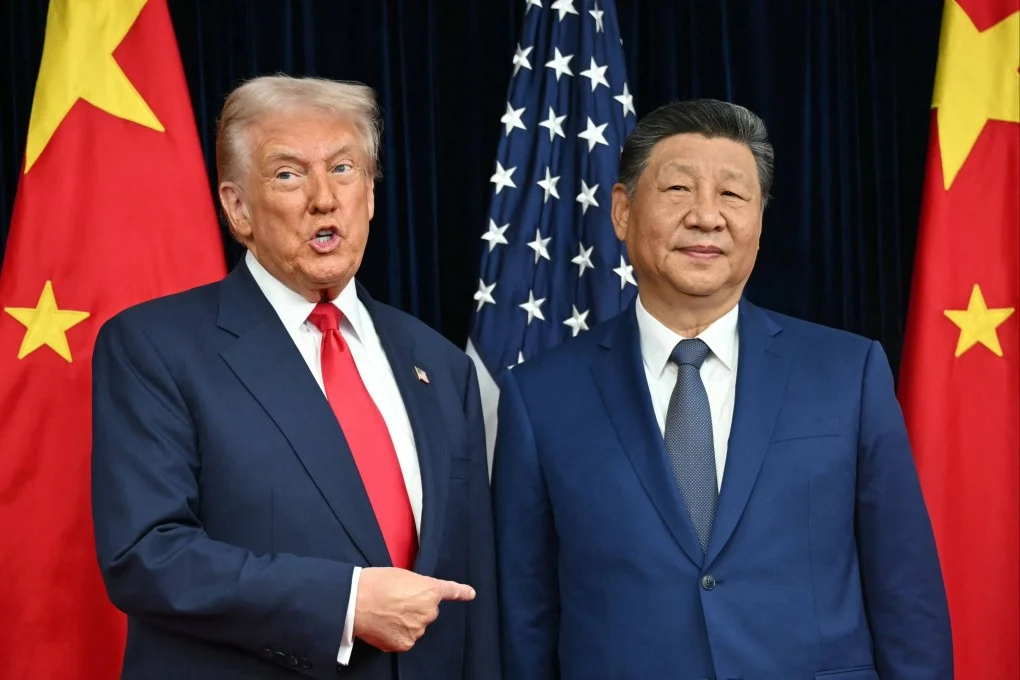
Although China has repeatedly voiced opposition to the conflict, Xi has made relatively few direct public statements. His latest comments come ahead of a planned meeting with U.S. President Donald Trump, expected to take place in Beijing next month.
Speaking to Sheikh Khaled bin Mohamed bin Zayed Al Nahyan, Crown Prince of Abu Dhabi, Xi stressed that the rule of law cannot be applied selectively depending on political convenience.
Strait of Hormuz Disruptions Impact Global Trade
The visit coincides with heightened geopolitical tensions following unsuccessful negotiations between Washington and Tehran aimed at ending the conflict. Since late February, Iran has effectively restricted access through the Strait of Hormuz for vessels it considers hostile.
In response, the U.S. has initiated a blockade of Iranian ports, accusing Tehran of engaging in economic disruption. As a result, oil shipments from Gulf countries, including the UAE, have declined significantly.
Iran has also launched missile and drone attacks targeting energy infrastructure in neighboring Gulf states, further escalating regional instability.
China’s Energy Imports Hit by Conflict
The impact of the conflict is already visible in China’s trade data. Natural gas imports in March fell to their lowest level since October 2022, while crude oil shipments dropped by 2.8%, partly due to disruptions in the Strait of Hormuz.
Xi warned against a breakdown in global order, stating that the world must avoid descending into a “law of the jungle” environment.
China and UAE Strengthen Strategic Ties
During the meeting, Xi reaffirmed China’s commitment to deepening its strategic partnership with the United Arab Emirates. He highlighted the importance of building a more resilient and dynamic economic relationship between the two nations.
The visit by Sheikh Khaled signals continued efforts to expand economic cooperation, building on momentum from previous high-level engagements.
Expanding Economic Cooperation and Trade
The UAE is also increasing its connectivity with China. Etihad Airways recently announced plans to significantly expand flights between Abu Dhabi and major Chinese cities over the next two years.
Senior UAE officials accompanying Sheikh Khaled included key figures from the energy, investment, and trade sectors, underscoring the importance of the visit.
China’s Premier Li Qiang stated that both countries could deepen cooperation in areas such as energy storage, hydrogen, and electric vehicles. He also encouraged increased UAE investment in sectors like artificial intelligence, advanced manufacturing, and life sciences.
Future Trade Agreements and Regional Cooperation
Looking ahead, China is preparing to host the second China-Arab States Summit later this year. A key objective will be advancing negotiations on a free trade agreement between China and the Gulf Cooperation Council, which includes major Gulf economies such as the UAE and Saudi Arabia.