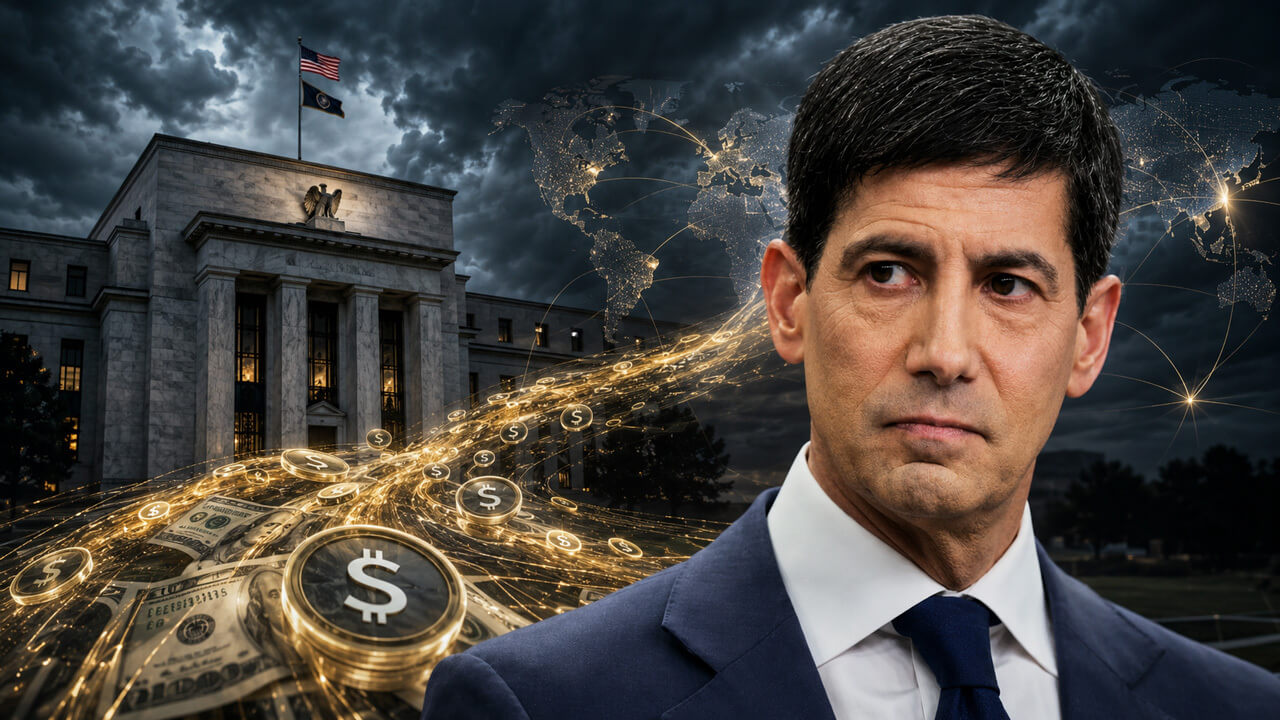
Citi does not expect Federal Reserve Chair Kevin Warsh’s upcoming remarks at Jackson Hole to reverse the recent U.S. dollar selloff.
According to the bank, the main risks to its bearish dollar outlook are more closely linked to market positioning and valuation than to the possibility of a significant hawkish surprise from the Federal Reserve.
Warsh Could Focus on Medium-Term Fed Challenges
During the July FOMC press conference, Warsh offered several clues about the potential direction of his Jackson Hole speech.
One possibility would be a traditional policy speech preparing markets for upcoming Federal Reserve meetings. Another could focus more broadly on the major challenges currently facing monetary policymakers.
Citi believes Warsh may ultimately combine both approaches by discussing the medium-term issues facing the FOMC.
The bank pointed to increased discussion around artificial intelligence and productivity in recent Fed minutes. Early findings from various policy task forces could also influence the speech.
Citi Sees Little Reason for a Hawkish Surprise
Citi strategists identified three conditions that could encourage Warsh to deliver a more hawkish message. However, they believe none of them currently apply.
The first would be if financial markets had priced in too little risk of tighter monetary policy.
At present, around 10 basis points of tightening is priced for September, which Citi believes may already provide enough of a hawkish premium from a financial-conditions perspective.
Higher Bond Yields May Not Require Fed Action
The second possible reason for a hawkish speech would be concern about rising longer-term U.S. Treasury yields.
However, Citi’s rates strategists do not believe a significant policy shift would necessarily solve the issue.
Even an extreme move such as an interest-rate increase may not reverse the recent rise in the term premium, according to the bank.
As a result, Citi sees limited reason for Warsh to use Jackson Hole as an opportunity to aggressively push back against the bond market.
Inflation Data Has Been Relatively Soft
A third reason for a hawkish surprise would be renewed evidence that U.S. inflation is accelerating.
Citi said recent economic data does not currently support that scenario.
Instead, inflation-related indicators have generally been softer over recent months, reducing the pressure on the Federal Reserve to deliver a more restrictive message.
Citi Remains Bearish on the U.S. Dollar
Overall, Citi continues to hold a bearish outlook for the U.S. dollar ahead of Jackson Hole, after recently changing its foreign exchange view from neutral to bearish.
The bank’s real-rate model suggests that EUR/USD could move toward 1.18.
That forecast assumes the Federal Reserve keeps interest rates unchanged, the European Central Bank raises rates once more, and oil prices gradually return toward more normal levels.
Citi also sees the potential for EUR/USD to temporarily overshoot that target.
EUR/USD Valuation Could Limit Further Gains
While Citi remains negative on the dollar, the bank warned that valuation could create short-term risks.
EUR/USD is beginning to appear increasingly overvalued, according to its strategists.
At the same time, leveraged investors already hold significant short-dollar positions. This raises the possibility that some traders could reduce those positions around the Jackson Hole event.
Such positioning adjustments could temporarily support the dollar even without a major change in the underlying economic outlook.
U.S.-Iran Conflict Remains a Dollar Risk
Geopolitical developments also remain an important factor for foreign exchange markets.
Citi highlighted the U.S.-Iran conflict as another potential risk to its bearish dollar forecast.
However, the bank does not currently include a major escalation of the conflict in its base-case dollar outlook.
Instead, Citi prefers to hedge against that possibility through a four-month NOK/SEK call spread rather than significantly alter its core currency forecast.
Fed Balance Sheet Could Deliver a Hawkish Surprise
One potential area where Warsh could surprise markets with a more hawkish message involves the Federal Reserve’s balance sheet.
Citi said any early details from policy task forces examining the balance sheet could potentially influence market expectations.
However, strategists believe there is little incentive for Warsh to reveal major changes at Jackson Hole, particularly if monetary-policy discussions are being coordinated with Treasury Secretary Scott Bessent.
AI and Productivity Could Support a Dovish Message
Citi believes it is more likely that any discussion of task-force findings will focus on AI and productivity.
Higher productivity could allow the economy to grow faster without generating the same degree of inflationary pressure.
For that reason, Citi believes a stronger emphasis on artificial intelligence and productivity would likely be interpreted as dovish or disinflationary rather than hawkish.
Unless Warsh delivers an unexpected shift in the Federal Reserve’s policy message, Citi therefore expects the broader dollar selling trend to remain intact following Jackson Hole.