The US economy expanded faster than previously estimated during the first quarter. However, a sharp slowdown in consumer spending raised concerns about the strength of underlying demand.
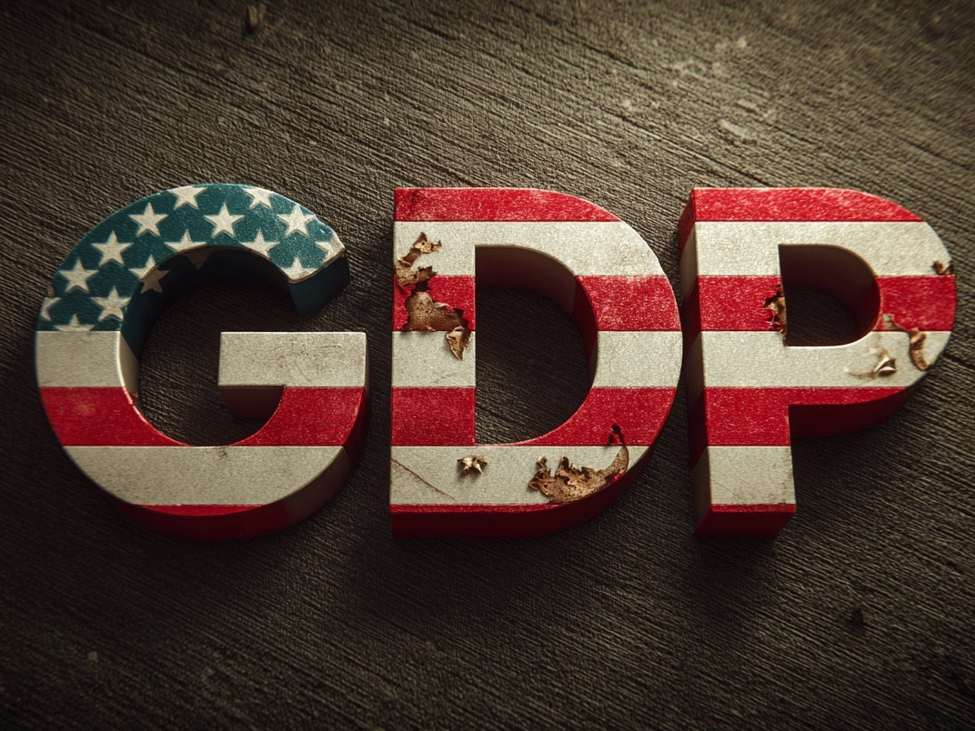
Gross domestic product increased at an annualized rate of 2.1% between January and March, according to the Commerce Department’s third estimate.
The previous estimate showed growth of 1.6%. Economists had expected the figure to remain unchanged.
First-Quarter GDP Receives Major Upgrade
The revised first-quarter growth rate marked a significant improvement from the 0.5% expansion recorded during the final three months of last year.
The 0.5 percentage-point upgrade mainly reflected a downward revision to imports, particularly purchases of consumer goods and business equipment.
Because imports are subtracted when calculating GDP, lower import estimates increased the reported pace of economic growth.
However, weaker consumer spending partially offset this positive contribution.
Consumer Spending Growth Slows Sharply
Consumer spending, which accounts for more than two-thirds of the US economy, grew at an annualized rate of just 0.5%.
That represented a sharp downgrade from the previously estimated 1.4% increase.
The revision reflected weaker spending on services, including financial services, insurance and international travel.
Part of the reduction in financial services spending was linked to the stock market selloff during the first quarter.
Tax Refunds Support Second-Quarter Spending
Consumer activity appears to have improved at the beginning of the second quarter.
Larger tax refunds helped households manage the impact of rising gasoline prices associated with the US-led conflict with Iran.
The average tax refund reached $3,276 during the week ending May 8. That compared with $2,939 during the corresponding period in 2025, according to the latest available Internal Revenue Service data.
The additional income may have provided temporary support for household consumption.
AI Investment Drives Economic Activity
Business spending linked to artificial intelligence remained a major source of US economic growth.
Investment in equipment increased at an annualized rate of 15.8%. However, that figure was revised down from the previous estimate of 17.2%.
Spending on intellectual property products rose at a 13.8% rate. This was higher than the earlier estimate of 11.6%.
The figures suggest that companies continue to invest heavily in AI infrastructure, technology and research despite weaker consumer demand.
Underlying Domestic Demand Revised Lower
Final sales to private domestic purchasers increased at a 1.7% annualized rate.
This measure excludes government spending, international trade and changes in business inventories. It is often used to assess the strength of private domestic demand.
The latest reading was revised down from the previous estimate of 2.4%, suggesting that underlying economic momentum was weaker than the headline GDP figure indicated.
Corporate Profits Rise in First Quarter
Profits from current production increased at an annualized rate of $74.4 billion during the first quarter.
That was significantly higher than the previously reported increase of $40.4 billion.
However, profit growth slowed considerably from the fourth quarter, when earnings rose at a rate of $246.9 billion.
Gross Domestic Income Also Revised Higher
The US economy expanded at a 1.2% annualized rate when measured from the income side.
Gross domestic income had previously been estimated to have increased by 0.9%. It grew at a 1.6% rate during the fourth quarter.
The average of GDP and gross domestic income, known as gross domestic output, rose at a 1.7% rate.
That figure was revised higher from 1.3% and followed growth of 1.1% during the final quarter of last year.