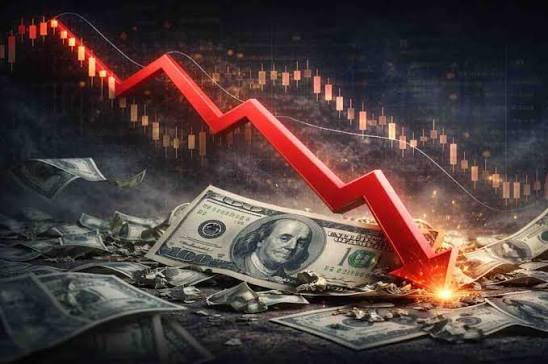
The US dollar remained under pressure on Wednesday after retreating sharply from a two-week high. Softer-than-expected US inflation data reduced expectations that the Federal Reserve would raise interest rates in the near term.
However, rising oil prices and escalating tensions in the Middle East continued to create concerns about renewed inflationary pressure.
US Dollar Weakens Against Major Currencies
The dollar traded at 162.20 against the Japanese yen, falling by around 0.05%.
Meanwhile, the euro gained more than 0.1% to trade at $1.1438. The British pound also strengthened, reaching approximately $1.3403.
The New Zealand dollar remained in demand at $0.5815, close to its strongest level in a month. The Australian dollar was largely unchanged at $0.6984.
The US Dollar Index, which tracks the currency against six major peers, edged lower to around 100.8.
During the previous session, the index fell by 0.35%. This marked its largest daily decline in almost two weeks and pulled it away from its highest level since July 2.
Softer US Inflation Reduces Fed Rate-Hike Bets
US consumer inflation slowed more sharply than analysts had expected in June.
The annual inflation rate declined to 3.5%, while the headline Consumer Price Index fell by 0.4% from the previous month. It was the first monthly decline in consumer prices since April 2020.
Lower energy costs were one of the main factors behind the drop.
The weaker inflation report reduced expectations that the Federal Reserve would increase interest rates at its next policy meeting.
As a result, US government bond yields also declined. The yield on the two-year Treasury note fell nine basis points from a 16-month high.
Federal Reserve Could Keep Rates Unchanged
Sim Moh Siong, a foreign exchange strategist at OCBC, said the surprisingly weak inflation reading gives the Federal Reserve more flexibility to keep interest rates unchanged for longer.
Federal Reserve officials had previously indicated that their July decision would depend heavily on the June inflation report.
According to the strategist, the US dollar could still appreciate moderately by the end of the year. Nevertheless, its short-term upside may remain limited unless new economic or political catalysts emerge.
Traders now largely expect the Federal Reserve to leave interest rates unchanged in July.
Based on CME Group Fed funds futures, the probability of a July rate increase fell to around 16%. This was roughly half the level recorded before the inflation data was released.
Fed Maintains Firm Position on Inflation
Despite the softer inflation figures, Federal Reserve Chair Kevin Warsh maintained a cautious position.
During testimony before the House Financial Services Committee, Warsh said the central bank would not tolerate persistently high inflation.
He also pledged to fulfil his responsibilities if pressure emerged from US President Donald Trump.
His comments suggested that the Federal Reserve may still consider additional monetary tightening if inflation begins to accelerate again.
Rising Oil Prices Keep Inflation Risks Alive
Investor optimism following the inflation report was partly limited by renewed gains in oil prices.
Escalating hostilities involving Iran pushed crude oil prices to their highest levels in approximately one month. Higher energy prices could eventually increase transportation, manufacturing and consumer costs.
President Trump reimposed a naval blockade on Iranian ports on Tuesday.
The US military also announced a new series of strikes aimed at weakening Iranian capabilities allegedly used to target commercial shipping in the Strait of Hormuz.
The conflict has increased concerns about global energy supplies, particularly because the Strait of Hormuz is a major route for international oil shipments.
One Inflation Report May Not Change Fed Policy
Commonwealth Bank of Australia economist Samara Hammoud warned that one weaker-than-expected inflation report would not completely eliminate the possibility of future rate increases.
Markets are now waiting for the latest US Producer Price Index data, which could provide further evidence about inflationary pressures within the economy.
A stronger-than-expected producer inflation report could revive expectations of tighter Federal Reserve policy. In contrast, another weak reading could place additional pressure on the US dollar.
China’s Economic Slowdown Supports Stimulus Expectations
Elsewhere, China’s economic growth slowed significantly during the second quarter.
Gross domestic product expanded by 4.3%, marking the country’s weakest growth rate in more than three years.
Despite the slowdown, the Chinese yuan briefly strengthened to a one-month high.
Investors interpreted the weaker economic data as increasing the likelihood that Beijing would introduce additional stimulus measures to support consumption, investment and economic growth.
For now, the US dollar’s direction is likely to depend on upcoming inflation data, Federal Reserve commentary and developments in the Middle East.