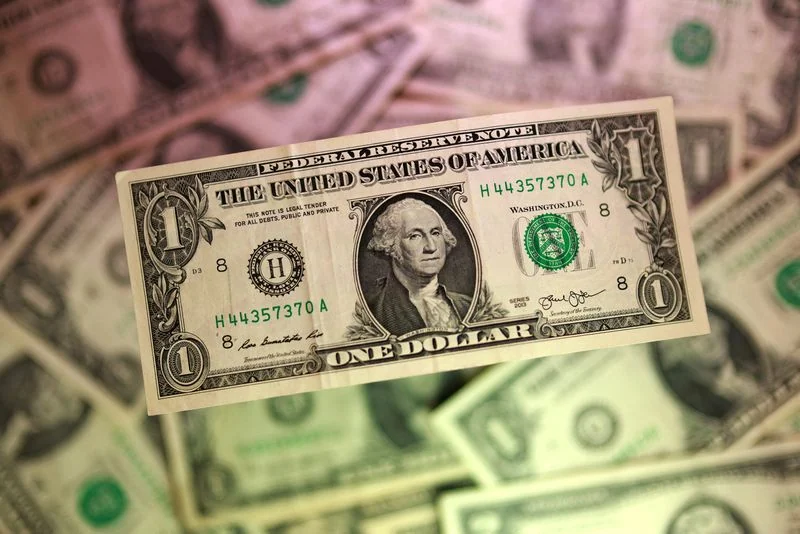
The US dollar edged higher on Thursday, November 5, as oil prices recovered from a sharp selloff and investors awaited crucial US employment data that could influence the Federal Reserve’s next interest rate decision.
Currency markets remained cautious following the Democratic Party’s sweeping victory in the US midterm elections, which raised uncertainty over Washington’s political outlook and the ongoing conflict with Iran.
Meanwhile, stronger-than-expected US labor market figures supported expectations that the Federal Reserve could raise interest rates again before the end of the year.
US Dollar Index Rises as Oil Prices Rebound
The US Dollar Index, which measures the greenback against a basket of major currencies, increased 0.04% to 101.51 during Thursday’s trading session.
The modest recovery followed the dollar’s largest daily percentage decline in approximately three weeks.
Meanwhile, the euro slipped 0.01% against the US currency, trading near $1.1226.
Oil prices also recovered some of their previous losses, climbing approximately 2% after plunging more than 8% on Wednesday.
The sharp decline in crude oil followed the US midterm elections, where significant Republican losses increased expectations that further military escalation involving Iran could become less likely.
Investors believe the new political balance in Washington could encourage diplomatic negotiations and potentially reduce geopolitical risks affecting global energy supplies.
However, uncertainty surrounding the conflict continues to influence commodity prices, currency markets, and broader investor sentiment.
US Midterm Elections Create New Market Uncertainty
The Democratic Party’s victory in both chambers of Congress has significantly altered the political landscape in Washington.
Democratic leaders have pledged to increase oversight of President Donald Trump’s administration, potentially creating legislative gridlock during the remaining two years of his presidency.
The election outcome has also raised questions about the future of US trade policies and military operations in the Middle East.
Financial markets initially reacted positively to expectations of reduced geopolitical tensions and lower oil prices.
However, that optimism weakened as American stocks declined sharply during Thursday’s trading session.
The S&P 500 technology sector experienced substantial selling pressure as investors renewed their concerns about the enormous spending commitments of artificial intelligence companies.
Questions surrounding AI investment returns, corporate valuations, and infrastructure expenses weighed on major technology stocks.
The broader decline in US equities contributed to cautious trading across foreign exchange markets.
Strong US Jobs Data Supports Federal Reserve Rate Hike Expectations
Investors are closely monitoring the US labor market ahead of Friday’s highly anticipated nonfarm payrolls report.
New figures from the Labor Department showed that initial unemployment claims declined by 6,000 to a seasonally adjusted 189,000 during the week ending October 31.
The reading matched a 57-year low previously recorded in July and came in below economists’ expectations of 196,000 claims.
The unexpectedly strong result suggested that American employers continue retaining workers despite economic uncertainty.
Separate government data also revealed that US worker productivity increased faster than anticipated during the third quarter.
Stronger productivity helped reduce labor costs, reinforcing the view that wage pressures are not currently a major driver of inflation.
Together, these developments strengthened expectations that the Federal Reserve could maintain a restrictive monetary policy stance.
Could the Federal Reserve Raise Interest Rates Again in December?
The latest US economic indicators have reinforced expectations of additional Federal Reserve interest rate increases.
Kevin Ford, lead foreign exchange and macro strategist at Convera, suggested that the combination of recovering oil prices and resilient labor market data supports the possibility of further monetary tightening.
According to Ford, the Fed could potentially raise interest rates at both its December and January policy meetings.
However, financial markets have slightly reduced their expectations for an immediate increase.
According to CME FedWatch data, traders assigned a 74.5% probability to a Federal Reserve rate hike of at least 25 basis points in December.
That compared with a probability of 79.9% one week earlier.
The change indicates that investors remain confident about the possibility of tighter monetary policy, although uncertainty surrounding the economic outlook has increased.
Friday’s employment report could significantly influence these expectations.
A stronger-than-anticipated payrolls reading may reinforce the argument for another interest rate increase, while weaker employment figures could raise questions about the economy’s resilience.
Fed Officials Warn Inflation Remains Too High
Several Federal Reserve policymakers have emphasized that additional action may be necessary to bring inflation back to the central bank’s 2% target.
Cleveland Federal Reserve President Beth Hammack warned that inflationary pressures remain unacceptably elevated.
Her comments suggested that policymakers still have work to do before price stability can be considered secure.
Richmond Federal Reserve President Tom Barkin also supported a cautious approach to monetary tightening.
Barkin indicated that gradually increasing interest rates would be appropriate given the current economic conditions.
These remarks reinforced the view that the Federal Reserve is unlikely to abandon its inflation-fighting efforts despite recent financial market volatility.
Nevertheless, policymakers must balance the risks of persistent inflation against the possibility that excessive borrowing costs could weaken economic growth.
Bank of England Raises Interest Rates to 4%
The British pound advanced modestly after the Bank of England announced its first interest rate increase in more than three years.
Sterling gained 0.04% against the US dollar, reaching approximately $1.3473.
The Bank of England raised its benchmark interest rate by 25 basis points to 4%, responding to inflationary pressures associated with the prolonged US-Iran conflict.
British policymakers also indicated that another rate increase could become necessary if elevated energy costs continue affecting consumer prices.
The decision highlighted the challenges facing central banks as geopolitical disruptions increase inflation risks.
Higher borrowing costs may help limit inflation expectations, but they can also place additional pressure on households and businesses.
Investors will therefore monitor upcoming UK economic data for further indications of the Bank of England’s monetary policy direction.
Japanese Yen Strengthens as Bank of Japan Signals Further Tightening
The Japanese yen also gained ground against the US dollar following the release of minutes from the Bank of Japan’s September monetary policy meeting.
The yen strengthened approximately 0.28%, with the dollar trading near 157.95 yen.
During its September meeting, the Bank of Japan raised interest rates to 1.25%, the highest level in 31 years.
The newly released minutes revealed that some policymakers were considering whether interest rates should increase at a faster pace.
Officials also discussed Japan’s neutral interest rate, the level at which monetary policy neither stimulates nor restricts economic activity.
The discussions highlighted growing attention to how far borrowing costs could rise without placing excessive pressure on the Japanese economy.
Expectations of further monetary tightening supported the yen as investors reassessed the outlook for interest rate differences between Japan and the United States.
European Central Bank Faces Additional Policy Challenges
Monetary policy uncertainty is also increasing across the eurozone.
European Central Bank Executive Board member Isabel Schnabel warned that rising public debt and the rapid expansion of non-bank financial institutions could complicate the ECB’s ability to implement appropriate monetary policy.
These structural developments may make it more difficult for policymakers to balance inflation control with financial stability.
Meanwhile, political and social tensions have continued across France, where public-sector workers participated in strikes and demonstrators gathered in several cities.
The combination of financial risks, economic uncertainty, and political developments has added to the challenges facing European policymakers.
Investors will continue monitoring ECB communications for clues about future interest rate adjustments.
What Comes Next for the US Dollar?
The near-term direction of the US dollar will likely depend on Friday’s employment report and expectations for Federal Reserve monetary policy.
Strong payrolls growth could reinforce the case for additional interest rate increases, potentially supporting the greenback against major currencies.
Conversely, weaker employment figures could reduce expectations of monetary tightening and place downward pressure on the dollar.
Oil prices and geopolitical developments will also remain important market drivers.
A sustained decline in Middle East tensions could reduce energy-related inflation risks, potentially influencing central bank policy expectations.
Meanwhile, renewed uncertainty surrounding the Iran conflict or additional volatility in US technology stocks could increase demand for defensive assets.
For now, the US dollar remains relatively stable as investors balance resilient economic data against changing political and financial market conditions.
The upcoming US jobs report could provide the next major catalyst for currency markets and help determine whether the Federal Reserve will proceed with another interest rate increase in December.