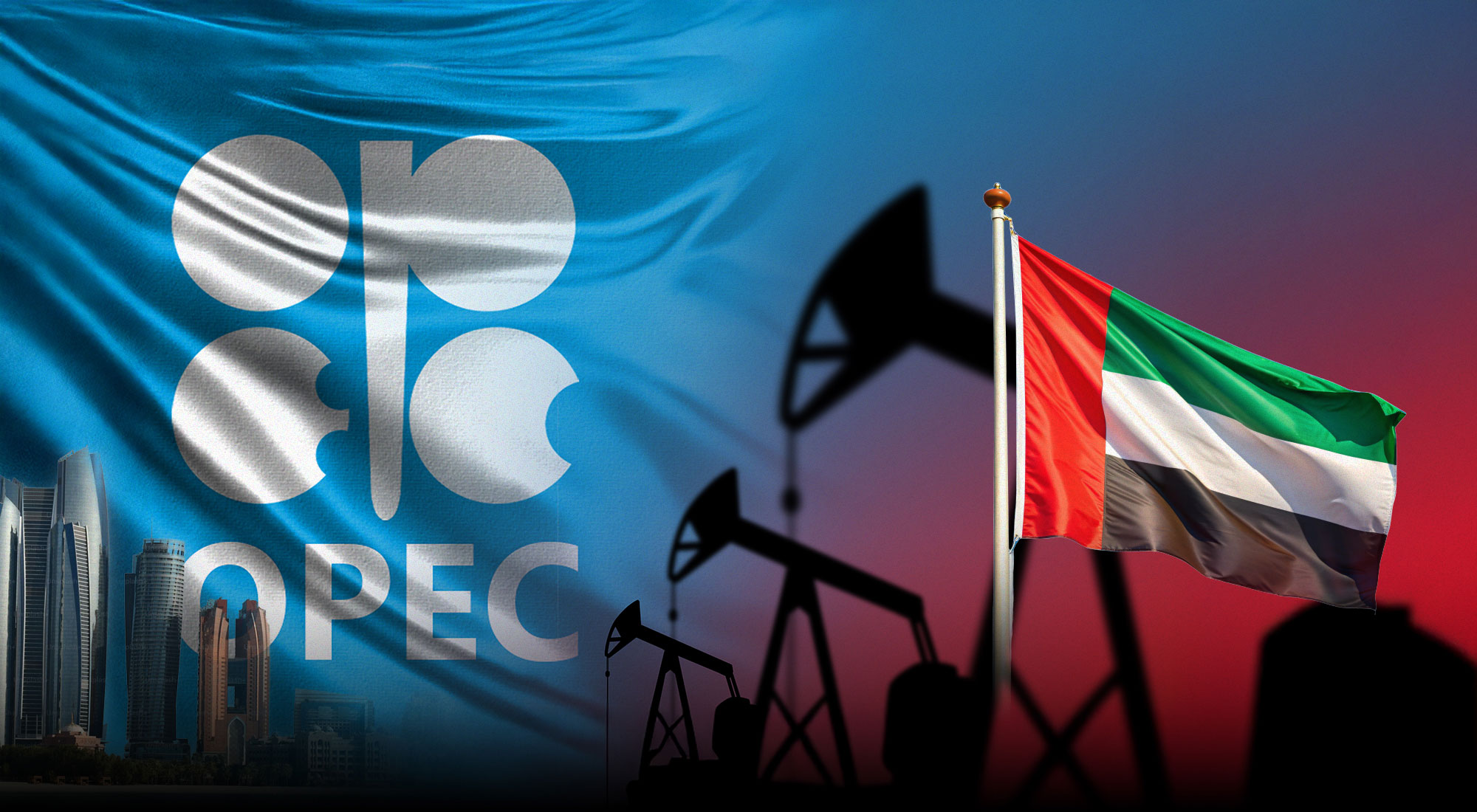
UAE Announces Exit from OPEC in Major Energy Policy Shift
The United Arab Emirates has officially confirmed its withdrawal from OPEC, effective May 1, 2026. According to a report by UBS, the decision follows prolonged disagreements over production quotas and rising geopolitical tensions in the region.
UAE Energy Minister Suhail Al Mazrouei described the move as a “strategic imperative,” aimed at securing greater flexibility in shaping the country’s long-term energy strategy.
Limited Short-Term Impact on Oil Prices
Despite the significance of the announcement, analysts expect only a limited immediate effect on global oil prices. Current logistical constraints—particularly around the Strait of Hormuz—are restricting the UAE’s ability to rapidly increase exports.
However, UBS warns that the medium-term outlook could bring notable downside risks for oil prices, as the UAE begins to fully utilize its expanded production capacity.
UAE Production Capacity and Expansion Plans
The UAE currently has an oil production capacity of approximately 4.5 million barrels per day (Mb/d), well above its recent output of 3.6 Mb/d. The country is already planning to increase capacity further to 5 Mb/d by 2027.
Freed from OPEC+ production quotas, the UAE will have greater control over output levels once logistical challenges are resolved. Holding around 25% of OPEC’s spare capacity, the UAE’s exit is seen as a significant shift that could weaken the group’s ability to manage global oil supply.
Economic Outlook and GDP Impact
Oil remains a key pillar of the UAE economy, accounting for roughly 25% of total GDP. While the exit from OPEC opens the door for long-term growth, short-term projections remain cautious due to ongoing regional instability.
After a 5.1% expansion in oil GDP during 2025, analysts expect a slight decline in 2026, with production projected to reach 3.65 Mb/d by the fourth quarter.
Looking ahead, oil GDP is forecast to rebound by around 6% in 2027 as the UAE begins to leverage its increased production flexibility. In a more aggressive growth scenario—where output reaches the 5 Mb/d target—oil GDP could rise by more than 20%.
A Measured Approach to Avoid Market Disruption
Despite the potential for higher output, analysts believe the UAE will adopt a cautious and market-aware strategy. The goal will be to increase production gradually without triggering a sharp drop in global oil prices.
This balanced approach could allow the UAE to maximize revenue while maintaining stability in international energy markets.