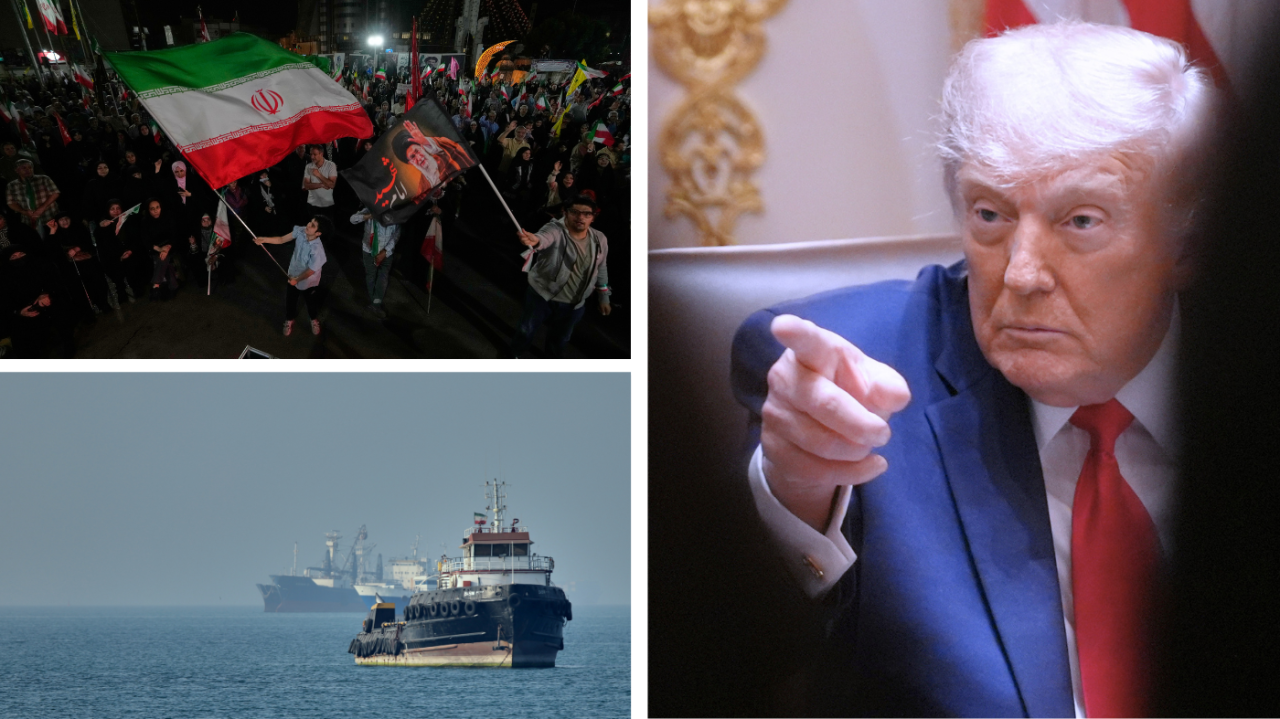
The United States and Iran have signed an initial agreement aimed at ending their conflict and reopening the Strait of Hormuz.
The deal also starts a new round of negotiations over Iran’s nuclear programme, with talks expected to begin later this week.
Trump Signs U.S.-Iran Agreement in France
U.S. President Donald Trump signed the memorandum of understanding during a dinner at the Palace of Versailles in France on Wednesday.
Media reports and a video shared by French President Emmanuel Macron confirmed the signing. However, Trump warned that military action against Iran could resume if the agreement breaks down.
Speaking to reporters after the dinner, Trump said both sides had formally signed the document.
The development came as a surprise because representatives from the United States and Iran had been expected to attend an official signing ceremony in Switzerland on Friday. It remains unclear whether that event will still take place.
Iranian President Also Signs the Deal
Iranian President Masoud Pezeshkian signed the agreement on behalf of Tehran, according to an image published by Iran’s state-run IRNA news agency.
Other reports indicated that leaders from both countries also approved the document electronically.
Pakistani Prime Minister Shehbaz Sharif, who played a mediating role in the negotiations, said the agreement had taken immediate effect.
The document calls for a permanent end to hostilities between Washington and Tehran.
The two countries have been at war since late February. However, much of the past two months has been marked by an unstable ceasefire.
Iran Nuclear Talks Set to Begin
The agreement also creates a 60-day period for negotiations over Iran’s nuclear programme.
Talks are expected to take place in Switzerland from Friday through Sunday.
The future of Iran’s nuclear activities is likely to become one of the most difficult issues during the negotiations.
Trump has repeatedly said that preventing Iran from developing nuclear weapons is a central objective of his policy.
Iran continues to insist that its nuclear programme is intended exclusively for peaceful purposes.
However, the International Atomic Energy Agency has raised concerns over Iran’s enrichment of uranium to 60%. According to the agency, no other country without a nuclear weapons programme has reached that level.
Agreement Could Reopen the Strait of Hormuz
The full text of the U.S.-Iran memorandum has not yet been released by the White House. Therefore, several important details remain unclear.
U.S. officials reportedly provided journalists with an outline of the draft agreement. A version published by Iran appeared broadly consistent with the American description.
In addition to ending the fighting and opening nuclear negotiations, the deal calls for the Strait of Hormuz to reopen.
The waterway is one of the world’s most important energy routes. Around one-fifth of global oil and liquefied natural gas shipments normally pass through it.
The strait has remained largely closed for several months due to the conflict. The disruption contributed to a sharp rise in oil prices and increased fears of another global inflation wave.
Ships May Still Need Iranian Coordination
Vessels travelling through the Strait of Hormuz will reportedly need to coordinate with Iran’s Islamic Revolutionary Guard Corps.
The agreement would allow ships to pass through the waterway without paying tolls for two months.
However, it does not permanently prevent Iran from introducing transit fees in the future.
The United States would also lift or suspend some sanctions on Iran as part of the agreement.
Energy Security Concerns Remain
Despite the planned reopening, several countries are reassessing their energy security strategies.
International Energy Agency Executive Director Fatih Birol warned that Iran could decide to close the Strait of Hormuz again if tensions return.
The possibility of another disruption means that governments and energy companies may continue seeking alternative supply routes.
As a result, some geopolitical risk could remain priced into global oil markets even after shipping activity resumes.
Reconstruction Fund Planned for Iran
The agreement also proposes the creation of a $300 billion reconstruction fund for Iran.
However, details about the fund’s structure, financing and purpose have not yet been disclosed.
Trump emphasized that the United States would not contribute financially to the initiative.
Other countries or international institutions may therefore be expected to provide the funding, although no commitments have been confirmed.
Lebanon’s Territorial Integrity Included in Deal
The memorandum also reaffirms support for Lebanon’s territorial integrity.
Israeli attacks on Hezbollah targets inside Lebanon have been a major obstacle during the peace negotiations.
Israel is closely aligned with the United States, while Hezbollah receives support from Iran.
Addressing the dispute is considered important for preventing the conflict from spreading again across the wider Middle East.