U.S. Dollar Falls as June Inflation Cools Faster Than Expected
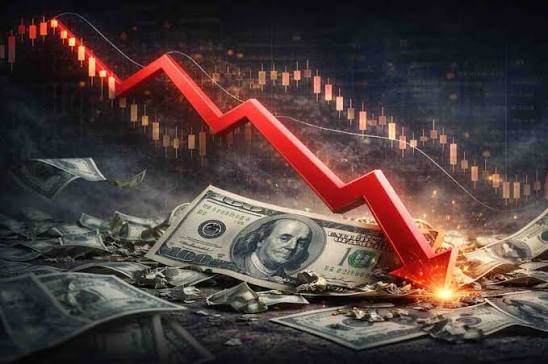
The U.S. dollar declined on Tuesday after fresh data showed that inflation slowed more sharply than economists had predicted in June.
The softer report strengthened expectations that the Federal Reserve could lower interest rates later this year. However, renewed conflict in the Middle East continued to create uncertainty around the inflation outlook.
U.S. Inflation Drops Below Forecasts
The U.S. Dollar Index, which tracks the greenback against six major currencies, fell by approximately 0.55%.
The Consumer Price Index increased by 3.5% year over year in June. That was down from May’s annual rate of 4.2% and below the 3.8% expected by economists.
On a monthly basis, consumer prices declined by 0.4%. Analysts had forecast a smaller drop of 0.1%.
Lower Gasoline Prices Ease Inflation
Falling gasoline prices were a major reason behind the slowdown in U.S. inflation.
Energy costs declined after the temporary ceasefire between the United States and Iran reduced concerns about oil supply disruptions during the previous month.
However, the relief may not last.
The ceasefire collapsed last week, and renewed military activity near the Strait of Hormuz has pushed oil prices higher once again.
As a result, investors are becoming increasingly concerned that rising energy costs could create another wave of inflation.
Fed Rate-Cut Expectations Increase
The weaker inflation report shifted market attention back toward the Federal Reserve’s interest-rate outlook.
Investors increased their expectations for rate cuts during the coming months. Lower inflation could give policymakers more room to ease monetary policy without risking another sharp rise in consumer prices.
Markets also focused on Federal Reserve Chair Kevin Warsh’s congressional testimony on Tuesday and Wednesday.
Investors were looking for clearer signals about the timing and scale of any future rate reductions.
Kevin Warsh Reaffirms Inflation Commitment
During his first appearance before the House Financial Services Committee as Federal Reserve chair, Warsh emphasized that the central bank would not accept persistently high inflation.
He said restoring price stability remained the Federal Reserve’s main priority after several years of elevated price pressures across the U.S. economy.
Warsh stressed that policymakers remained firmly committed to bringing inflation under control.
His comments suggested that the Fed may remain cautious about cutting rates too quickly, particularly while oil prices continue to rise.
Middle East Conflict Supports Safe-Haven Demand
Despite the dollar’s decline, geopolitical risks continued to support demand for traditional safe-haven assets.
Oil prices remained elevated following renewed military exchanges in the Middle East. Markets were especially concerned about possible disruptions to commercial shipping through the Strait of Hormuz.
The strategic waterway plays a vital role in global energy transportation. Any serious interruption could reduce oil supplies and push inflation higher worldwide.
Oil Shock Limits Dollar Losses
The dollar received some support from growing instability in the energy market.
President Donald Trump announced the return of a naval blockade on Iranian shipping. He also introduced a 20% cargo fee on commercial vessels passing through the Strait of Hormuz.
The announcement followed a third consecutive night of military exchanges in the region.
Brent crude subsequently climbed to its highest level in one month.
A major increase in oil prices can weaken global growth while keeping inflation elevated. However, geopolitical and economic uncertainty can also attract capital into U.S. financial assets, which often supports the dollar.
Euro and Pound Gain Against the Dollar
The euro and British pound benefited from the dollar’s temporary weakness.
Both currencies gained approximately 0.2% during European trading.
The euro moved higher against the greenback, while the British pound also recorded modest gains.
However, further increases in oil prices or a more hawkish Federal Reserve message could quickly reverse those moves.
Japanese Yen Remains Under Pressure
The Japanese yen remained a major focus in currency markets.
The USD/JPY exchange rate traded near 161.84 as Japanese officials increased their verbal efforts to support the weakened currency.
Japan’s Finance Minister Satsuki Katayama said the asset-allocation targets of the country’s Government Pension Investment Fund could be reviewed if market conditions changed significantly.
The GPIF manages approximately $1.8 trillion in assets.
Health Minister Kenichiro Ueno also confirmed that the government could examine the fund’s portfolio if necessary.
Markets Speculate About Japanese Capital Repatriation
The comments sparked speculation that Japanese authorities may be considering measures to encourage institutional investors to move capital back into domestic assets.
Such a move could increase demand for the yen and reduce the pressure created by large short positions held by leveraged investors.
For now, the currency remains near historically weak levels against the dollar.
Dollar Outlook Depends on Inflation and Oil Prices
The dollar’s near-term direction may depend on two opposing forces.
Cooling U.S. inflation supports expectations for Federal Reserve rate cuts, which could weaken the currency.
At the same time, rising oil prices and escalating Middle East tensions may increase safe-haven demand for the dollar while also keeping inflation elevated.
Investors will therefore continue monitoring Federal Reserve comments, energy prices and developments around the Strait of Hormuz.