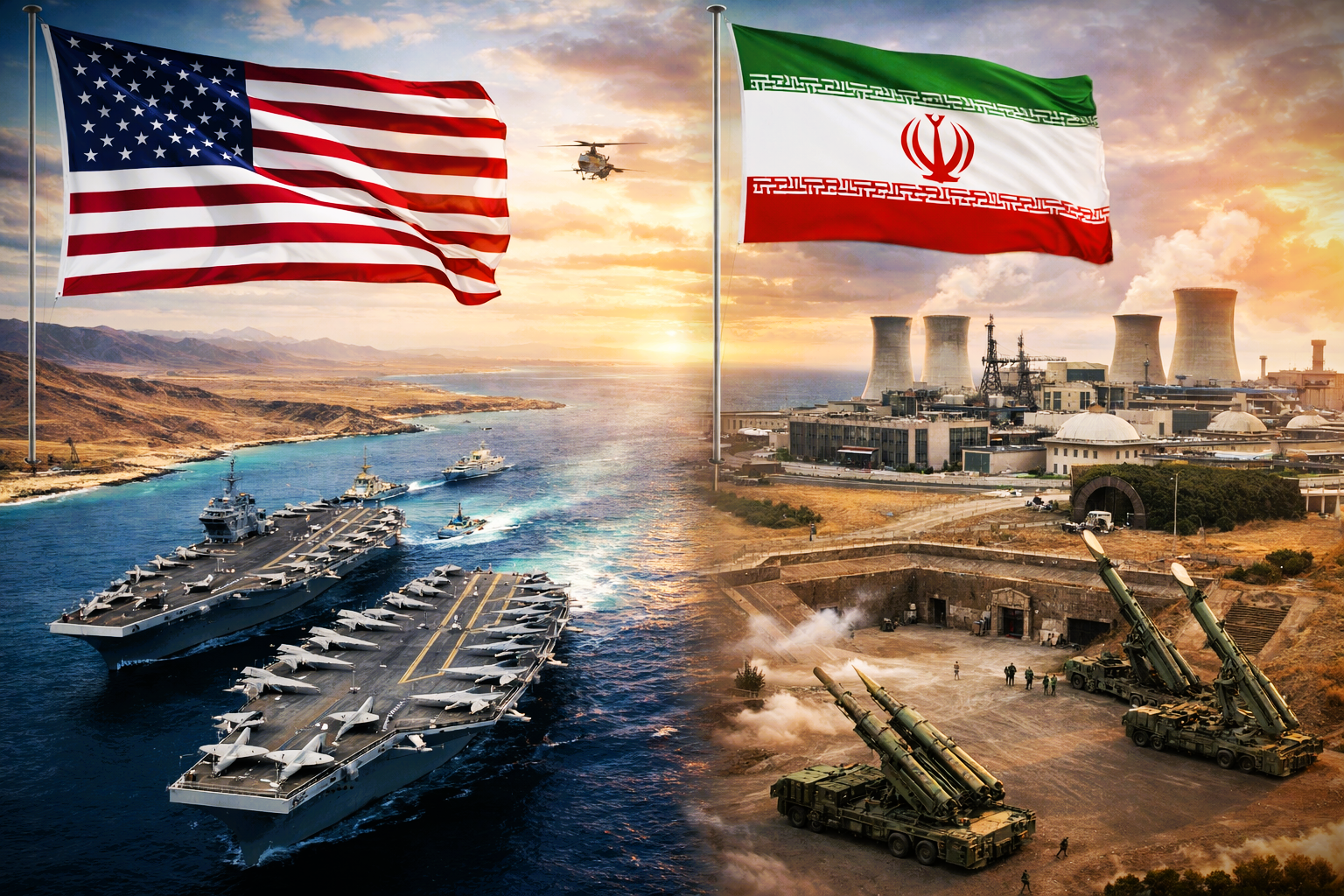
The United States and Iran exchanged a new round of strikes on Tuesday, marking the most serious military escalation between the two countries since late July.
The renewed fighting comes as tensions remain high over the Strait of Hormuz, one of the world’s most important shipping routes for oil and energy supplies.
U.S. Targets Iranian Military Sites
U.S. Central Command said it had completed a series of strikes against targets linked to Iran’s Islamic Revolutionary Guard Corps by Tuesday evening.
According to CENTCOM, the operation targeted air defense installations, radar systems and naval assets.
The U.S. military said the strikes were carried out in response to recent IRGC attacks on commercial vessels operating around the Strait of Hormuz, as well as attacks involving American military personnel in the region.
Iran Responds With Regional Attacks
Iranian media reported that Tehran retaliated by targeting several U.S.-linked locations in Iraq, Jordan and Bahrain.
Iran was also accused of threatening commercial vessels operating in and around the Strait of Hormuz.
The latest exchange represents the most intense period of U.S.-Iran fighting since late July and highlights the continued disagreement over control and access to the strategically important waterway.
Strait of Hormuz Remains at Center of Dispute
Washington has maintained that the Strait of Hormuz remains open to shipping.
Iran, however, has continued to claim that the route is closed to commercial traffic.
The disagreement has created uncertainty for global shipping companies and energy markets, especially as traffic through the strait remains significantly below levels recorded before the conflict.
Trump Threatens Further Action Against Iran
U.S. President Donald Trump indicated that Washington could take additional military action if tensions continue to escalate.
In comments on Tuesday, Trump warned that the U.S. could intensify its response against Iran.
He also raised the possibility of targeting Kharg Island, one of Iran’s most important oil export hubs.
Trump later said the United States was in a stronger strategic position around the Strait of Hormuz and claimed that Iran’s economy was coming under increasing pressure.
Iran Warns U.S. Allies in the Gulf
Iran also issued warnings to countries in the Gulf that host U.S. military forces.
Tehran said those governments should remove American troops from their territories or risk becoming targets of further Iranian military action.
The comments increase concerns that the conflict could spread beyond direct clashes between the U.S. and Iran.
Oil Prices Rise as Supply Risks Grow
Oil prices moved sharply higher this week as investors reacted to the renewed fighting and limited signs of progress toward a diplomatic agreement.
The continued escalation has increased concerns about disruptions to oil shipments through the Strait of Hormuz.
Shipping data indicates that traffic through the waterway remains well below pre-conflict levels.
Any further disruption could place additional pressure on global energy supplies and keep oil prices elevated.
Markets Watch for Further Escalation
Investors are now closely monitoring military developments, shipping activity and diplomatic efforts between the U.S. and Iran.
The Strait of Hormuz remains a central risk for global oil markets because of the large volume of crude that normally passes through the region.
Further escalation could increase volatility across oil, currencies, bonds and global equity markets.