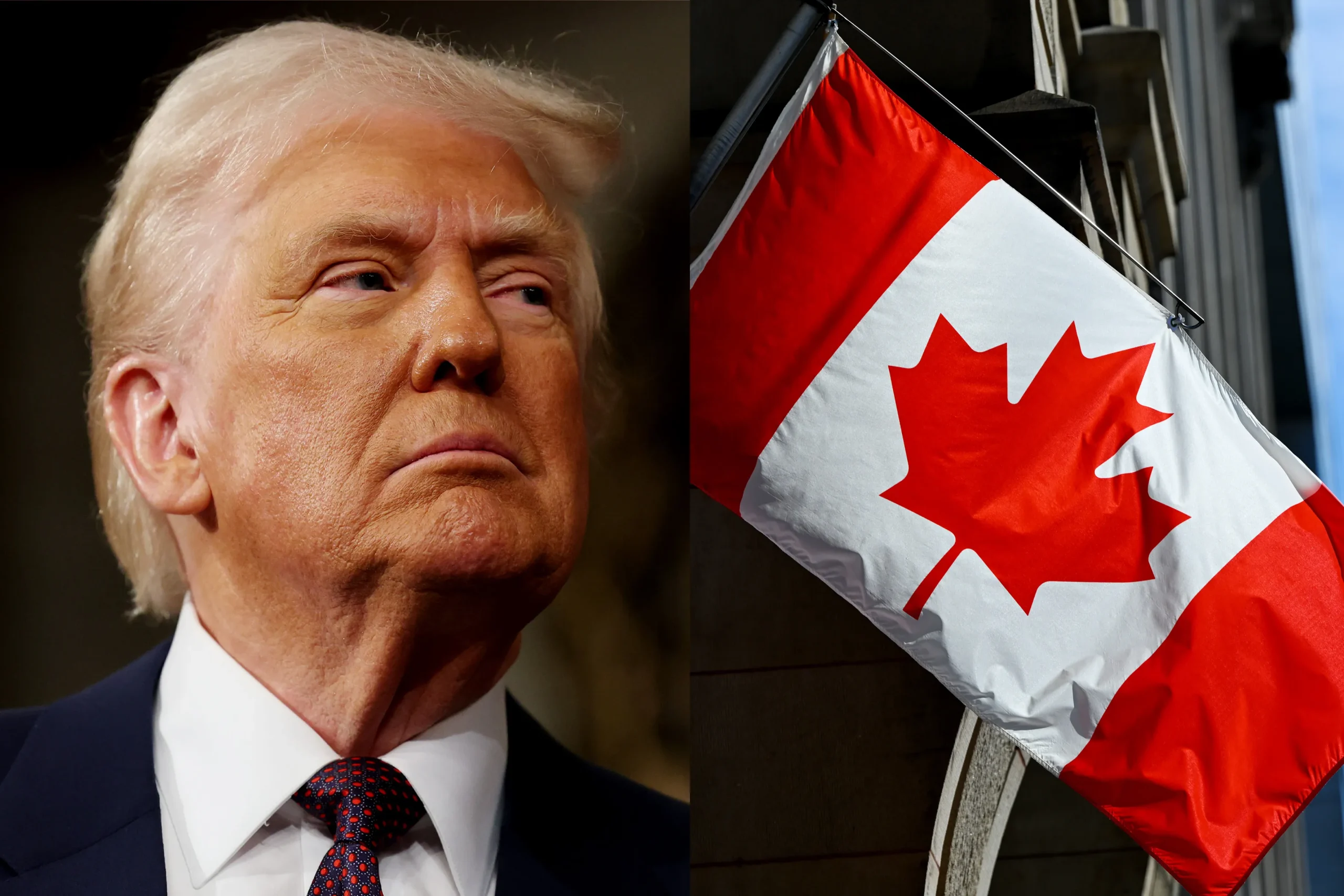
US President Donald Trump has intensified criticism of Canada as smoke from hundreds of Canadian wildfires continues to affect air quality across several American states.
Trump also threatened to impose higher tariffs on Canadian goods, arguing that Canada should bear financial responsibility for the cross-border impact of the fires.
Trump Criticises Canada Over Wildfire Smoke
Trump described the flow of hazardous smoke into the United States as an “invasion” of polluted air.
He said he planned to raise the issue directly with the Canadian prime minister and accused the Canadian government of failing to take sufficient action to prevent recurring wildfire emergencies.
The president characterised Canada’s response as negligent. However, Canadian authorities have not been quoted in the provided report responding to those claims.
Higher Tariffs Threatened
Trump suggested that the economic cost of the smoke should be added to the tariffs already imposed on Canada.
He argued that wildfire pollution creates significant financial consequences for US communities, including healthcare costs, business disruption and the cancellation of public events.
The president did not provide specific details about the size or timing of any additional tariff measures.
Forest Management Becomes Political Issue
Trump blamed inadequate forest management and debris removal for the scale of the wildfires.
He argued that Canada should take stronger measures to reduce the risk of future fires and prevent smoke from repeatedly crossing the US border.
Wildfire behaviour can be influenced by several factors, including weather conditions, drought, vegetation, forest management and climate patterns. Therefore, the causes and potential solutions are likely to remain the subject of political and scientific debate.
Hazardous Air Reaches Several US Regions
Smoke from more than 800 active Canadian wildfires has reportedly spread across parts of the Midwest, Northeast and New England.
Air-quality warnings have been issued in several affected areas as thick haze reduces visibility and increases health concerns.
Major cities including Detroit, New York and Toronto have experienced smoky conditions, while other communities across the region have also reported deteriorating air quality.
Health Officials Warn Residents
Health authorities have advised people in affected areas to limit outdoor activity and remain indoors when pollution reaches hazardous levels.
Children, older adults and people with respiratory or cardiovascular conditions may face greater risks from prolonged smoke exposure.
Some outdoor events have also been cancelled or postponed to protect participants and spectators from unhealthy air.
Wildfire Smoke Deepens US-Canada Tensions
Trump’s comments add another source of tension to the relationship between the United States and Canada.
The dispute now combines environmental concerns, public health risks and trade policy.
With millions of people potentially affected by wildfire smoke, pressure is growing on both governments to address emergency response, forest management and cross-border cooperation.
For now, Trump has made clear that he intends to hold Canada financially and politically accountable for the disruption caused by the smoke.