Donald Trump Signals Shift Toward Prolonged Iran Blockade
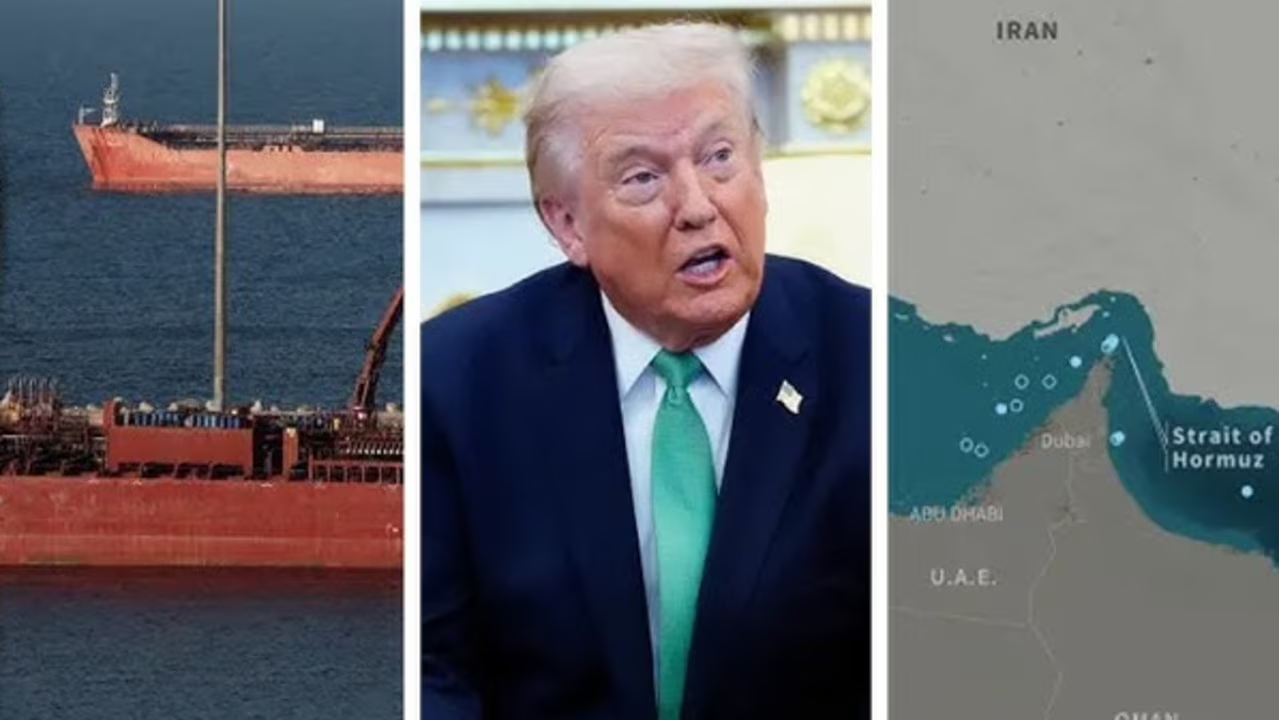
U.S. President Donald Trump has reportedly instructed aides to prepare for an extended blockade of Iran, marking a shift toward sustained economic pressure as Washington evaluates its next steps in the conflict, according to the Wall Street Journal.
Strategy Focuses on Economic Pressure Over Military Action
Citing U.S. officials, the report indicates that the administration aims to tighten restrictions on Iran’s oil exports and limit shipping activity to and from its ports. A prolonged blockade is viewed as a lower-risk option compared to resuming large-scale military operations or pursuing a rapid diplomatic resolution.
Ceasefire Holds but Tensions Remain Elevated
The development follows an April ceasefire that ended a significant bombing campaign but left geopolitical tensions high across the region. Despite the pause in direct conflict, uncertainty continues to shape global markets and policy decisions.
Strait of Hormuz Proposal Rejected
The report also revealed that Trump rejected a three-step proposal from Iran that would have reopened the Strait of Hormuz while delaying nuclear negotiations. U.S. officials deemed the proposal insufficient to meet key strategic demands.
Nuclear Conditions Remain a Key Sticking Point
Washington continues to insist that Iran commit to suspending uranium enrichment for at least 20 years, along with accepting long-term restrictions beyond that timeframe. This demand remains a central obstacle to any potential agreement.
Risk of Prolonged Standoff Increases
While a blockade could intensify pressure on Iran’s economy, it also raises the likelihood of a drawn-out stalemate. Officials warn the situation could evolve into a “no-deal, no-war” scenario as diplomatic efforts remain stalled.
Oil Prices Rise on Supply Concerns
Energy markets have reacted to the ongoing uncertainty. Brent Crude futures rose 2.9% to $114.46 per barrel, while West Texas Intermediate crude gained 2.9% to $102.79 per barrel.
The sustained disruption around the Strait of Hormuz has kept oil prices elevated well above pre-conflict levels, reinforcing concerns about global supply and inflation.
Market Implications
The potential for a prolonged blockade introduces new risks for global trade, energy markets, and geopolitical stability. Investors are closely monitoring developments as the situation continues to evolve.