Trump Proposes Hormuz Blockade and 20% Cargo Security Fee
President Donald Trump said on Monday that the United States would again prevent Iranian vessels from passing through the Strait of Hormuz.
He also proposed a 20% reimbursement charge on other cargo transported through the strategic waterway.
Trump argued that shipping companies should help cover the cost of U.S. security operations in the region.
Trump Calls U.S. the “Guardian” of Hormuz
In a social media post, Trump said the United States would become known as the “Guardian of the Hormuz Strait.”
He claimed that the U.S. should receive compensation for protecting commercial shipping in one of the world’s most volatile maritime corridors.
Trump proposed charging the equivalent of 20% of cargo value to help cover the costs of maintaining safety and security.
Earlier, during an interview with Fox News, he said the United States could take a leading role in operating and protecting the Strait.
Trump added that Washington expected to receive substantial payment for providing that protection.
Why the Strait of Hormuz Matters
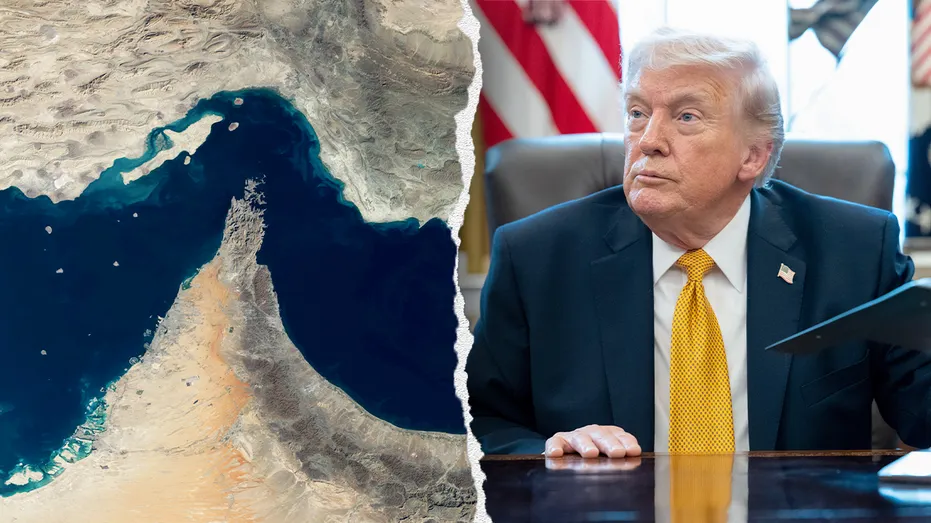
The Strait of Hormuz is one of the world’s most important energy shipping routes.
Around one-fifth of global oil consumption passes through the narrow waterway.
As a result, any disruption can quickly affect oil prices, shipping costs and global inflation.
The Strait has become the central focus of the growing confrontation between the United States and Iran.
Iran’s restrictions on shipping have already raised concerns about energy supplies and contributed to higher crude prices.
Iran Rejects Trump’s Proposal
Iran strongly rejected Trump’s comments.
The country’s senior joint military command said Tehran would not allow the United States to control or manage the Strait of Hormuz.
Iran also warned that any regional country helping Washington implement the proposal could be treated as participating in an act of war.
The response highlighted the risk of further military escalation around the key shipping route.
U.S. Says Hormuz Remains Open
U.S. Central Command said commercial shipping could still travel through the Strait.
This position directly contradicted Iran’s announcement that the waterway had been closed until further notice.
Central Command said it had completed another wave of strikes against targets across Iran.
According to the U.S. military, the attacks were intended to weaken Tehran’s ability to target international vessels travelling through Hormuz.
U.S. Strikes More Iranian Targets
The latest operation followed a major U.S. military campaign against Iranian positions.
American forces reportedly struck around 140 Iranian military targets on Saturday.
The action came after an attack on the Cyprus-flagged container ship M/V GFS Galaxy.
The weekend strikes brought the total number of targets hit during Washington’s three-day campaign to more than 300.
U.S. Defense Secretary Pete Hegseth said Iran would face consequences for its actions.
Iran Retaliates Across the Gulf
Iran responded with missile and drone attacks against U.S. and allied military facilities across the Gulf.
The United Arab Emirates said its air defences intercepted several Iranian missiles and drones.
Warning sirens were also reported in Bahrain, while explosions were heard in Doha.
Iran’s Islamic Revolutionary Guard Corps said it had disabled another vessel inside the Strait of Hormuz.
The expanding attacks increased fears that the conflict could spread further across the region.
Iran Says Strait Will Remain Closed
Iran declared the Strait of Hormuz closed after vessels allegedly attempted to travel through unauthorised routes.
The Islamic Revolutionary Guard Corps said the restriction would remain in place until U.S. involvement in the region ended.
It also warned that any military response would be met with severe retaliation.
However, ship-tracking data indicated that a limited number of vessels were still moving through the waterway.
Oil Prices Rise on Supply Fears
Oil prices climbed sharply following the weekend’s military developments.
Brent crude rose by more than 8% during Monday’s session as traders prepared for possible supply disruptions.
Any extended restriction on shipping through Hormuz could affect oil exports from several major Gulf producers.
It could also increase freight charges, insurance costs and fuel prices around the world.
Oman Hosts Diplomatic Discussions
Diplomatic efforts continued despite the military escalation.
Iranian Foreign Minister Abbas Araghchi met Omani Foreign Minister Sayyid Badr Albusaidi in Muscat.
The talks focused on possible arrangements for maintaining safe shipping through the Strait of Hormuz.
Oman said discussions would continue at both political and technical levels.
Iran’s Foreign Ministry argued that future transit rules should be developed through consultations between the countries bordering the Strait.
U.S.–Iran Negotiations Face New Obstacles
The latest exchange has weakened hopes for renewed negotiations between Washington and Tehran.
Iran accused the United States of violating a recent ceasefire agreement.
Araghchi said both sides would have to follow the agreement if diplomacy were to continue.
The United States, meanwhile, has demanded guarantees that commercial vessels can travel safely through the Strait before wider negotiations resume.
Global Economic Risks Continue to Grow
The conflict is creating new risks for the global economy.
A prolonged disruption to Hormuz shipping could reduce energy supplies, increase inflation and slow economic growth.
Higher fuel prices may also become a political problem for Trump ahead of November’s congressional elections.
The dispute over control of the Strait now combines military, economic and political risks.
Iran’s New Supreme Leader Vows Retaliation
Iran’s new Supreme Leader, Ayatollah Mojtaba Khamenei, also promised retaliation for the death of his father and predecessor, Ayatollah Ali Khamenei.
He said Iran would continue pursuing revenge regardless of future political developments.
His statement followed a warning from Trump that the United States was prepared to launch a major military response if Iran attempted to assassinate him.
The latest comments suggest that tensions surrounding the Strait of Hormuz could remain elevated for some time.