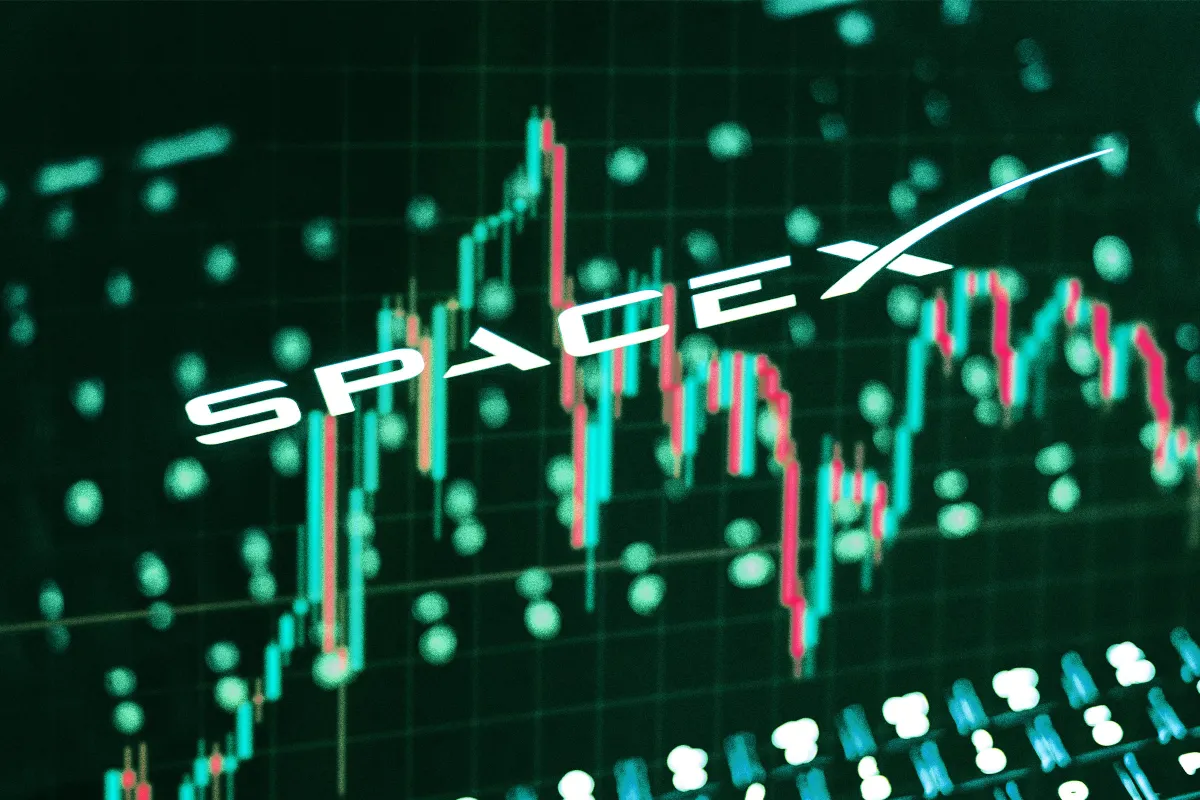
Short sellers betting against SpaceX have accumulated an estimated $8.7 billion in unrealized gains since the company completed its initial public offering last month.
According to data from analytics company Ortex Technologies, the profits increased as SpaceX shares fell below their IPO price.
SpaceX Shares Retreat From Post-IPO High
Short sellers borrow shares and sell them in the hope of buying them back later at a lower price. The difference between the selling and repurchase prices becomes their profit.
Bearish traders increased their positions as SpaceX stock declined from a post-IPO high of $225.64 towards its initial offering price of $135.
The shares have experienced significant volatility since the listing. Periods of recovery have repeatedly been followed by renewed selling pressure.
On Wednesday, SpaceX stock traded below its IPO price for the first time. However, the shares later recovered and closed slightly above that level.
Short Sellers Continue Adding to Positions
Ortex co-founder Peter Hillerberg described SpaceX stock as a difficult but ultimately profitable trade for short sellers.
Instead of closing their positions and securing profits, bearish investors continued increasing their exposure as the share price moved lower.
Ortex estimates that approximately 49% of SpaceX’s freely tradable shares are currently on loan. Hillerberg said the company believes most of those borrowed shares are being used for short selling.
SpaceX did not immediately respond to a request for comment.
High Valuation Attracts Bearish Traders
SpaceX’s elevated market valuation has made the company an appealing target for investors who believe the stock is overpriced.
However, betting against the company remains risky. SpaceX continues to attract strong interest from both retail and institutional investors.
Chief Executive Elon Musk also has a long history of publicly challenging short sellers, adding another layer of uncertainty for traders taking bearish positions.
AI Spending Raises Investor Concerns
Part of the recent weakness in SpaceX shares has been linked to concerns about debt-funded spending on artificial intelligence projects.
Investors are closely watching whether heavy AI investment will deliver sufficient long-term returns or place additional pressure on the company’s finances.
These concerns have contributed to the decline in the share price and strengthened the position of short sellers.
Large Short Position Could Increase Volatility
The exceptionally high level of short interest could lead to sharper price movements in either direction.
According to Ortex, every $1 movement in SpaceX stock represents more than $300 million in gains or losses for short sellers.
A continued decline would generate further profits for bearish traders. In contrast, a sudden rally could force some short sellers to repurchase shares quickly to limit their losses.
Such buying could potentially trigger a short squeeze and accelerate an upward move in the stock.
SpaceX Stock Recovers Slightly
SpaceX shares gained approximately 1% on Thursday and traded at $136.28.
Although the stock moved back above its IPO price, the large short position and continued uncertainty surrounding its valuation suggest that volatility could remain elevated.