Nasdaq Falls Over 2% as Alphabet, Tesla and Oil Weigh on Stocks
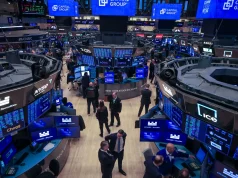
U.S. stocks closed sharply lower on Thursday as heavy losses in Alphabet and Tesla pressured the technology sector.
Investor concerns about the cost and profitability of artificial intelligence investment intensified after both companies revealed ambitious spending plans. At the same time, surging oil prices added new inflation risks and weakened broader market sentiment.
Major U.S. Stock Indexes Close Lower
The S&P 500 fell 1.2% to close at 7,407.58 points.
Meanwhile, the technology-heavy Nasdaq Composite declined 2.2% to 25,137.69 points. The Dow Jones Industrial Average also dropped 1% to finish at 51,711.29 points.
Alphabet and Tesla were among the biggest contributors to the Nasdaq’s decline.
Strong Jobless Claims Data Offers Limited Support
The latest U.S. economic data provided one positive signal.
Initial unemployment claims fell to their lowest level since May 1969, suggesting that the American labor market remains strong.
However, the encouraging report was not enough to offset concerns about rising energy prices, higher bond yields and weakness in major technology stocks.
Oil Prices Revive Inflation Concerns
Brent crude climbed above $100 per barrel for the first time since May as tensions in the Middle East continued to escalate.
Higher energy prices raised concerns that inflation could remain elevated for longer.
Investors also worried that renewed price pressure could complicate the Federal Reserve’s policy outlook and increase the possibility of further monetary tightening.
Truist chief investment officer Keith Lerner said rising oil prices were lifting inflation expectations and Treasury yields.
Although markets were not fully pricing in another interest-rate increase, expectations for tighter policy had grown.
Technology Stocks Remain Under Pressure
Lerner also noted that technology stocks were still moving through a corrective phase.
The sector had led much of the previous market rally. However, high valuations and enormous AI-related spending have made investors more cautious.
Market participants are becoming increasingly selective as they assess whether companies can generate enough revenue and profit to justify their infrastructure investments.
Market Rotation Limits Broader Damage
Despite the sharp decline in major indexes, the sell-off did not affect every part of the market equally.
Industrials, energy, healthcare and utilities showed relative strength. Real estate also traded higher during part of the session but failed to retain its gains.
This pattern suggested that investors were moving money between sectors rather than withdrawing from the stock market entirely.
Communication services and consumer discretionary stocks recorded the largest losses, falling more than 5%.
Alphabet weighed heavily on communication services, while Tesla pressured the consumer discretionary sector.
Alphabet AI Spending Worries Investors
Alphabet’s earnings report did little to ease concerns about the cost of the AI infrastructure race.
The Google parent recorded its first quarterly negative free cash flow result on record.
For the full year, Alphabet raised its capital expenditure forecast to between $195 billion and $205 billion.
The company had previously expected spending of between $180 billion and $190 billion. Management also warned that investment could increase further in 2027.
Alphabet shares fell more than 7% on Thursday.
Investors Question Alphabet’s AI Returns
Alphabet is spending hundreds of billions of dollars to expand its data centers and maintain its position in artificial intelligence.
However, investors remain uncertain about whether the company can generate returns that match the scale of those investments.
Higher energy expenses and capacity constraints are also increasing operating costs.
These pressures could weaken margins while the company continues spending heavily to protect and expand its market share.
Tesla Reports Negative Free Cash Flow
Tesla also disappointed investors despite reporting record second-quarter vehicle deliveries.
The company recorded negative quarterly free cash flow for the first time since the first quarter of 2024.
Tesla reiterated its expectation to spend more than $25 billion on capital expenditure.
CEO Elon Musk acknowledged that 2026 would be a major spending year but argued that the investments could eventually generate substantial returns.
Tesla shares ended the session 14.5% lower.
Tesla Margins Disappoint Wall Street
Tesla had already reported a recovery in demand for its electric vehicles.
However, the latest results showed that profitability remained under pressure.
Lower prices may have helped attract more buyers, but they also reduced automotive margins and pushed earnings below market expectations.
Tesla is accelerating its investment in Robotaxis, artificial intelligence and humanoid robots.
The high cost of those projects contributed to the company’s negative free cash flow.
Intel Earnings Move Into Focus
Investors were also preparing for Intel’s quarterly earnings report after the closing bell.
The market was looking for signs that the chipmaker had made progress in narrowing the gap with semiconductor rivals benefiting more strongly from AI demand.
Intel’s turnaround strategy has received support from the U.S. government.
A new advanced chip platform is expected to play a central role in the company’s effort to regain competitiveness.
Defense Stocks Rally on Strong Guidance
Several companies outside the technology sector reported stronger results.
Shares of defense contractors RTX and Lockheed Martin gained 7.3% and 10.5%, respectively.
Both companies raised their full-year revenue and earnings forecasts.
The ongoing Middle East conflict has supported demand as the Pentagon works to rebuild military equipment and ammunition supplies.
Honeywell Helps Limit Dow Losses
Honeywell Technologies climbed 5.7%, becoming the strongest performer in the Dow.
Quarterly orders increased 16% from the previous year. The company’s backlog also reached approximately $20 billion at the end of the quarter.
The business is the automation company formed after Honeywell completed a three-way corporate separation.
Honeywell Aerospace became an independent company, while the specialty materials division was separated into Solstice Advanced Materials.
T-Mobile Falls After Revenue Miss
T-Mobile US shares dropped 10.7%, placing the company among the weakest performers in the S&P 500.
The wireless provider reported quarterly revenue below expectations.
Its postpaid net account additions also declined by 13% compared with the same period last year.
The figures raised concerns about slowing customer growth in the competitive U.S. telecommunications market.
Houthi Attacks Push Brent Above $100
Middle East tensions intensified after Yemen’s Iran-backed Houthis claimed responsibility for attacks on two Saudi oil tankers in the Red Sea.
The incidents were the first since the group announced a blockade targeting Saudi vessels.
The attacks increased fears that regional conflict could further disrupt global oil supplies.
Shipping analytics company Kpler estimated that approximately 1.9 million barrels per day of Saudi refining capacity on the country’s western coast could be vulnerable to Houthi missile attacks.
Strait of Hormuz Traffic Drops Sharply
Confirmed vessel crossings through the Strait of Hormuz reportedly fell by 75%.
The decline left more oil stored inside the Gulf as shipping companies became increasingly cautious.
The waterway remains one of the world’s most important routes for global energy exports.
Military exchanges between the United States and Iran have increased the risks for vessels travelling through the region.
U.S.-Iran Conflict Continues
U.S. Central Command completed its twelfth consecutive night of attacks against Iran on Wednesday.
A naval blockade also redirected nine commercial ships and disabled another vessel to restrict access to Iranian ports.
Iran responded by attacking U.S. military facilities in Kuwait, Jordan and Bahrain.
The continuing escalation increased fears that the conflict could expand across the wider Middle East.
Trump Warns Houthis and Iran
President Donald Trump criticized the Houthis following the attacks on the Saudi vessels.
He warned that additional attacks could result in major military retaliation against both the Houthis and Iran.
Trump described the group as an Iranian proxy and said Tehran would be held responsible for further incidents.
His comments added to geopolitical uncertainty and helped push oil prices higher.
Rising Oil and AI Spending Pressure Wall Street
Brent crude briefly moved above $100 per barrel before easing slightly.
The oil rally, combined with concerns about AI investment returns, created a difficult environment for U.S. stocks.
For now, investors are watching energy prices, Federal Reserve expectations and upcoming technology earnings.
The market’s next direction may depend on whether major companies can prove that their heavy AI spending will eventually produce strong profits and cash flow.