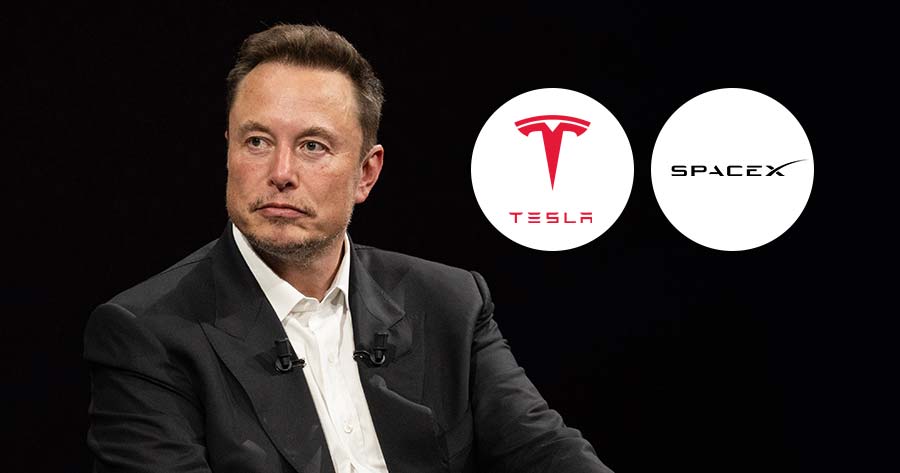
Elon Musk has suffered one of the largest paper-wealth declines ever recorded. The world’s richest person has lost hundreds of billions of dollars as the value of his stakes in SpaceX and Tesla collapsed within just five weeks.
Musk owns an estimated 42% economic stake in SpaceX. However, the company’s stock has fallen by roughly half from its post-IPO peak, wiping an enormous amount from his estimated net worth.
SpaceX Shares Collapse After Historic IPO
Space Exploration Technologies completed its long-awaited initial public offering on June 12, 2026. The company raised $75 billion in one of the largest IPOs in history.
SpaceX shares were priced at $135 under the SPCX ticker. Investor excitement initially pushed the stock to a record high of $225.64 on June 16.
However, the rally quickly reversed.
By Friday, SpaceX shares had fallen to $112.96. The stock was down 4.47% during the session, approximately 16% below its IPO price and nearly 50% below its all-time high.
The steep decline has created major losses for investors who purchased shares during the early post-IPO surge.
Musk’s Net Worth Falls by Nearly $700 Billion
The SpaceX sell-off has had a dramatic impact on Elon Musk’s estimated wealth.
According to the Bloomberg Billionaires Index, Musk’s net worth reached approximately $1.45 trillion on June 16, when SpaceX shares traded near their peak.
By the close of trading on July 23, his fortune had fallen to around $738 billion.
This represents an estimated loss of between $650 billion and $700 billion in just over five weeks.
Although these losses are largely based on changing stock valuations, they still represent an extraordinary reversal in Musk’s financial position.
Musk Retains Full Control of SpaceX
Despite the collapse in SpaceX’s market value, Musk continues to maintain overwhelming control of the company.
A June 17 SEC Form 4 filing showed that Musk’s Revocable Trust held approximately 842.09 million Class A shares and 663.8 million Class B shares.
An additional 7.4 million Class A shares were held through the EM 2024 GRAT-A trust.
Musk’s economic ownership remains close to 42%. However, SpaceX’s dual-class share structure gives him approximately 82% of the company’s voting power.
As a result, public investors are exposed to the stock’s volatility while Musk retains control over major operational and strategic decisions.
Short Sellers Profit From SpaceX’s Decline
The fall in SpaceX shares has created significant gains for bearish traders.
An Investing.com analysis published on July 21 estimated that short sellers had accumulated around $15.5 billion in unrealized profits.
Short interest had also increased to approximately one-third of SpaceX’s publicly available shares.
Musk recently warned short sellers on X that their chances of long-term survival were extremely low. However, bearish positions continued to increase after his remarks.
The growing short interest suggests that many traders expect further weakness in SpaceX’s stock price.
Starship Failure Hits Investor Confidence
Two major events accelerated the decline in Musk’s wealth.
The first came on July 16, when an engine failure forced SpaceX to cancel a Starship launch.
The aborted mission immediately damaged investor confidence. SpaceX shares dropped more than 4% during extended trading.
According to Forbes, the failed launch erased more than $45 billion from Musk’s estimated fortune in a single move.
Starship is central to SpaceX’s long-term ambitions, including reusable spaceflight, lunar missions and potential journeys to Mars. Therefore, launch delays and technical failures carry major consequences for the company’s public valuation.
Tesla Earnings Trigger Another Major Blow
The second major setback came from Tesla’s disappointing second-quarter earnings report on July 23.
Tesla reported adjusted earnings of $0.33 per share. This was more than 30% below analysts’ consensus estimate of $0.50.
Operating income fell 56.88% from the previous year to $398 million. The company’s operating margin narrowed to just 1.4%.
Free cash flow also dropped to negative $1.09 billion.
At the same time, capital expenditure increased 141.81% to $5.79 billion as Tesla continued investing heavily in artificial intelligence, manufacturing and new infrastructure.
Investors reacted sharply to the weak results.
Tesla shares plunged 14.52%, marking their worst single-day performance since June 5, 2025. The decline erased an additional estimated $18.6 billion from Musk’s net worth.
Musk Remains the World’s Richest Person
Despite losing as much as $700 billion, Musk continues to rank as the wealthiest person in the world.
Forbes estimated that he remained roughly $650 billion ahead of his nearest rivals as of July 23.
Google co-founder Larry Page was valued at approximately $263.8 billion, while Amazon founder Jeff Bezos had an estimated fortune of $245.4 billion.
This means Musk’s wealth advantage remains enormous, even after the dramatic decline in Tesla and SpaceX valuations.
Tesla-SpaceX Merger Rumors Intensify
Musk has also increased speculation about a possible merger between Tesla and SpaceX.
During Tesla’s second-quarter earnings call, he said there was growing overlap between the two companies.
He pointed to several areas of cooperation, including the integration of Starlink technology into Cybertrucks and the development of TeraFab, a joint artificial intelligence chip project.
The initiative reportedly involves Tesla, SpaceX and the former xAI business, which is now described as a SpaceX subsidiary.
Musk said that any merger would need to follow the correct corporate process. However, when Reuters asked him about the likelihood of a deal, he reportedly suggested the probability could be as high as 80%.
A Tesla-SpaceX merger would create one of the world’s most valuable and complex technology groups. However, it could also raise major questions regarding governance, valuation and shareholder rights.
SpaceX Faces Its First Public Earnings Test
SpaceX is scheduled to release its first quarterly earnings report as a publicly traded company on August 4.
The report will give investors their first detailed look at SpaceX’s finances since the IPO.
Markets are expected to focus on revenue growth, Starlink performance, launch costs, cash flow and progress within the Starship program.
A strong report could restore confidence after the recent stock decline. However, disappointing results may create additional selling pressure.
Lockup Expiry Could Release Millions of Shares
Another major risk arrives on August 6, when SpaceX’s IPO lockup restrictions are expected to partially expire.
Insiders may then become eligible to sell as much as 20% of their previously locked holdings.
According to CNBC, up to 911.5 million shares could become available for sale. This amount would be larger than the entire number of shares sold during the IPO.
The lockup expiry does not guarantee that insiders will sell. However, the possibility of such a large increase in supply could place further pressure on the stock.
The risk may become even greater if SpaceX reports disappointing financial results only two days earlier.
Next Starship Launch Could Decide Market Direction
Investors are also waiting for SpaceX’s rescheduled Flight 13 Starship test.
The company has not yet confirmed an official launch date.
A successful mission could improve confidence in the Starship program and support SpaceX’s share price.
However, another technical failure or launch cancellation could deepen concerns about development costs, delays and operational risks.
Musk’s Empire Faces a Critical Test
The next few weeks could determine whether Tesla and SpaceX can stabilize after their recent declines.
SpaceX earnings, the lockup expiry and the next Starship launch will all play an important role in shaping investor sentiment.
Musk remains the world’s wealthiest person and retains dominant control over SpaceX. Nevertheless, the estimated destruction of up to $700 billion in paper wealth shows how quickly market valuations can change.
The performance of Tesla and SpaceX will now determine whether Musk’s business empire stages a recovery or suffers an even deeper decline.