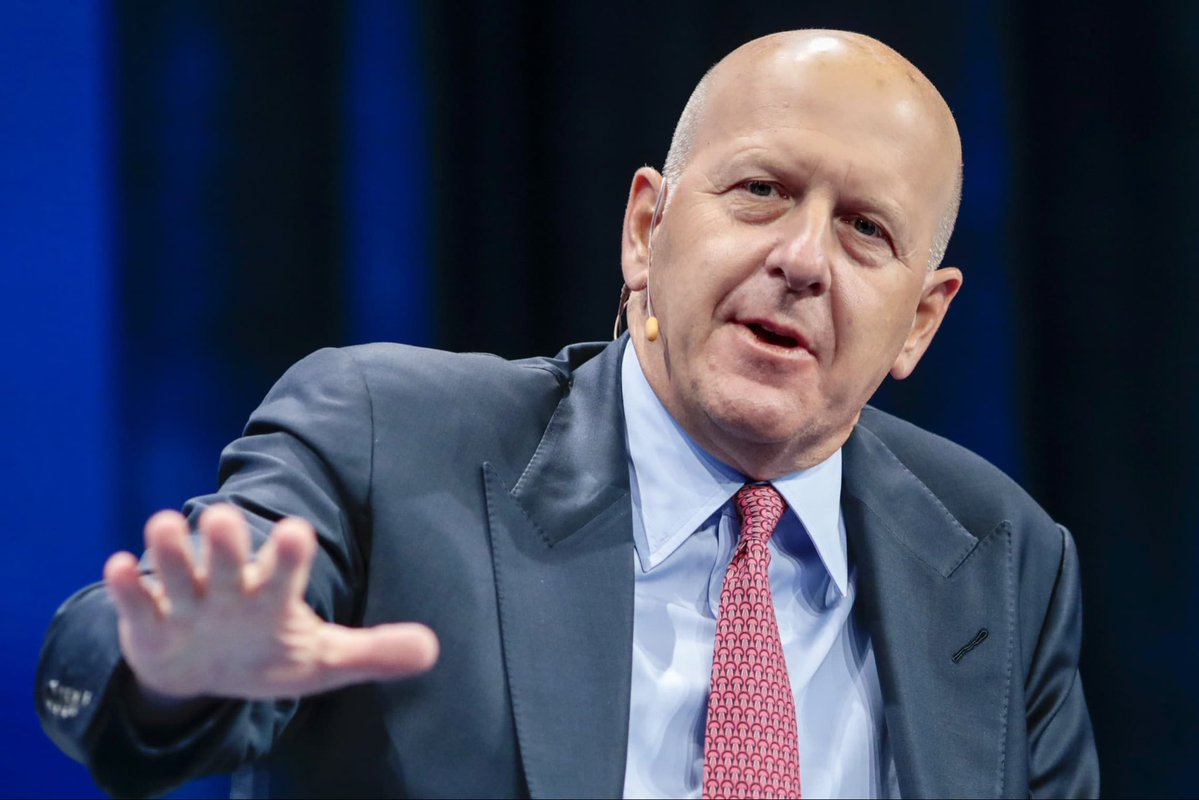
Goldman Sachs CEO David Solomon has expressed support for advancing the CLARITY Act, even as major banking groups continue to raise concerns about stablecoin rewards.
Solomon admitted that the proposed crypto legislation is not perfect. However, he believes it could provide clearer market rules, improve financial stability and support innovation across the digital asset industry.
Goldman Sachs CEO Backs the CLARITY Act
David Solomon told Politico that he strongly supports moving the CLARITY Act forward.
According to the Goldman Sachs CEO, the United States needs a clear crypto market structure. Establishing these rules could help companies innovate while giving investors and financial institutions greater regulatory certainty.
Solomon acknowledged that lawmakers could debate several parts of the legislation. Nevertheless, he said creating a level playing field should remain one of the main priorities.
In his view, consistent regulations could improve market stability and allow the cryptocurrency sector to develop in a more responsible way.
Solomon now joins several major crypto industry leaders who have encouraged the Senate to approve the bill. Ripple CEO Brad Garlinghouse and Coinbase CEO Brian Armstrong have also publicly supported efforts to establish clearer digital asset regulations.
Banks Remain Concerned About Stablecoin Yields
Although Solomon supports the CLARITY Act, banking organizations remain worried about provisions related to stablecoin rewards.
The latest version of the bill would allow third-party crypto companies to offer activity-based rewards to stablecoin users. However, it would prohibit companies from paying yields on stablecoins that remain in inactive balances.
Banking associations argue that these rewards could encourage customers to move deposits from traditional banks into stablecoin platforms.
Community banks may face the greatest risk. These institutions often depend heavily on customer deposits to fund mortgages, small-business loans and other local financial services.
If a significant amount of money moves into stablecoins, community banks could have fewer funds available for lending.
JPMorgan CEO Jamie Dimon has previously raised similar concerns about the potential effect of stablecoins on the traditional banking system.
Latest CLARITY Act Draft Faces Political Opposition
Senate Republicans recently released an updated draft of the CLARITY Act.
The latest text still allows certain activity-based stablecoin rewards. However, it bans direct yield payments on idle stablecoin balances.
Despite this compromise, the bill continues to face major political obstacles.
Democratic lawmakers have not yet supported the updated draft. Their opposition continues even though lawmakers added an ethics provision designed to address concerns about elected officials and their involvement in the cryptocurrency industry.
As a result, the chances of the bill receiving enough support for approval remain uncertain.
Hispanic Chamber Supports Banking Industry Concerns
The United States Hispanic Chamber of Commerce has also voiced concerns about the stablecoin reward provisions.
Earlier this week, the organization sent a letter to Senate leaders supporting the banking industry’s position.
The group warned that stablecoin rewards could increase deposit outflows from community banks. It argued that this development could negatively affect small-business financing, local investment and economic opportunities in Hispanic communities.
Community banks play an important role in providing credit to small and medium-sized businesses. Therefore, reduced deposits could limit their ability to offer affordable loans.
The organization also referred to recent analyses that reportedly showed deposit outflows linked to cryptocurrency-related activity.
Republican Senators Question Stablecoin Provisions
Concerns about stablecoin yields are not limited to banks and business organizations.
Republican Senators John Curtis and John Cornyn have reportedly said they share concerns about customers moving deposits away from traditional banks.
The stablecoin issue has returned to the center of negotiations despite an earlier compromise between lawmakers and industry representatives.
Meanwhile, Republican Senator Thom Tillis has said he does not support the bill’s current ethics provision. His opposition creates another potential challenge for lawmakers trying to secure enough votes.
Can the CLARITY Act Gain Enough Support?
The CLARITY Act aims to establish a clearer regulatory framework for cryptocurrencies and digital assets in the United States.
Supporters believe the bill could reduce uncertainty, protect investors and encourage financial innovation. They also argue that clear regulations would help American companies compete with businesses operating in countries that already have established crypto rules.
However, opponents remain concerned about the potential effect on banks, customer deposits and community lending.
The debate now centers on whether lawmakers can create stablecoin rules that support innovation without weakening traditional financial institutions.
David Solomon’s support gives the bill another influential backer. Still, disagreements over stablecoin rewards, banking risks and ethics rules must be resolved before the legislation can move forward.