Gold Prices Remain Stable as Markets Watch Trump-Xi Summit
Gold prices traded mostly unchanged on Thursday as investors closely monitored the high-profile summit between U.S. President Donald Trump and Chinese President Xi Jinping amid growing uncertainty surrounding the ongoing Iran war.
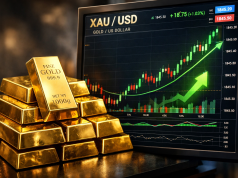
By 09:26 ET, spot gold edged up 0.1% to $4,695.08 per ounce, while gold futures slipped slightly by 0.1% to $4,701.05 per ounce.
Markets remained cautious as traders evaluated geopolitical developments, inflation risks, and the broader economic outlook.
Trump and Xi Hold Key Trade and Geopolitical Talks
Trump and Xi concluded the first round of discussions during their two-day summit, with Chinese state media reporting progress in trade negotiations between the two economic powers.
However, Xi also warned that tensions over Taiwan could still negatively impact relations between Washington and Beijing.
Investors were particularly focused on whether the talks would include discussions related to the Iran conflict. Some analysts believe Trump may attempt to encourage China to play a larger diplomatic role, particularly given Beijing’s status as one of the biggest importers of Iranian oil.
Still, uncertainty remains over whether China would be willing to act as a guarantor in any potential peace agreement involving Iran.
Strait of Hormuz Crisis Continues to Pressure Global Markets
The global economy remains under pressure due to the ongoing disruption in the Strait of Hormuz, one of the world’s most important oil shipping routes located off Iran’s southern coast.
Approximately one-fifth of global oil supplies normally pass through the strategic waterway. However, reciprocal blockades imposed by Iran and the United States have severely restricted tanker traffic, creating major supply concerns across energy markets.
As a result, oil prices have surged far above pre-war levels of around $70 per barrel, fueling fears of rising inflation and slower global economic growth.
Rising Inflation and Interest Rate Concerns Impact Gold Outlook
Higher oil prices have intensified inflation concerns, increasing speculation that major central banks may respond by keeping interest rates elevated or even raising them further.
This environment could limit upside momentum for gold prices, as the precious metal typically underperforms during periods of higher interest rates due to its non-yielding nature.
Adding to market uncertainty, the U.S. Senate confirmed Kevin Warsh as the new chair of the Federal Reserve on Wednesday.
Warsh will replace outgoing Fed Chair Jerome Powell at a time when policymakers are facing growing inflationary pressure linked to energy prices and geopolitical instability.
The appointment comes as President Trump has repeatedly called for aggressive interest rate cuts to support economic growth.
U.S. Dollar Holds Firm During Iran Conflict
Meanwhile, the U.S. dollar remained mostly stable as investors continued seeking safe-haven assets during the Iran war.
Some analysts argue that the United States may be relatively insulated from the current energy shock because of its role as a major energy exporter. This perception has helped support demand for the dollar despite broader geopolitical uncertainty.
The combination of a resilient dollar, elevated oil prices, and expectations for higher interest rates continues to shape the outlook for gold and global financial markets.