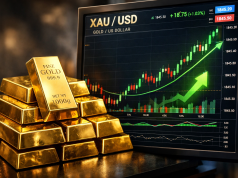
Gold prices moved lower during Asian trading on Monday as investors focused on renewed inflation concerns and the risk of higher US interest rates.
The decline followed fresh military exchanges between the United States and Iran over the weekend, which placed additional pressure on an already fragile ceasefire.
Gold Falls Despite Reported US-Iran Stand-Down
Gold remained under pressure even after reports suggested that Washington and Tehran had agreed to pause further attacks.
The two sides are also expected to hold another round of negotiations this week.
Despite the potential diplomatic progress, spot gold fell by 1.1% to $4,043.62 an ounce as of 01:36 ET, or 05:36 GMT.
Gold futures declined by around 1% to $4,056.77 an ounce.
Gold Remains Near Eight-Month Low
Gold prices stayed close to an eight-month low reached during the previous week.
The main source of pressure was growing concern that the Federal Reserve could raise interest rates later in the year.
A recent peace agreement between the United States and Iran had initially reduced fears about energy-driven inflation.
Oil prices also fell sharply over the previous week and returned close to levels recorded before the conflict.
However, lower energy prices were not enough to support gold as the US dollar remained strong and Treasury yields stayed elevated.
Federal Reserve Rate Fears Weigh on Bullion
Financial markets are pricing in a probability of more than 30% that the Federal Reserve will raise interest rates by the end of 2026, according to the CME FedWatch Tool.
Recent US inflation figures strengthened concerns that price pressures remain persistent.
The Federal Reserve’s June meeting also delivered a more hawkish signal, increasing uncertainty over the future path of monetary policy.
Higher interest rates are generally negative for gold because the metal does not pay interest or dividends.
When bond yields rise, investors may prefer income-generating assets over non-yielding investments such as gold and other precious metals.
Silver and Platinum Prices Also Decline
Other precious metals also moved lower during early Monday trading.
Spot silver fell by approximately 1.8% to $58.1145 an ounce.
Spot platinum declined by around 0.4% to $1,612.20 an ounce.
The losses reflected broader pressure across the metals market as investors adjusted their expectations for interest rates and the US dollar.
Global Economic Data Comes Into Focus
Investors are now preparing for a busy week of economic releases from several major economies.
Japan is expected to publish industrial production data, while China will release its latest purchasing managers’ index figures.
European inflation data will also be closely watched for further evidence about the direction of interest rates across the region.
These reports could influence expectations for global monetary policy and create additional volatility in precious metal prices.
US Jobs Report Could Shape Gold Outlook
The main event of the week is expected to be the US nonfarm payrolls report for June.
Employment and inflation remain the Federal Reserve’s two most important considerations when setting interest rates.
A stronger-than-expected labour market report could give the central bank more room to keep borrowing costs high or consider another rate increase.
By contrast, weaker employment data could reduce expectations for tighter monetary policy and provide some support for gold prices.