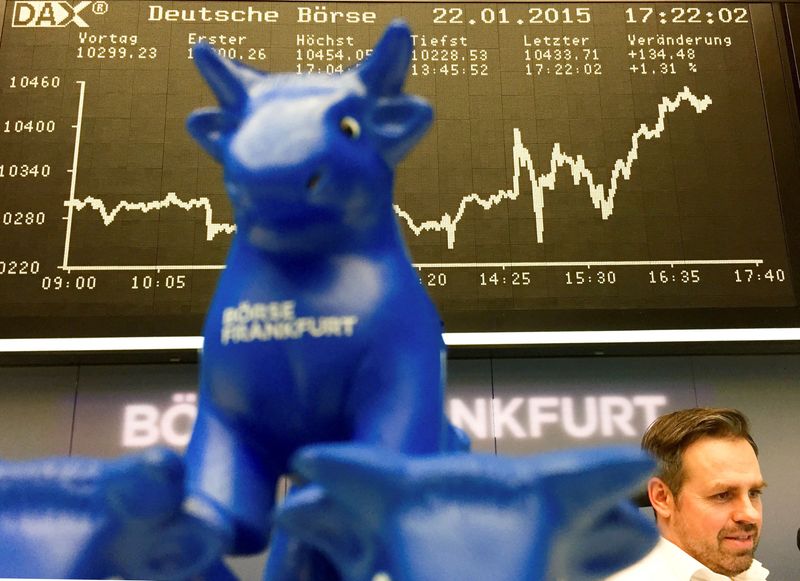
European Stocks Edge Lower Ahead of Nvidia Earnings and Rising Inflation Concerns
European stock markets opened slightly lower on Wednesday as investors turned cautious before quarterly results from Nvidia, a report expected to provide important insight into the strength of the global artificial intelligence boom.
At the opening of trading:
- The pan-European Stoxx 600 fell 0.1%
- Germany’s DAX declined 0.4%
- France’s CAC 40 slipped 0.3%
- The UK’s FTSE 100 dropped 0.4%
Market sentiment remained pressured by concerns over inflation, interest rates and geopolitical uncertainty.
Nvidia Earnings Seen as Key Test for AI Growth Momentum
Nvidia, one of the world’s most valuable technology companies and a dominant player in AI semiconductors, is scheduled to release quarterly earnings after the close of Wall Street trading.
The company’s rapid growth in recent years has been driven by substantial investment from major technology firms building infrastructure to support artificial intelligence systems.
Because of Nvidia’s central role in the AI industry, its earnings reports have become closely watched indicators of broader demand for AI-related spending.
Investors are expected to focus heavily on whether enthusiasm surrounding artificial intelligence remains strong enough to support continued market growth.
AI Investment Has Helped Offset Economic Pressures
Large-scale spending on artificial intelligence infrastructure has supported economic activity globally during a period marked by geopolitical instability and slower growth in some regions.
However, analysts warn that prolonged tensions involving Iran could increase inflation pressures and weaken global economic momentum.
Iran Conflict Continues to Raise Inflation Risks
Concerns over inflation remain elevated partly due to disruptions surrounding the Strait of Hormuz — a critical shipping route responsible for transporting roughly 20% of global oil supplies.
Continued instability in the region has contributed to higher energy costs, increasing fears that inflation could remain elevated worldwide.
Higher oil prices typically create additional pressure on consumers, businesses and central bank policy decisions.
Investors Reassess Interest Rate Expectations
Markets have increasingly begun pricing in the possibility that the European Central Bank and other major central banks could maintain tighter monetary policy or raise interest rates further if inflation accelerates.
Rising expectations for higher borrowing costs have contributed to increases in government bond yields, which have recently weighed on equity markets.
Higher yields often reduce the attractiveness of stocks, particularly growth and technology sectors.
Eurozone Inflation Data Remains in Focus
Investors are also awaiting the release of final April inflation figures for the Eurozone.
Recent UK inflation data showed signs of easing, but broader concerns remain over whether energy-related pressures could trigger renewed increases in consumer prices.
Upcoming economic data may influence expectations regarding future interest rate decisions.
Hopes for U.S.-Iran Progress Offer Some Optimism
Despite ongoing uncertainty, markets continue monitoring diplomatic efforts between the United States and Iran.
Any progress toward ending hostilities could help reduce pressure on oil markets and ease inflation concerns.
Shipping data released Wednesday showed two Chinese oil tankers exiting the Strait of Hormuz, offering limited signs of continued energy flows despite ongoing tensions.
Developments in both geopolitical negotiations and central bank policy are likely to remain major drivers for European markets in the near term.