European stock markets opened cautiously on Wednesday as investors weighed strong results from ASML against a sharp technology selloff triggered by IBM on Wall Street.
The pan-European STOXX 600 traded close to unchanged levels. Investors remained hesitant as they assessed corporate earnings, upcoming economic data and changing expectations for global interest rates.
European Markets Struggle for Direction
Major European indices moved lower during the opening session.
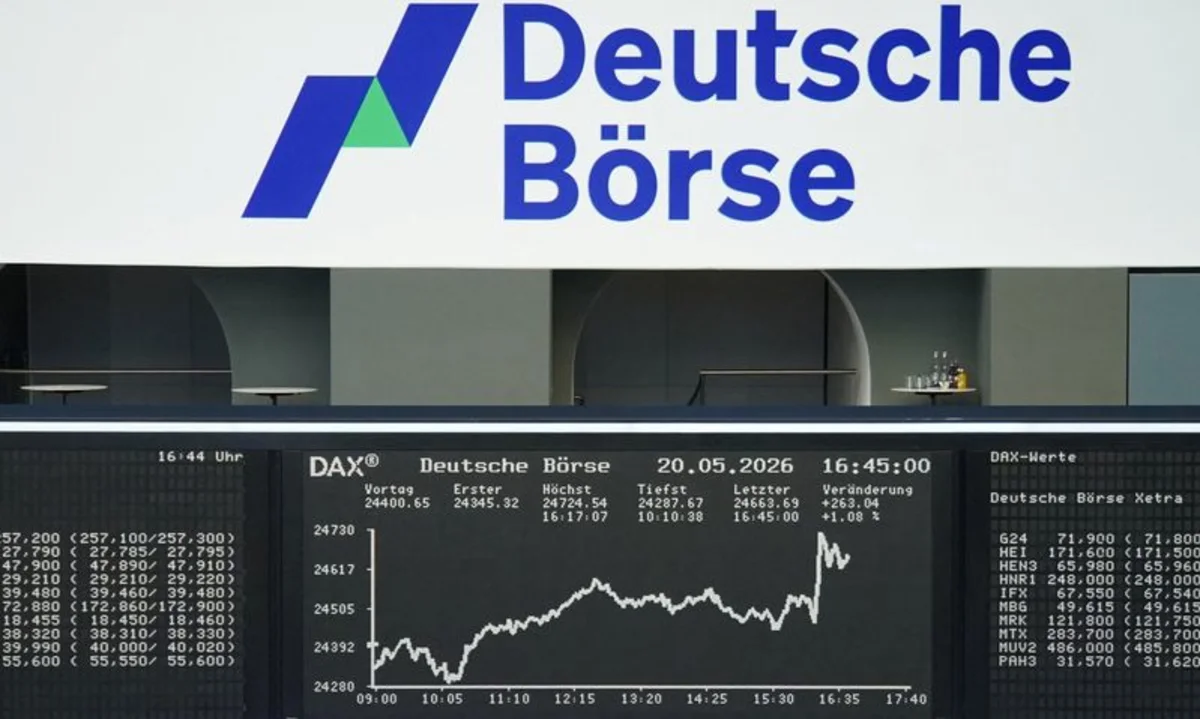
Germany’s DAX declined by almost 1%, while France’s CAC 40 fell by around 0.4%. London’s FTSE 100 also slipped approximately 0.6%.
However, gains in ASML helped limit broader market losses.
The Dutch semiconductor equipment manufacturer rose around 3.3% after publishing stronger-than-expected second-quarter results.
ASML Gains on Strong AI Chip Demand
ASML reported second-quarter net sales that comfortably exceeded analysts’ forecasts.
Demand for advanced chips used in artificial intelligence infrastructure played a major role in the company’s performance.
The strong results encouraged ASML to raise its full-year guidance. This provided investors with further evidence that demand for AI-related hardware remains resilient.
ASML’s update also supported confidence in the wider European semiconductor sector.
IBM Selloff Pressures Technology Stocks
The positive reaction to ASML was partly offset by heavy losses in IBM shares overnight.
IBM disappointed investors after its preliminary second-quarter revenue missed market expectations.
The stock subsequently plunged by around 25%, creating fresh concerns about valuations and spending trends across the global technology industry.
The scale of the decline also showed how sensitive investors have become to disappointing earnings from companies linked to the artificial intelligence investment cycle.
AI Spending Shift Weighs on Software Companies
IBM said enterprise customers were increasingly directing their technology budgets toward AI servers and data-storage systems.
This spending shift appears to be reducing demand for more traditional software and infrastructure products.
The warning affected technology shares beyond the United States and placed pressure on several European software companies.
SAP shares fell approximately 2.1%, while Capgemini declined by around 1.1%.
Softer US Inflation Offers Limited Relief
European investors also continued to assess the latest US inflation report.
Consumer prices slowed faster than economists had expected, initially improving sentiment across global markets.
The softer reading reduced immediate concerns about another Federal Reserve interest rate increase.
However, details within the report suggested that underlying inflationary pressure had not disappeared completely.
Fed Rate-Hike Risk Remains
Interest-rate markets continue to indicate that the Federal Reserve could raise borrowing costs at least once more before the end of the year.
Some persistent inflation components remain above levels that would make policymakers comfortable.
As a result, investors remain concerned that interest rates could stay elevated for longer than previously expected.
The prospect of higher-for-longer rates is limiting stronger gains in European equities, particularly among highly valued technology and growth stocks.
Eurozone Industrial Production in Focus
Attention will now turn to the latest eurozone industrial production figures.
The data will provide an important update on the health of the region’s manufacturing sector.
Recent purchasing managers’ surveys have shown weak factory activity across major economies, including Germany and France.
A stronger-than-expected industrial production report could support cyclical and industrial stocks later in the session.
However, another weak reading could deepen concerns about slowing growth and persistent inflation.
ECB Faces a Difficult Policy Balance
Weak economic growth combined with ongoing inflation would create a challenging environment for the European Central Bank.
The ECB may need to balance the risk of keeping interest rates too high against the danger of easing policy before inflation is fully under control.
A disappointing industrial production report could therefore increase fears of a stagflationary outlook across the eurozone.
This would make the ECB’s next policy decision even more complicated.
Other European Stock Movers
Among individual companies, Seco shares gained around 6.6% after the company reported stronger first-half sales.
TomTom fell approximately 2.5% following the release of its latest quarterly results.
For now, European stocks remain caught between strong AI-related demand, concerns over the wider technology sector and uncertainty surrounding interest rates and economic growth.