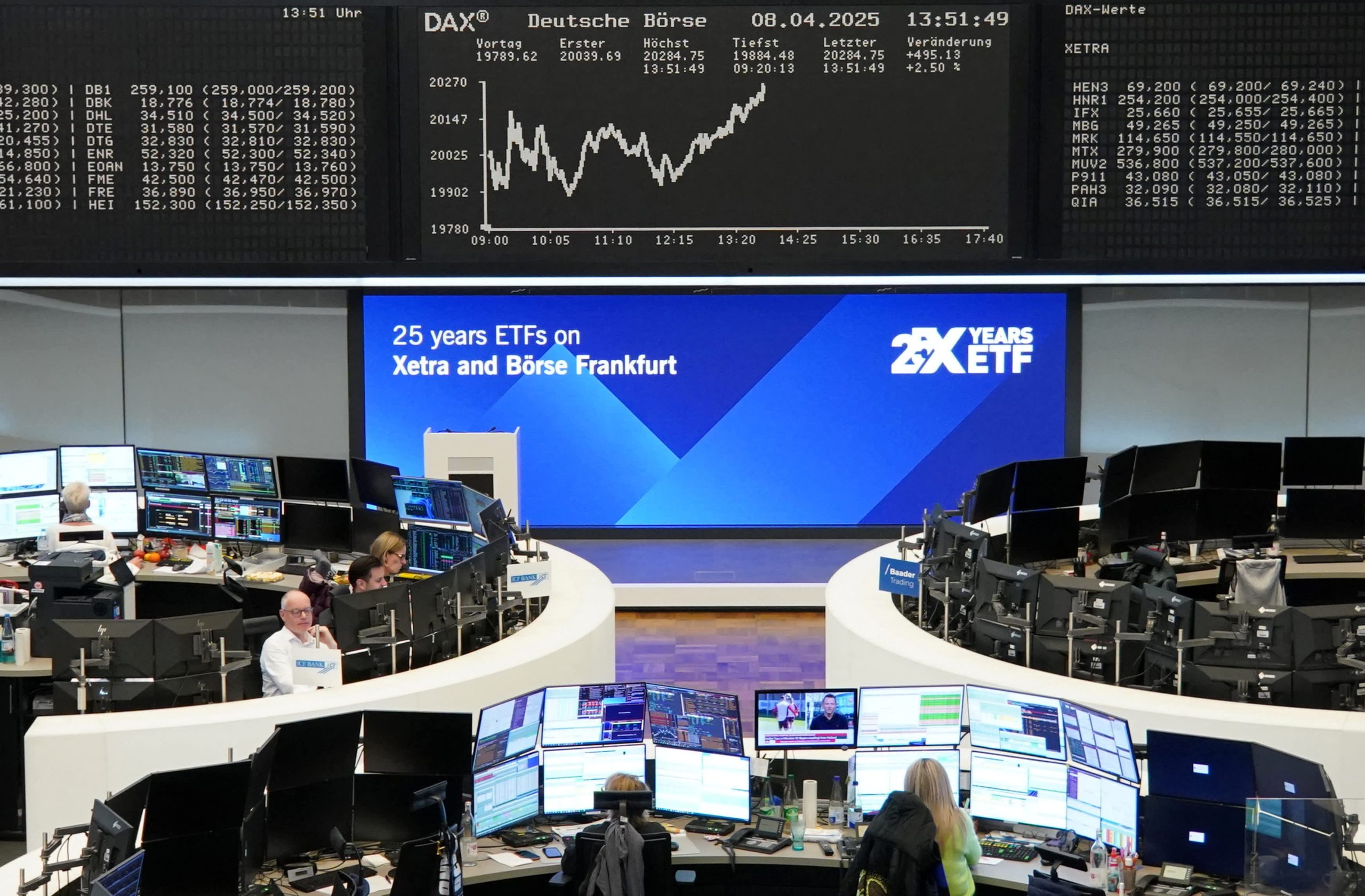
European stocks moved higher on Friday, with the pan-European STOXX 600 gaining around 0.6%.
Despite the rebound, the index remained on course for its third consecutive weekly decline. That would mark its longest losing streak since April 2025.
The STOXX 600 was heading for a weekly loss of roughly 0.4% as investors continued to weigh high interest rates, volatile energy prices, and mixed economic data across the region.
European Stocks Recover but Weekly Pressure Remains
Friday’s gains were relatively modest as investors avoided taking aggressive positions ahead of Federal Reserve Chair Kevin Warsh’s keynote speech at the Jackson Hole Economic Policy Symposium.
The event is expected to provide fresh clues about the future direction of U.S. interest rates and monetary policy.
European markets have remained sensitive to changes in global borrowing costs throughout the week.
Higher Bond Yields Weigh on European Markets
One of the biggest pressures on European equities has been the renewed rise in global government bond yields.
Higher sovereign yields pushed borrowing costs across several euro-zone markets toward multi-month highs earlier in the week.
Yields eased somewhat during the middle of the week following U.S. debt-buyback announcements and lower energy prices.
However, borrowing costs remain elevated and continue to pressure corporate valuations.
Real estate companies have been particularly sensitive because higher interest rates increase financing costs and can reduce the value of income-producing assets.
Energy Prices Add to Market Volatility
Volatile energy markets have also influenced European stocks.
Geopolitical tensions surrounding the Strait of Hormuz kept European natural gas prices and global crude oil benchmarks elevated for much of the week.
A late-week diplomatic push helped ease some concerns and provided temporary relief from inflationary pressures.
Still, uncertainty around energy supplies remains an important risk for the European economic outlook.
ECB Comments Keep Interest Rates in Focus
Hawkish comments from European Central Bank officials also weighed on investor sentiment.
ECB Executive Board member Isabel Schnabel reiterated that interest rates may need to rise further to bring inflation under control.
Such comments reinforced expectations that borrowing costs could remain elevated for longer than previously anticipated.
This outlook has limited investor appetite for European equities despite Friday’s rebound.
Warsh’s Jackson Hole Speech Takes Center Stage
The main focus for global markets on Friday is Federal Reserve Chair Kevin Warsh’s first keynote address at the Jackson Hole symposium in Wyoming.
Investors are looking for clearer guidance on whether the Federal Reserve intends to maintain restrictive monetary policy into the autumn.
Persistent inflation remains a concern, while signs of slowing momentum in the labor market could support the case for a pause in further tightening.
Because U.S. Treasury yields are closely linked to European sovereign bond markets, a more hawkish tone from Warsh could push global yields higher again.
That could further tighten financial conditions for European companies.
Investors will also be listening for any comments about the Federal Reserve’s balance sheet as governments around the world continue to issue large amounts of debt.
DAX, CAC 40 and FTSE 100 Move Higher
Major European stock indexes traded higher alongside the STOXX 600 on Friday.
Technology-related stocks received some support from continued optimism following Nvidia’s strong earnings outlook earlier in the week.
Germany’s DAX gained around 0.5%.
France’s CAC 40 rose approximately 0.9%, recovering from sharp losses in the previous session.
The UK’s FTSE 100 also moved higher, adding around 0.4%.
Overall, European stocks ended the week under pressure despite Friday’s rebound. High bond yields, energy-market volatility and uncertainty over central bank policy remain key risks for investors.