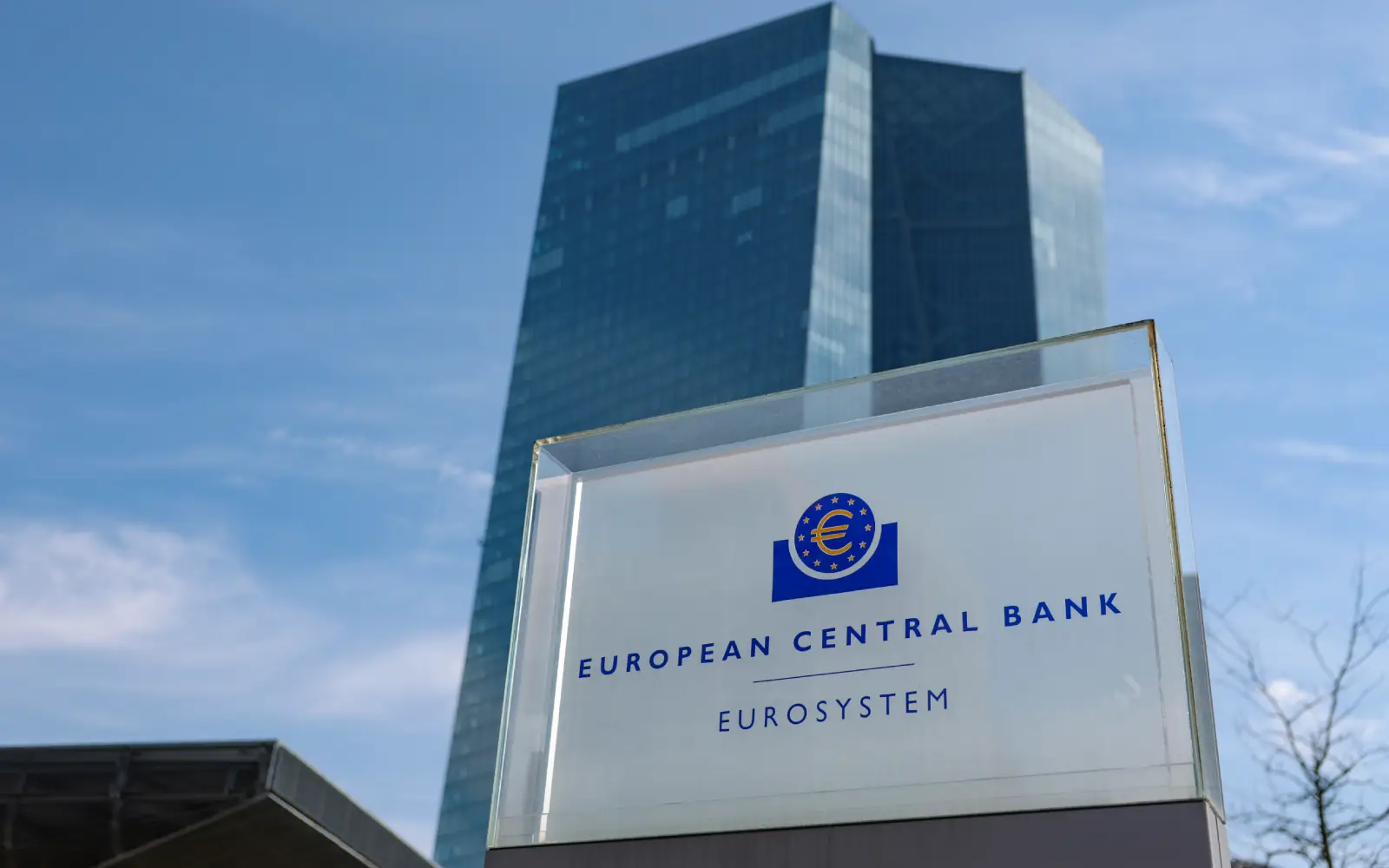
The European Central Bank raised interest rates on Thursday for the second time this year as policymakers responded to renewed inflation pressures driven by soaring energy prices.
The ECB increased its policy rate from 2.25% to 2.50% and warned that inflation could remain elevated for longer than previously expected.
Energy Prices Revive Eurozone Inflation Fears
Fresh tensions across the Middle East have pushed global energy prices sharply higher.
Since late August, attacks involving the United States and Iran on military, shipping and energy infrastructure have contributed to a surge in oil prices. Crude oil has moved back above $100 per barrel, raising concerns about another wave of price increases across the eurozone.
Europe remains heavily dependent on imported energy, making the region particularly vulnerable to higher oil and natural gas prices.
The ECB now expects inflation to return to its 2% target by the end of 2027. However, policymakers warned that this process could take even longer if energy costs remain elevated.
ECB President Christine Lagarde said the economic outlook remains highly uncertain, with inflation risks tilted higher while risks to economic growth remain on the downside.
She also acknowledged that inflation could prove more persistent than previously anticipated.
ECB Inflation Forecasts May Already Be Outdated
Although the ECB raised its inflation projections only slightly, the latest forecasts may not fully reflect the recent surge in energy prices.
The projections were completed before some of the latest moves in oil and natural gas markets.
Oil prices are already trading around levels included in the ECB’s adverse economic scenario. Meanwhile, European natural gas prices have moved even higher, approaching levels associated with a more severe scenario.
This is particularly important because natural gas is widely used for heating across Europe and could contribute to longer-lasting inflation pressures.
Arne Petimezas, director of research at AFS, argued that the ECB’s inflation forecasts for 2026 and 2027 may have to be revised higher if energy prices remain at current levels.
He also suggested that another 25-basis-point rate hike could follow in December.
Markets Increase Bets on Further ECB Rate Hikes
The combination of higher energy prices and persistent inflation has strengthened expectations that the ECB may continue tightening monetary policy.
Investors are now pricing in more than three interest-rate increases over the next 12 months. Before the ECB meeting, markets had expected between two and three hikes.
However, Lagarde stressed that additional rate increases are far from guaranteed.
She said policymakers had not discussed a predetermined path for future interest rates and emphasized that upcoming decisions would depend on economic data.
The ECB’s primary objective remains maintaining price stability across the eurozone.
Economists Shift Toward Another December Hike
Before Thursday’s decision, many economists expected the latest increase to be the ECB’s final move for the time being.
However, the central bank’s more hawkish tone has caused some analysts to revise their forecasts.
Commerzbank economist Jörg Krämer said the bank now expects another 25-basis-point ECB rate hike in December.
Other analysts have reached similar conclusions as inflation risks continue to increase.
Eurozone Growth Outlook Improves
Despite concerns about inflation, the ECB delivered some positive news regarding economic growth.
Lagarde raised growth forecasts for both this year and next, saying that the 21-country eurozone economy has proven more resilient than previously expected.
However, stronger economic activity could also make the ECB’s inflation battle more difficult.
A more resilient economy may support consumer demand, adding further upward pressure to prices and strengthening the case for additional interest-rate increases.
ECB Could Move Into Restrictive Territory
Further rate hikes could eventually push ECB policy into what economists describe as restrictive territory.
At this level, interest rates would actively slow economic activity rather than simply remain neutral.
Sylvain Broyer of S&P Global Ratings said the ECB may need to move into restrictive territory if inflation pressures continue.
He noted that inflation risks have worsened over the summer as supply shocks become more frequent and demand also begins to contribute to higher prices.
ECB May Still Move Gradually
Despite the increasingly hawkish outlook, the ECB may not need to raise rates again immediately.
Several economic indicators still suggest that inflation pressures are not accelerating across the entire economy.
The eurozone labour market remains relatively soft, while underlying inflation declined during the previous month.
Wage growth indicators also remain relatively contained, reducing concerns about a persistent wage-price spiral.
These factors could encourage the ECB to continue raising rates gradually rather than implementing consecutive increases at every meeting.
Some economists therefore expect the central bank to maintain a quarterly tightening schedule.
December Rate Hike Comes Into Focus
Nordea economists Jan von Gerich and Tuuli Koivu continue to expect two additional 25-basis-point rate increases.
Under their baseline scenario, the next ECB rate hike would come in December, followed by another increase in March 2027.
The December meeting could become particularly important because the ECB will also release a fresh set of economic and inflation projections.
For markets, the direction of energy prices and upcoming inflation data will likely play a major role in determining whether the ECB continues tightening monetary policy.