Dollar Hits Weekly High as US-Iran Tensions Drive Safe-Haven Demand
The U.S. dollar strengthened to its highest level in a week against major currencies on Monday, before trimming gains later in the session. Renewed tensions between the United States and Iran, along with fading hopes for a Middle East peace agreement, pushed investors toward safe-haven assets.
Geopolitical Escalation Shakes Market Sentiment
Over the weekend, the United States announced the seizure of an Iranian cargo vessel accused of breaching a blockade. In response, Iran warned of retaliation, raising fears of renewed conflict.
Adding to concerns, Tehran confirmed it would not participate in a second round of negotiations that Washington had hoped to initiate before the current ceasefire expires.
According to Saxo’s chief investment strategist Charu Chanana, the escalation has reintroduced a geopolitical risk premium just as markets were beginning to price in a potential peace outcome. She noted that rising oil prices are not only an energy issue but also have broader implications for economic growth and interest rates.
Currency Markets React to Risk-Off Mood
The euro traded at $1.1757, after touching a one-week low earlier in the session. The British pound slipped 0.11% to $1.3503, while the Australian dollar, often seen as a risk-sensitive currency, declined 0.27% to $0.7148.
The U.S. dollar index, which tracks the currency against a basket of six major peers, hovered around 98.30, near a one-week high and partially recovering from recent losses.
Despite the rebound, the index remains down 1.5% in April, reflecting earlier optimism driven by hopes for a peace agreement. In contrast, it had surged 2.3% in March amid strong safe-haven demand following the outbreak of conflict.
Markets Remain Cautiously Optimistic
Analysts pointed out that currency movements have remained relatively contained, suggesting that markets still hold some optimism about a potential resolution.
Chris Weston, head of research at Pepperstone, stated that while the tone is currently risk-off, market behavior appears orderly rather than signaling a major volatility shock.
He added that investors recognize negotiations are unlikely to follow a straight path and remain vulnerable to sudden shifts in sentiment.
Focus Shifts to the Strait of Hormuz
Attention is now firmly on the Strait of Hormuz, a critical global oil transit route handling roughly 20% of worldwide oil shipments.
Now in its eighth week, the conflict has triggered one of the most significant disruptions to energy supplies in recent history. Both the U.S. and Iran have imposed and adjusted blockades in the region, further tightening supply conditions.
This has led to a sharp increase in oil prices, with Brent crude rising over 5% to $95.53 per barrel, while U.S. West Texas Intermediate climbed more than 6% to $89.08 per barrel.
Market strategist Nick Twidale noted that the situation around the Strait of Hormuz remains the key driver, with hopes for renewed negotiations before the ceasefire deadline appearing increasingly unlikely.
Global Currencies and Central Bank Outlook
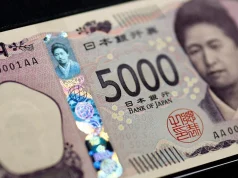
The New Zealand dollar edged slightly lower to $0.5872, while the Japanese yen weakened to 158.96 per dollar, staying below the critical 160 level that could trigger intervention by Japanese authorities.
Investors are also watching the Bank of Japan’s upcoming policy meeting, with Governor Kazuo Ueda signaling a cautious stance. While no immediate rate hike has been confirmed, there are indications that tighter monetary policy could be considered by June.