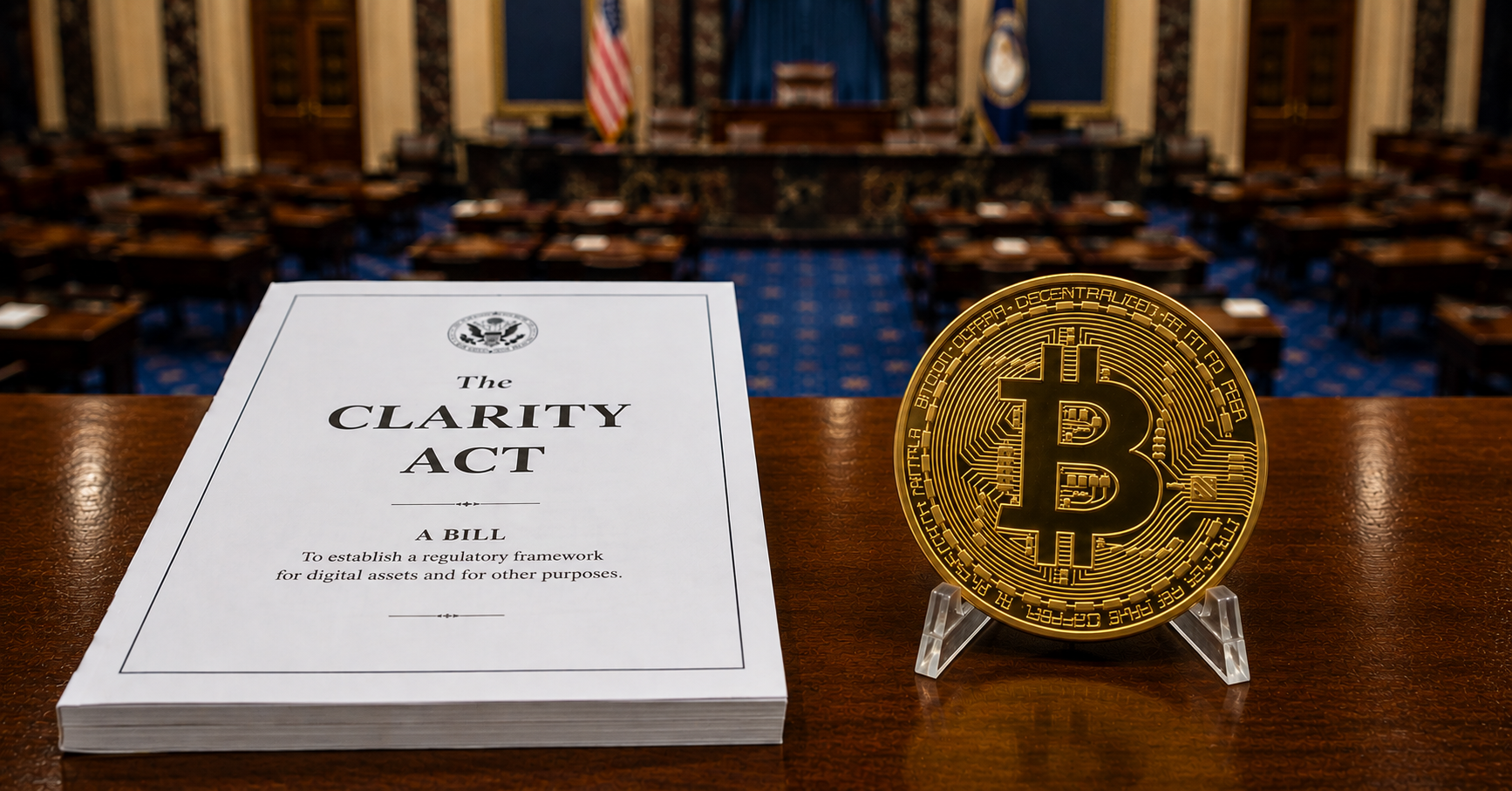
The US Senate has a narrow window to advance the CLARITY Act in 2026. If lawmakers fail to reach an agreement, the crypto market structure bill could be delayed, substantially rewritten, or even abandoned under a future Congress.
With the political balance in Washington potentially changing after the November midterm elections, the outcome of the legislation could have major consequences for the US cryptocurrency industry.
Senate Faces a Tight Deadline for the CLARITY Act
The Senate is preparing to return after lawmakers spent more than a month working in their home states.
Republican Senate Majority Leader John Thune has scheduled a cloture vote on the Digital Asset Market Clarity Act, better known as the CLARITY Act, for Tuesday.
Republicans will need support from several Democratic senators to reach the required 60-vote threshold and overcome a possible filibuster.
If the legislation fails to secure the necessary three-fifths majority, lawmakers will have fewer than 36 legislative business days remaining before the end of 2026.
That leaves relatively little time to negotiate changes, hold additional votes and send a final bill to the president.
A Failed Vote Could Push Crypto Legislation Into 2027
Failure to advance the CLARITY Act this year could dramatically change the political environment surrounding the bill.
A new Congress will take office in 2027, and control of the House or Senate could shift depending on the results of the November midterm elections.
If Democrats gain control of either chamber, the existing bill could face significant revisions. In a more dramatic scenario, lawmakers could abandon the current version and develop an entirely new approach to cryptocurrency market structure.
Senator Cynthia Lummis, one of the strongest congressional supporters of the CLARITY Act, warned on September 6 that lawmakers may not get another serious opportunity to pass similar legislation until 2030 if negotiations collapse.
Lummis is also not seeking reelection in 2026, meaning one of the bill’s most prominent advocates will no longer be in Congress during the next session.
Midterm Elections Could Reshape Crypto Policy
All 435 seats in the House of Representatives and 33 Senate seats are being contested during the 2026 midterm elections.
Prediction markets currently indicate that Democrats have a meaningful chance of regaining control of the House. The race for Senate control appears considerably closer.
The election result could therefore determine which party has greater influence over cryptocurrency legislation beginning in 2027.
Republicans gained control of the Senate after the 2024 elections, giving the party control of the presidency and both chambers of Congress.
That political advantage has helped lawmakers advance legislation viewed favorably by parts of the cryptocurrency industry, including the Guiding and Establishing National Innovation for US Stablecoins Act, commonly known as the GENIUS Act.
If Democrats regain control of Congress, Republicans could find themselves negotiating future cryptocurrency bills largely on Democratic terms.
Crypto Industry Spending Could Influence the 2026 Elections
The cryptocurrency industry has also become increasingly active in US elections.
Crypto-backed political action committees have spent heavily to support candidates viewed as favorable toward digital asset legislation.
One of the most prominent examples occurred during the 2024 election involving former Senate Banking Committee Chair Sherrod Brown.
Brown lost his Ohio Senate seat in a race where crypto-backed PAC Fairshake and other groups spent millions of dollars supporting Republican challenger Bernie Moreno.
Brown has now returned to politics and is running in a special election against Republican Jon Husted to complete the Senate term originally won in 2022 by current Vice President JD Vance.
Coinbase and Ripple-Backed PAC Remains Active
Fairshake, which has received backing from major cryptocurrency companies including Coinbase and Ripple Labs, continues to support congressional candidates considered favorable toward the industry.
Many Democratic and Republican candidates supported by Fairshake-related advertising succeeded in their 2026 primary campaigns.
However, the group’s spending has not always produced its preferred result.
In Illinois, Lieutenant Governor Juliana Stratton won the Democratic Senate primary in March despite facing attack advertisements funded by cryptocurrency industry groups.
Crypto PACs have generally supported incumbents who voted for legislation such as the GENIUS Act or CLARITY Act. Meanwhile, candidates viewed as critical of digital assets have sometimes become targets of negative advertising campaigns.
The growing amount of crypto-related political spending has also attracted criticism from some candidates.
Democratic candidate Jason Poulos, who challenged Representative Jake Auchincloss in Massachusetts’ 4th congressional district primary, criticized the influence of outside cryptocurrency industry money on US politics.
A Fairshake-affiliated political action committee reportedly spent around $189,000 supporting Auchincloss, who had voted in favor of the CLARITY Act.
Poulos argued that large industry-backed political donations could give cryptocurrency companies excessive influence over lawmakers and federal policy.
White House Control Would Remain Unchanged
Even if Democrats capture one or both chambers of Congress in November, control of the White House would not change before January 2029.
That creates another important obstacle for any major rewrite of US cryptocurrency legislation.
A Democratic-controlled Congress could pass its own digital asset bill, but the president would retain the power to veto it.
Overriding a presidential veto would require a two-thirds majority in both the House and Senate, a considerably higher threshold than passing ordinary legislation.
As a result, divided government could make passing comprehensive cryptocurrency legislation even more difficult.
SEC and CFTC Could Act Without Congress
The leadership of two major US financial regulators is also unlikely to change significantly while President Trump remains in office.
The administration nominated Paul Atkins to lead the Securities and Exchange Commission and Michael Selig to head the Commodity Futures Trading Commission.
Both regulators have indicated that they intend to continue developing rules for digital assets even if Congress fails to pass the CLARITY Act.
That means the SEC and CFTC could play an increasingly important role in shaping US crypto regulation if lawmakers remain unable to agree on comprehensive market structure legislation.
What Happens if the CLARITY Act Fails?
The biggest consequence of a failed CLARITY Act vote may be uncertainty.
Rather than receiving a comprehensive federal framework from Congress, cryptocurrency companies could continue operating under a mixture of existing laws, regulatory interpretations and agency-led rulemaking.
A change in congressional control could also result in the legislation being rewritten from the ground up.
For the crypto industry, the remaining months of 2026 may therefore represent one of the most important opportunities to secure a federal market structure framework before the political environment potentially becomes more complicated.