China’s export growth accelerated in August as strong overseas demand for high-tech and artificial intelligence products supported the economy.
The improvement offered Beijing an important source of growth at a time when domestic consumption, investment and the property market remain under pressure.
China’s Exports Jump 25% in August
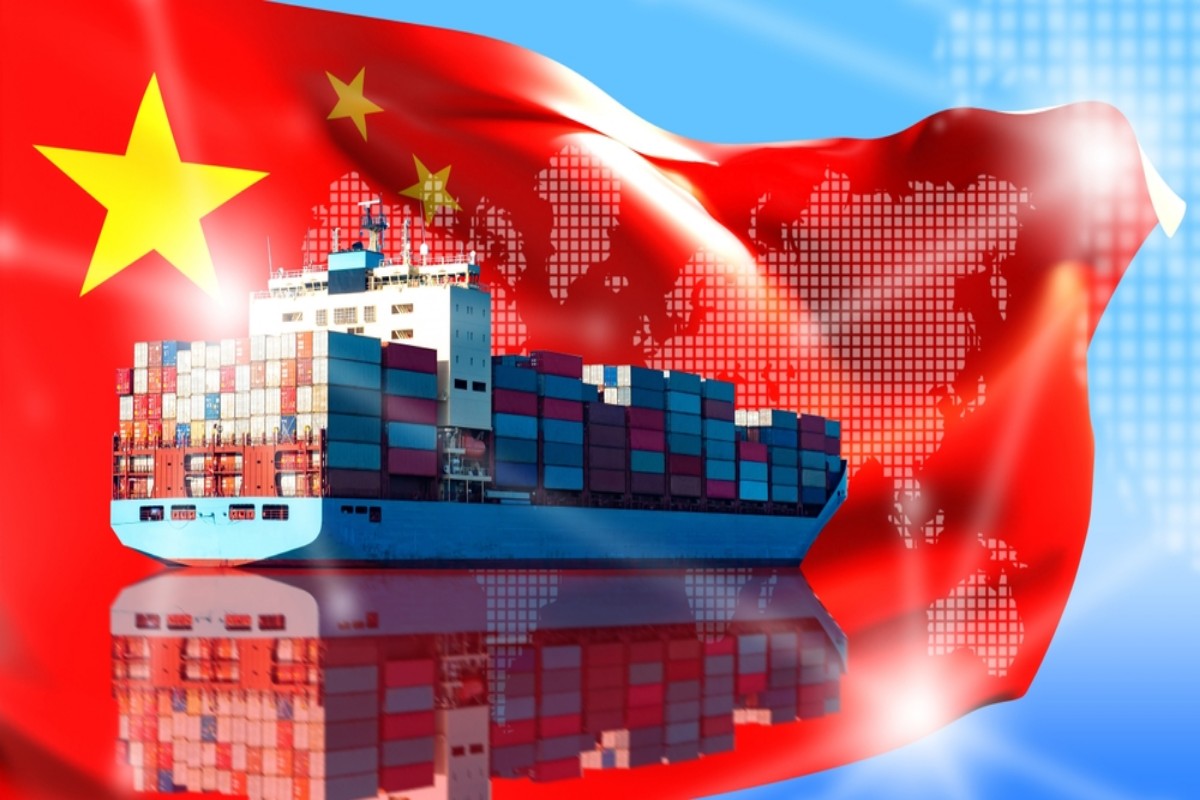
China’s exports rose 25% year-on-year in August in US dollar terms, according to customs data released on Tuesday.
That matched market expectations and marked an acceleration from the 23.9% increase recorded in July.
Imports also climbed sharply, rising 28.2% year-on-year. That compared with growth of 27.5% in July, although it came in slightly below forecasts for a 30% increase.
The figures highlight a widening gap between strong external demand and weaker economic activity inside China.
Beijing is targeting economic growth of between 4.5% and 5% this year, but policymakers continue to face challenges in reviving household spending and private investment.
AI and High-Tech Products Drive Export Growth
China’s technology sector has been one of the main drivers behind the latest export surge.
During the first eight months of the year, exports of high-tech products increased 42.9% in US dollar terms.
Semiconductor export values more than doubled over the same period. However, shipment volumes increased by only 4.1%, suggesting that higher prices played a major role in the rise in export value.
Vehicle exports were also strong, increasing by more than 50% in both value and volume.
Demand for AI-related products, electric vehicles, solar cells and lithium-ion batteries helped offset disruptions caused by adverse weather conditions.
These sectors have become increasingly important to China’s export strategy as the country expands its presence in advanced manufacturing and clean-energy technologies.
Tariff Risks Remain a Major Concern
Despite the strong figures, economists remain cautious about whether China can maintain the current pace of export growth.
Lynn Song, Greater China chief economist at ING, said the key issues to watch are tariff risks and whether the technology investment cycle can continue supporting demand.
Chinese exporters are also facing uncertainty surrounding future US trade policy.
Some companies have been accelerating shipments to the United States to reduce the potential impact of new tariffs or trade restrictions.
China Continues Spending Heavily on Technology
China’s imports also point to continued investment in advanced technology.
Technology-related products remain an important source of import growth as Beijing pushes to strengthen its position in semiconductors, artificial intelligence and other strategic industries.
The country’s race to expand domestic technology capabilities has also supported investor interest in Chinese technology stocks.
Growing demand for AI computing has benefited semiconductor manufacturers and other technology companies involved in memory chips, data centres and advanced computing infrastructure.
However, industries that depend mainly on the domestic Chinese market continue to face softer demand and weak pricing conditions.
China’s Trade Surplus Continues to Expand
China’s trade surplus increased to $119.09 billion in August, up from $112.5 billion in July.
Across the first eight months of the year, the surplus reached $805.51 billion.
If the current pace continues, China’s annual trade surplus could exceed $1 trillion for a second consecutive year.
The country’s trade surplus with the United States also widened.
China recorded a $29.18 billion trade surplus with the US in August, compared with $28 billion in July.
Exports to the United States surged 34.4% year-on-year, significantly stronger than the 17.8% increase in imports from the US.
US-China Trade Relations Remain in Focus
Trade tensions remain an important risk for both economies.
A trade truce agreed between Beijing and Washington late last year has remained in place despite several periods of renewed tension.
The two governments are now reportedly discussing reciprocal tariff reductions covering approximately $30 billion worth of goods from each country.
The talks come ahead of another expected summit later this month.
Meanwhile, both the United States and European Union have urged Beijing to reduce its large trade surpluses.
China’s dependence on exports to absorb excess industrial capacity could expose the country to additional trade restrictions if its surpluses continue to increase.
Rare Earth Exports Rise While Oil Imports Fall
China’s rare earth exports increased on a monthly basis in August.
However, shipment volumes remained below the average monthly level recorded so far this year.
Rare earths are closely watched because they are essential for industries including electric vehicles, defence equipment, electronics and renewable energy.
At the same time, China’s crude oil imports fell 23.4% year-on-year in volume terms.
The decline adds to signs of weaker domestic demand despite strong performance from the export sector.
Markets Show Limited Reaction to China Trade Data
Financial markets showed little immediate reaction to the latest trade figures.
The Chinese yuan remained broadly unchanged, while Chinese stocks posted modest gains.
Investors instead focused on upcoming US inflation data for new clues about the Federal Reserve’s interest-rate outlook.
The USD/CNY exchange rate remained near 6.71 yuan per US dollar following the release.
China Still Relies Heavily on External Demand
China’s strong exports have become increasingly important as other parts of the economy struggle.
Economic growth slowed to 4.3% during the April-to-June period.
More recent economic indicators have also shown weaker momentum.
Industrial production and retail sales slowed at the beginning of the third quarter, while fixed-asset investment declined more sharply during the first seven months of the year.
China’s property market also remains in a prolonged downturn after previously serving as one of the country’s biggest engines of economic growth.
Beijing Increases Fiscal Support
Chinese Premier Li Qiang has called for greater efforts to stabilise foreign demand while acknowledging the challenges facing the domestic economy.
The government has increased fiscal support, including an 800 billion yuan financing programme, worth approximately $119 billion, aimed at supporting infrastructure investment.
However, continued strength in exports reduces pressure on Beijing to introduce much larger economic stimulus measures in the immediate future.
Policymakers may therefore remain cautious about aggressive measures such as major interest-rate cuts.
China’s Economic Outlook Depends on Global Demand
China’s latest trade figures underline how important foreign demand has become to the country’s economic outlook.
Strong exports of AI products, semiconductors, electric vehicles and other advanced technologies are helping offset weakness in domestic consumption and investment.
However, rising trade surpluses, tariff uncertainty and tensions with major trading partners remain significant risks.
For now, resilient exports are providing valuable support to economic growth. The key question is whether global demand for Chinese technology products can remain strong enough to sustain that momentum.