China Industrial Output Beats Expectations in May
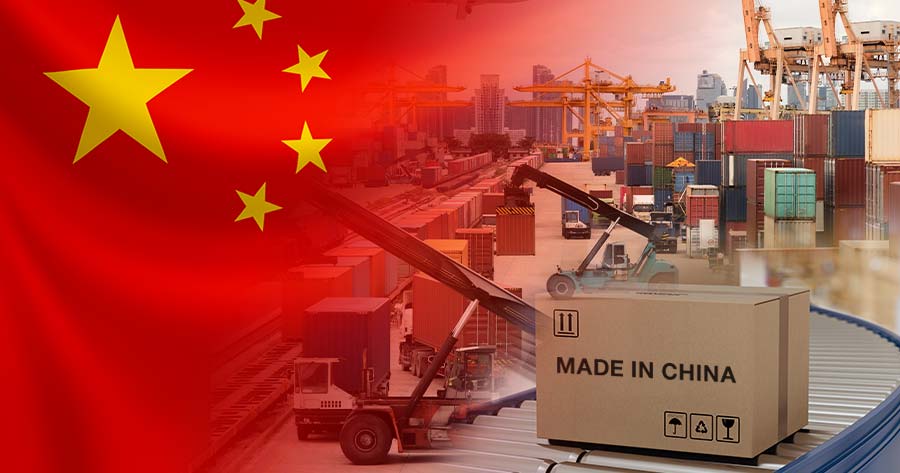
China’s industrial production expanded slightly faster than expected in May, supported by strong demand from overseas buyers.
However, the latest economic data also showed continued weakness in domestic consumption and investment. Retail sales and fixed asset investment both performed worse than economists had forecast.
Industrial Production Growth Accelerates
Industrial production increased by 4.5% compared with the same month last year, according to official government data released on Tuesday.
The result came in slightly above market expectations for 4.4% growth. It also marked an improvement from the 4.1% increase recorded in April.
Strong manufacturing activity was mainly supported by foreign demand. Overseas customers reportedly brought forward export orders because of growing uncertainty surrounding global shipping routes and energy markets.
Export Demand Supports Chinese Factories
Exports have become an increasingly important source of growth for China’s economy in recent years.
Strong overseas orders have helped keep factories active, even as households and businesses remain cautious about spending domestically.
However, the reliance on exports also leaves China vulnerable to weaker global demand, trade restrictions and disruptions across international supply chains.
China Retail Sales Fall More Than Expected
Domestic demand remained under pressure in May, with retail sales declining by 0.6% from a year earlier.
Economists had expected a smaller fall of 0.3%. The latest result also reversed the 0.2% increase reported in the previous month.
The decline suggests Chinese consumers remain reluctant to increase spending despite repeated government efforts to stimulate the economy.
Fixed Asset Investment Records Sharp Decline
Fixed asset investment dropped by 4.1% in May, significantly worse than forecasts for a 2.3% decline.
The indicator measures total spending on long-term assets, including property, infrastructure, equipment and machinery.
The latest fall represented the weakest pace of fixed asset investment since mid-2020. It also pointed to a significant slowdown in domestic capital spending.
Property Crisis Continues to Weigh on Investment
China’s prolonged property market downturn remains one of the main pressures on investment and consumer confidence.
Falling property values, weak housing demand and financial difficulties among developers have reduced spending across several parts of the economy.
The property crisis has weighed heavily on China’s recovery since the COVID-19 pandemic and has limited the impact of Beijing’s stimulus measures.
China’s Economic Recovery Remains Uneven
China’s economy has struggled to regain strong and consistent momentum over the past six years.
Government support has helped stabilize some areas of activity, but household consumption and private investment remain weak.
For now, exports and industrial production continue to drive much of China’s economic growth. However, the weakness in retail sales and fixed asset investment suggests the broader recovery remains uneven.