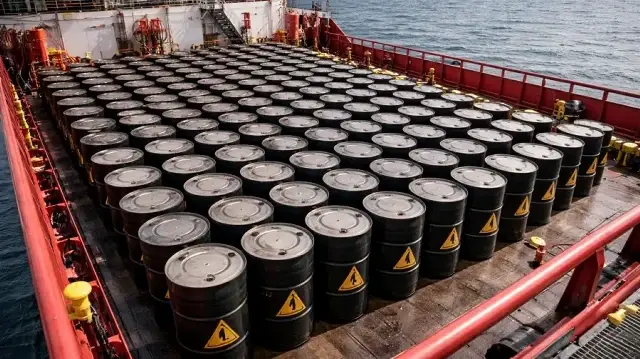
Brent Oil Prices Rise as New U.S.-Iran Strikes Increase Middle East Tensions
Brent crude oil prices moved higher on Tuesday, as renewed military action between the United States and Iran reduced optimism over a possible agreement to reopen the Strait of Hormuz, one of the world’s most important oil shipping routes.
Growing geopolitical uncertainty has once again raised concerns about global energy supplies, supporting oil prices after recent declines.
Brent crude futures for July delivery climbed 3.4% to $99.45 per barrel, recovering part of Monday’s nearly 3% drop. Before the conflict began, Brent oil was trading near $70 per barrel.
Meanwhile, U.S. West Texas Intermediate (WTI) crude traded at $92.85 per barrel.
Fresh Military Action Raises Concerns Over Oil Supply Disruptions
According to reports, the U.S. military launched defensive strikes in southern Iran, targeting vessels linked to the Islamic Revolutionary Guard Corps (IRGC) that were allegedly attempting to place mines in the Strait of Hormuz.
The attacks reportedly resulted in retaliation from Iran, which launched missiles toward U.S. aircraft. Additional U.S. strikes later targeted missile launch sites near Bandar Abbas, according to reports citing American officials.
The escalation renewed fears that tensions could further disrupt shipping through the Strait of Hormuz — a route responsible for transporting roughly 20% of global oil supplies.
Hopes for a Hormuz Deal Have Weakened
Recent optimism had emerged after reports suggested the United States and Iran were making progress toward a framework agreement aimed at ending the conflict and reopening the Strait of Hormuz.
The waterway has remained heavily restricted since the start of the joint U.S. and Israeli military campaign against Iran in late February, creating significant concerns around energy markets.
However, the latest exchange of military actions has tempered expectations that a peace agreement could be reached quickly.
Marco Rubio Says Agreement Could Still Take Time
Following the latest developments, U.S. Secretary of State Marco Rubio stated that the Strait of Hormuz would reopen “one way or another.”
However, he also cautioned that negotiations with Iran could require several additional days before any agreement is finalized.
The comments highlight the uncertainty still surrounding diplomatic efforts and the future direction of oil prices.
Deutsche Bank Sees Continued Optimism Despite Setbacks
Analysts at Deutsche Bank noted that investors remain cautiously optimistic that an agreement to end the conflict may eventually emerge.
The bank said recent market sentiment suggests expectations for progress have been building, despite repeated setbacks.
According to Deutsche Bank, the path toward peace has often appeared inconsistent, with periods of progress followed by renewed tensions.
Even so, analysts pointed out that Brent crude continues to trade below levels seen before the latest optimism surrounding negotiations, indicating markets still believe a diplomatic resolution remains possible.
Oil Markets Remain Highly Sensitive to Geopolitical Headlines
Oil prices are likely to remain volatile as investors closely monitor developments involving Iran, the United States and the Strait of Hormuz.
Any progress toward reopening the strategic shipping route could ease supply concerns and pressure oil prices lower, while further military escalation may continue supporting crude markets.