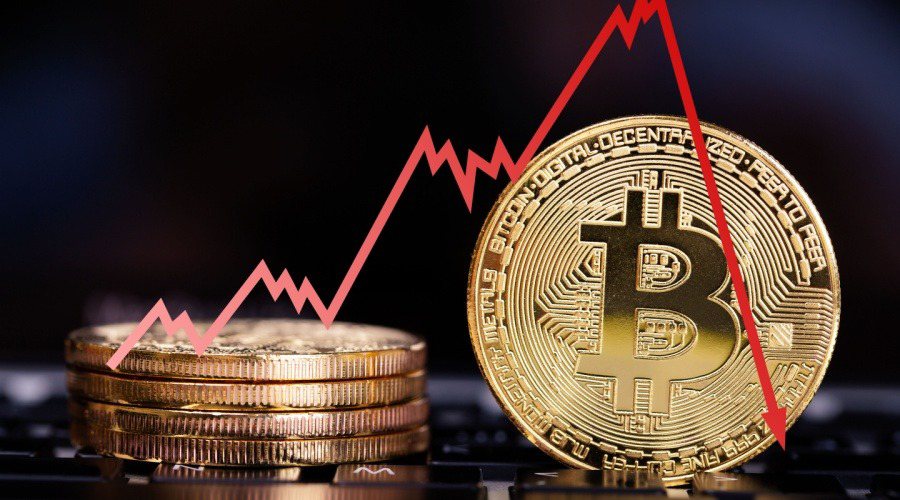
Bitcoin moved lower on Friday as weakness spread across risk-sensitive markets.
Persistent tensions between the United States and Iran, combined with renewed concerns about higher interest rates, reduced investor appetite for cryptocurrencies.
The decline erased much of Bitcoin’s brief recovery earlier in the week and pushed the world’s largest cryptocurrency back into negative territory over the past seven days.
Bitcoin Price Drops Below $63,000
Bitcoin fell 2.8% to approximately $62,924.80 by 02:32 ET.
The cryptocurrency was heading for a weekly loss of around 1.4% as its latest rebound lost momentum.
Investors initially reacted positively to softer US inflation data. However, cautious comments from Federal Reserve officials quickly revived concerns that borrowing costs could remain high or even increase further.
Federal Reserve Comments Pressure Crypto
Several Federal Reserve policymakers maintained a hawkish stance on monetary policy.
Dallas Fed President Lorie Logan said interest rates may need to move higher to ensure inflation returns to the central bank’s target.
Her remarks followed a similar warning from Federal Reserve Governor Christopher Waller, who also highlighted the risk of persistent inflation.
Fed Chair Kevin Warsh repeated the central bank’s commitment to returning annual inflation to its 2% target. However, he did not provide specific guidance about the policy steps officials may take.
Higher Interest Rates Weigh on Bitcoin
Higher interest rates generally create difficult conditions for speculative assets such as Bitcoin.
When government bonds and cash offer more attractive yields, investors may become less willing to hold assets that do not generate income.
This increases the opportunity cost of investing in cryptocurrencies and can reduce demand across the digital asset market.
Bitcoin has struggled since the US-Iran conflict began in February. The cryptocurrency was also down approximately 28% since the beginning of 2026.
Iran Conflict Pushes Oil Prices Higher
Renewed military action between the United States and Iran added to market uncertainty during the week.
The conflict surrounding the Strait of Hormuz helped drive oil prices sharply higher and increased fears that energy costs could keep inflation elevated.
Iran also warned that it could disrupt other important shipping routes across the Middle East.
Such a move would broaden the conflict and could place additional pressure on global trade, energy supplies and consumer prices.
Bitcoin ETF Flows Turn Negative
US spot Bitcoin exchange-traded funds were heading for moderate net outflows during the week.
Data from SoSoValue indicated that the funds were on course to record approximately $56.6 million in outflows.
This followed an inflow of about $197.4 million during the previous week, which had ended an eight-week period of heavy withdrawals.
The renewed outflows suggested that institutional demand remained cautious as investors assessed interest-rate risks and geopolitical uncertainty.
Ether and Major Altcoins Decline
The wider cryptocurrency market also moved lower on Friday.
Ether, the world’s second-largest cryptocurrency, dropped 4.7% to approximately $1,831.68.
XRP declined 1.7% to around $1.0869.
Solana fell 3.6%, while Cardano lost 2.5%. BNB declined by approximately 2.3%.
Memecoins Follow Crypto Market Lower
Memecoins also came under selling pressure.
Dogecoin and the $TRUMP token each declined by roughly 2%.
The broad losses showed that risk aversion was affecting nearly every part of the cryptocurrency market, rather than Bitcoin alone.
Bitcoin Outlook Depends on Rates and Geopolitics
Bitcoin’s near-term direction may depend heavily on Federal Reserve policy expectations and developments in the US-Iran conflict.
A further rise in oil prices could strengthen inflation concerns and increase pressure on the central bank to maintain restrictive monetary policy.
On the other hand, easing geopolitical tensions or clearer signs of lower inflation could improve demand for Bitcoin and other risk assets.
For now, the break below $63,000 highlights the fragile state of the cryptocurrency market as investors respond to rising rates, ETF outflows and worsening geopolitical risks.