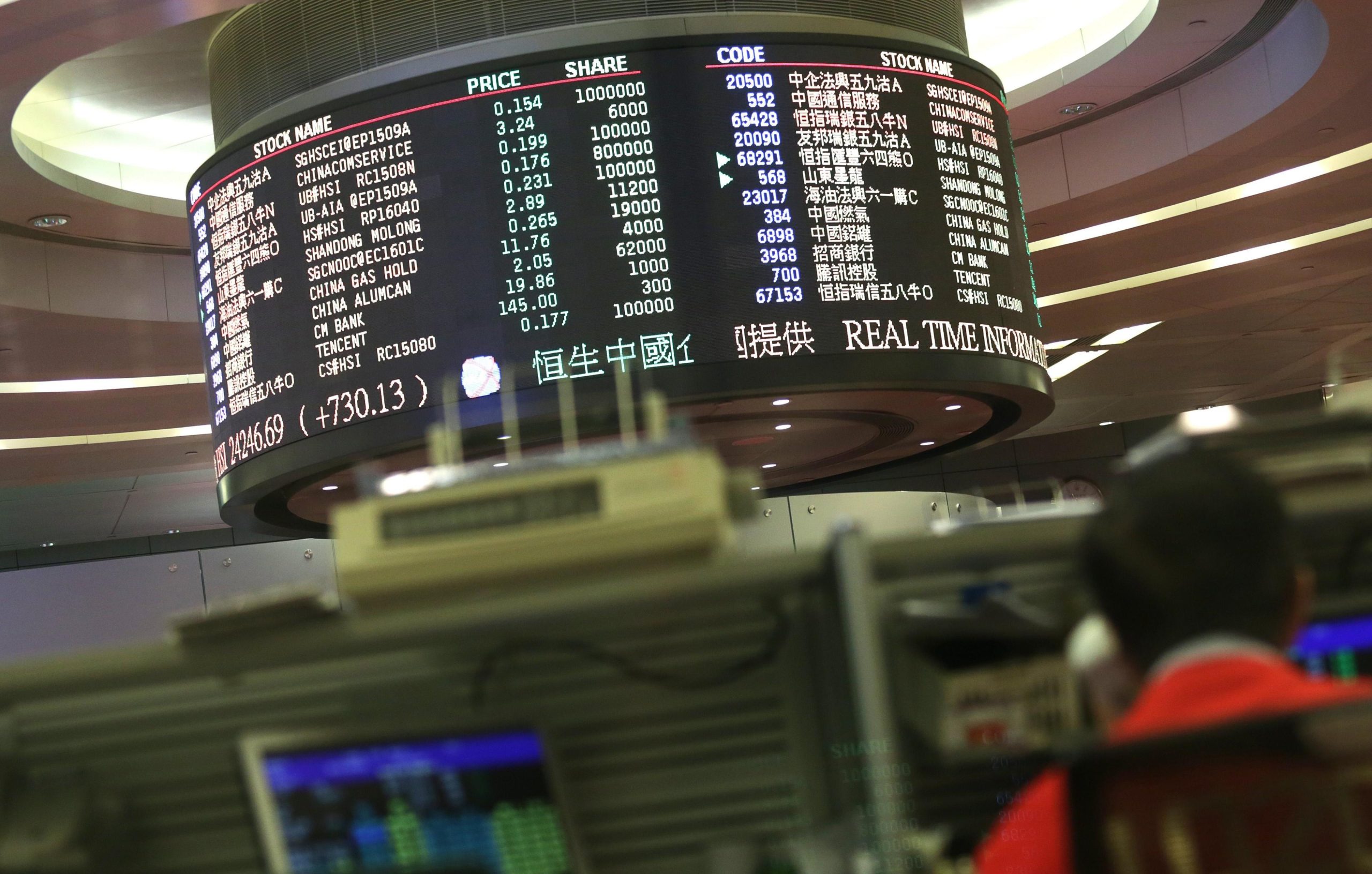
Asian stock markets recovered much of their earlier losses on Wednesday, November 4, 2026, as investors reacted to the US midterm election results and growing clarity over the political landscape in Washington.
The Democratic Party’s victory in both chambers of Congress initially triggered concerns about potential changes to technology regulation, artificial intelligence investment and US fiscal policy.
However, Asian stocks staged a significant intraday recovery, with several major indexes rebounding from steep declines as election-related uncertainty began to ease.
US stock futures also recovered from earlier losses, suggesting that investors were reassessing the potential economic consequences of a divided government.
Asian Stocks Recover as US Election Uncertainty Eases
Asian financial markets experienced considerable volatility following the US midterm elections.
Initial election results showed Democrats making substantial gains against President Donald Trump’s Republican Party, eventually securing control of both the House of Representatives and Senate.
The outcome raised concerns that the administration could face greater resistance when pursuing its economic and regulatory agenda.
Investors were particularly worried about potential restrictions on artificial intelligence development and data center construction.
However, as the election results became clearer, financial markets began recovering from their earlier declines.
Some investors viewed the political outcome as removing an important source of uncertainty that had weighed on market sentiment ahead of the vote.
Nevertheless, the prospect of legislative gridlock in Washington remains a concern for businesses and financial markets.
Japan’s Nikkei Falls as South Korea’s KOSPI Rebounds
Japan and South Korea experienced some of the sharpest market movements during Wednesday’s trading session.
Japan’s Nikkei 225 closed 1.4% lower, recovering from an earlier decline of nearly 5%.
The broader TOPIX index also ended the session in negative territory, falling approximately 0.9%.
Technology companies were among the hardest-hit stocks as investors continued questioning elevated valuations and the profitability of large-scale AI investment.
Meanwhile, South Korea’s KOSPI delivered a particularly strong recovery.
The benchmark index initially plunged as much as 4% before reversing its losses and closing approximately 0.6% higher.
Major semiconductor manufacturers Samsung Electronics and SK Hynix recovered much of their earlier declines.
The rebound highlighted renewed buying interest in technology shares despite ongoing uncertainty surrounding artificial intelligence spending.
However, investors remain cautious about whether the industry’s rapid expansion can generate sufficient returns to justify its substantial capital requirements.
AI Regulation Concerns Weigh on Technology Stocks
Artificial intelligence investment remained a central concern for Asian stock markets following the US election results.
Democratic control of Congress could introduce additional regulatory scrutiny of technology companies and large-scale data center projects.
Investors are assessing whether new oversight measures could affect infrastructure development, energy consumption and the expansion of AI computing capacity.
Asian semiconductor manufacturers are particularly sensitive to these developments because they supply essential components to major US technology companies.
Any slowdown in American AI infrastructure investment could affect demand for advanced chips, memory products and related equipment.
However, significant regulatory changes are not guaranteed.
President Trump retains veto power, while major legislation could face substantial political obstacles.
Consequently, the final impact on technology companies will depend on future negotiations between the administration and Congress.
AMD Earnings Provide Support for Semiconductor Sentiment
Strong quarterly earnings from Advanced Micro Devices offered a more encouraging signal for the technology industry.
The US semiconductor company reported third-quarter revenue of $13.38 billion, representing annual growth of 45%.
AMD also projected approximately $17 billion in revenue for the fourth quarter, reflecting continued demand for artificial intelligence processors and data center equipment.
The results exceeded market expectations and highlighted the ongoing expansion of AI infrastructure investment.
For Asian semiconductor companies, AMD’s performance provided evidence that demand for advanced computing hardware remains strong.
Nevertheless, investors continue evaluating whether elevated AI spending across major technology businesses can remain sustainable over the longer term.
Singapore Stocks Approach Correction Territory
Singapore’s stock market also faced selling pressure during Wednesday’s trading.
The Straits Times Index briefly traded near 5,193 points, approximately 11% below its September record high of 5,828.5.
A decline of at least 10% from a recent peak is commonly described as a market correction.
However, the index recovered from its intraday low, making its closing performance important when assessing whether the market had entered correction territory on a sustained basis.
Weakness in banking stocks and other major index constituents contributed to the decline.
The selling pressure also reflected broader concerns about global economic conditions and investor appetite for equities.
Despite the uncertainty, several other Asian markets recorded gains.
Chinese Stocks Rally as Hong Kong Markets Strengthen
Mainland Chinese equities outperformed several regional markets as buying activity returned.
The Shanghai Composite Index and the blue-chip CSI 300 both gained approximately 2% during the reported session.
Meanwhile, Hong Kong’s Hang Seng Index advanced around 1.5%.
The gains contrasted with the weakness observed in Japan and Australia, suggesting that investors were responding to different regional economic and policy developments.
Chinese equities also benefited from domestic efforts to support financial markets and encourage investment.
In Australia, the S&P/ASX 200 declined approximately 0.6%, reflecting continued pressure on local equities.
India’s Nifty 50 was comparatively stable, trading around 0.1% higher during the report’s market snapshot.
Overall, the mixed performance demonstrated that Asian stock markets remained sensitive to both international political developments and domestic economic conditions.
China’s Services PMI Slows to Three-Month Low
Fresh economic data from China provided additional insight into the country’s economic outlook.
The RatingDog China Services Purchasing Managers’ Index declined to 50.8 in October from 51.6 in September.
The reading represented the slowest expansion in three months.
Although the index remained above the 50-point threshold separating growth from contraction, the decline indicated weaker momentum in the services sector.
Slower business activity raised concerns about the strength of domestic demand and the sustainability of China’s economic recovery.
Nevertheless, the services industry continued expanding, suggesting that economic conditions remained broadly positive despite the moderation.
Investors will monitor upcoming Chinese economic indicators for further evidence of changes in consumer spending and business activity.
US-Iran Peace Talks Add to Market Volatility
Geopolitical developments also influenced investor sentiment across Asian markets.
Washington and Tehran continued reviewing proposals from international mediators aimed at resolving their differences and preventing renewed large-scale military confrontation.
The diplomatic discussions followed a period of heightened tensions that had disrupted global energy markets.
Oil prices remained volatile as traders weighed the possibility of a negotiated settlement against the risk of further military escalation.
A successful agreement could reduce concerns about energy supply disruptions and potentially ease inflationary pressures.
However, renewed hostilities could push oil prices higher and create additional uncertainty for global financial markets.
These developments are particularly important for Asian economies that depend heavily on imported energy.
Asian Stock Market Outlook: Can the Recovery Continue?
The latest trading session demonstrated the resilience of several Asian stock markets following an initial wave of election-related selling.
South Korea’s KOSPI staged a strong recovery, while Chinese and Hong Kong equities recorded notable gains.
However, Japanese and Australian stocks remained under pressure, reflecting persistent concerns about technology valuations and global economic conditions.
The political landscape in Washington could continue influencing investor sentiment as markets evaluate the implications of Democratic control of Congress.
At the same time, strong corporate earnings from companies such as AMD suggest that demand for artificial intelligence infrastructure remains an important source of growth.
Looking ahead, investors will focus on US economic data, Federal Reserve monetary policy, corporate earnings and developments in the Middle East.
For now, Asian stocks have recovered from their sharpest declines, but uncertainty surrounding AI investment, US economic policy and geopolitical risks could continue driving market volatility.