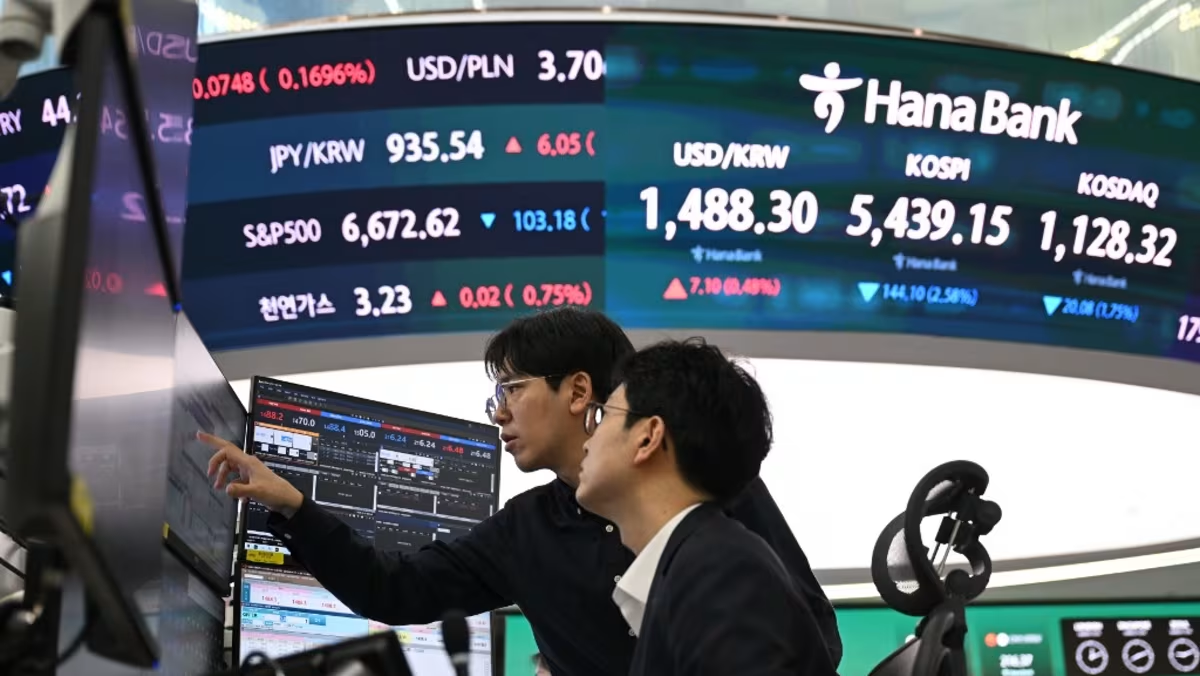
Asian stocks fell sharply on Friday as investors sold technology and semiconductor shares across the region.
South Korea’s benchmark index briefly triggered a circuit breaker for the second time during the week. Meanwhile, Apple’s warning about higher AI-related hardware costs added to concerns about technology spending and consumer demand.
Wall Street Weakness Pressures Asian Stocks
The regional decline followed a weak lead from Wall Street.
The Nasdaq 100 failed to hold gains inspired by Micron Technology’s strong earnings after Apple shares dropped more than 6%.
Nasdaq 100 futures subsequently fell around 1.2%, while S&P 500 futures declined 0.6%.
Investors continued reducing their exposure to technology stocks ahead of the end of the quarter.
KOSPI Triggers Another Circuit Breaker
South Korea’s KOSPI fell more than 8% on Friday, triggering a 20-minute circuit breaker.
It was the second such trading halt during the week and the fifth imposed by the Korea Exchange this year.
The repeated restrictions highlighted the severity of the sell-off and the extreme volatility affecting South Korean technology stocks.
The KOSPI was heading toward a weekly loss of almost 10%.
Samsung and SK Hynix Lead Chip Sell-Off
Samsung Electronics fell 7.4%, while SK Hynix dropped 8.7%. Both companies were among the biggest contributors to the KOSPI’s decline.
Investors took profits in the two semiconductor companies following their AI-driven gains during the previous session.
Local media also reported that Samsung and SK Hynix were preparing major long-term increases in semiconductor investment.
The reports raised concerns about the rising cost of expanding production capacity to meet demand from the artificial intelligence industry.
Apple Price Increases Weaken AI Sentiment
Micron’s strong earnings had initially supported optimism about AI-driven demand for memory chips.
However, sentiment quickly changed after Apple raised prices across several Mac and iPad products.
The company reportedly blamed rising memory and storage expenses for the increases.
Apple’s decision highlighted how the AI infrastructure boom is raising component costs for consumer electronics manufacturers.
Investors are concerned that higher device prices could weaken demand and reduce spending across the wider technology market.
OpenAI IPO Report Adds to Market Pressure
Reports that OpenAI may postpone its initial public offering until 2027 also affected AI-related stocks.
The possible delay raised fresh questions about investor demand for highly valued artificial intelligence companies.
Concerns about OpenAI’s listing added to the pressure on semiconductor and technology shares that had previously benefited from enthusiasm surrounding AI.
Nikkei Falls as Japanese Tech Stocks Retreat
Japan’s Nikkei 225 declined by more than 4% as major technology stocks extended their losses.
The index had attempted to recover during the previous session, but the rebound failed to continue.
SoftBank reversed an earlier decline and traded around 0.8% higher. The stock had initially fallen following reports of a possible delay to OpenAI’s IPO.
Tokyo Inflation Supports BOJ Rate Expectations
Japanese inflation data also remained in focus.
Tokyo core consumer inflation rose by 1.6% year-on-year in June. A separate measure excluding fresh food and energy accelerated to 1.1% from 0.7%.
The figures showed that underlying price pressures were continuing.
As a result, investors maintained expectations that the Bank of Japan could introduce additional interest-rate increases.
Chinese and Hong Kong Stocks Decline
Losses spread to other major Asian markets.
Hong Kong’s Hang Seng Index dropped 1.6%, while China’s CSI 300 fell 2.4%. The Shanghai Composite declined by 1.6%.
The broader MSCI Asia ex-Japan Index lost nearly 2.9%, reflecting widespread weakness across the region.
Other Asian Markets Trade Lower
Australia’s S&P/ASX 200 remained largely unchanged.
Singapore’s Straits Times Index fell 1%, while Indonesia’s Jakarta Composite dropped 2.7%.
Thailand’s SET Index reversed earlier gains and declined 1.1%.
Indian stock markets were closed for the Muharram holiday.
Fed Outlook and Oil Prices Remain in Focus
Investors also assessed a mixed U.S. personal consumption expenditures inflation report.
The data provided some signs that expectations for aggressive Federal Reserve tightening may be easing. However, uncertainty surrounding U.S. interest rates remained a source of market volatility.
Qualcomm’s positive long-term AI revenue forecast offered limited support to sentiment.
Meanwhile, Brent crude traded below $75 per barrel, suggesting that concerns about Middle East supply disruptions were continuing to ease.
Asian Technology Outlook Remains Volatile
Asian technology stocks could remain under pressure as investors reassess the costs and benefits of the AI investment boom.
Strong semiconductor demand continues to support chipmakers. However, rising production and component expenses are creating new risks for consumer electronics companies.
The outlook will depend on AI spending, corporate investment plans, consumer demand and future signals from global central banks.