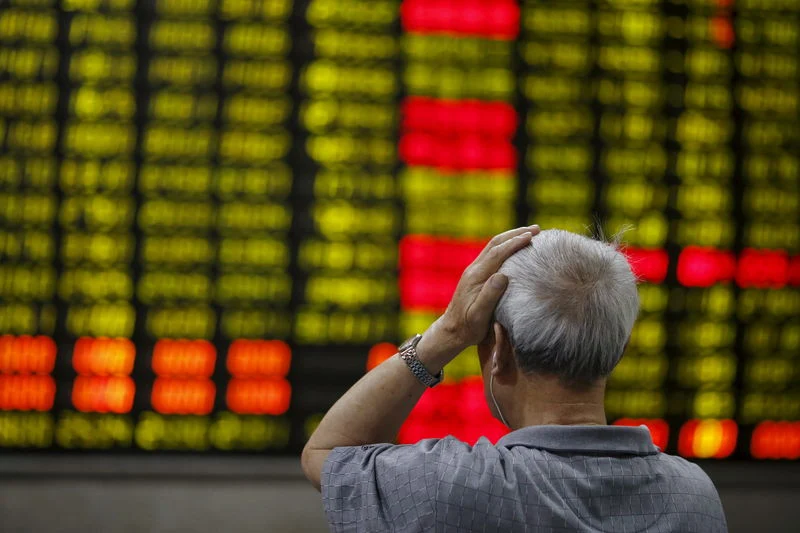
Asian stocks suffered heavy losses on Friday as a global selloff in artificial intelligence and semiconductor companies spread across regional markets. Japan and South Korea experienced the sharpest declines, reflecting growing investor concerns about AI investment spending, technology valuations, and the impact of the US midterm elections.
The downturn followed a dramatic session on Wall Street, where major US stock indexes recorded their steepest daily losses in more than a year.
The S&P 500 dropped 4.4%, while the technology-heavy Nasdaq Composite plunged 5.5%. Meanwhile, the Dow Jones Industrial Average declined 3.4%, and the Philadelphia Semiconductor Index suffered a substantial 12.3% loss.
Despite the widespread selling, US stock futures showed mixed performance during Friday’s Asian session. Nasdaq 100 futures moved higher in early trading.
South Korea’s KOSPI Plunges as Semiconductor Stocks Collapse
South Korea’s stock market experienced severe volatility as investors aggressively reduced their exposure to technology shares.
The benchmark KOSPI index closed approximately 6% lower after plunging as much as 8.8% during the session, reaching 4,911.28 points, its lowest level since early February.
The rapid decline triggered an automatic circuit breaker after the index fell 8%.
The Korea Exchange temporarily suspended stock and derivatives trading for 20 minutes to limit market instability.
Major semiconductor manufacturers were among the hardest-hit companies.
Samsung Electronics shares declined 6.4%, while memory chip producer SK Hynix plunged 10.4%.
The substantial losses reflected mounting concerns about the outlook for artificial intelligence demand and the sustainability of elevated semiconductor stock valuations.
Japan’s Nikkei Enters Bear Market After 6% Decline
Japan’s stock market also suffered a sharp downturn as technology-related selling intensified.
The Nikkei 225 closed approximately 6% lower, pushing the benchmark more than 20% below its record high reached in June.
The decline placed the index in technical bear market territory, a condition generally defined as a drop of at least 20% from a recent peak.
Japan’s broader TOPIX index also fell nearly 6%, highlighting the widespread nature of the market selloff.
Semiconductor equipment manufacturer Advantest, memory chip producer Kioxia Holdings, and technology investment company SoftBank Group were among the major stocks facing heavy selling pressure.
The latest losses extended Thursday’s technology rout, when Advantest plunged 15%, Lasertec declined 14%, and Kioxia dropped 13%.
The consecutive declines demonstrated how quickly investor sentiment has deteriorated toward companies closely connected to the artificial intelligence industry.
Wall Street AI Selloff Fuels Asian Market Weakness
The sharp decline in Asian stocks followed significant losses across US technology markets.
Investors have become increasingly concerned about whether the enormous amounts being invested in artificial intelligence infrastructure will generate sufficient financial returns.
Semiconductor manufacturers have benefited from strong demand for advanced processors used in AI applications. However, elevated stock valuations have made the sector particularly vulnerable to changes in growth expectations.
Additional pressure emerged after US chipmaker Qualcomm reported smartphone chip sales that fell short of analyst forecasts.
Qualcomm shares dropped nearly 10% overnight, adding to the negative sentiment surrounding semiconductor companies.
The disappointing results reinforced concerns about the profitability and growth outlook of the broader technology sector.
As a result, selling pressure spread from Wall Street to major Asian markets with substantial exposure to semiconductor manufacturing and AI-related businesses.
US Midterm Elections Raise Concerns About AI Regulation
Political uncertainty following the US midterm elections has added another challenge for technology investors.
Democratic gains in Congress have raised expectations that lawmakers could introduce stricter oversight of artificial intelligence infrastructure projects.
In particular, investors are monitoring potential regulatory changes affecting the construction and expansion of large data centers.
Some Democratic candidates campaigned against major data center developments, citing concerns about their impact on local communities and infrastructure.
A more restrictive regulatory environment could potentially slow the pace of new construction and affect future demand for semiconductor equipment.
Although no specific regulatory changes have been confirmed, the uncertainty has contributed to weaker investor confidence in AI-related companies.
Taiwan Stocks Slide as TSMC Faces Selling Pressure
Taiwan’s technology-heavy stock market also declined sharply as the regional semiconductor selloff continued.
The Taiwan Weighted Index dropped approximately 4.5%, reflecting widespread weakness among technology manufacturers.
Taiwan Semiconductor Manufacturing Company (TSMC), the world’s largest contract chipmaker, fell 4.8%.
TSMC plays a critical role in manufacturing advanced processors for major global technology companies, including developers of artificial intelligence systems.
Its decline highlighted the extent to which concerns about AI infrastructure spending have affected semiconductor companies throughout Asia.
The selling pressure also reflected broader investor efforts to reduce exposure to technology stocks following the sharp downturn in US markets.
China, Hong Kong and Singapore Stocks Extend Regional Declines
Stock market weakness extended across several other major Asian financial centers.
China’s Shanghai Composite Index fell 1.1%, while the blue-chip CSI 300 declined approximately 1.4%.
Hong Kong’s Hang Seng Index also dropped 1.2% as investors reacted to deteriorating regional sentiment.
Singapore’s Straits Times Index recorded a steeper decline of 2.8%, while Australia’s S&P/ASX 200 slipped 0.5%.
However, not every major Asian market moved lower.
India’s Nifty 50 managed to rise 0.5%, outperforming several regional benchmarks despite the broader uncertainty.
The mixed performance demonstrated how differences in technology exposure and domestic market conditions influenced investor reactions.
Oil Prices Rebound Amid Iran Conflict Uncertainty
Energy markets showed a different trend during Friday’s Asian trading session.
Oil prices extended their recovery following substantial losses earlier in the week, as investors reassessed the geopolitical outlook after the US midterm elections.
The Democratic Party’s election gains initially encouraged expectations that increased political pressure could accelerate diplomatic efforts to resolve the conflict involving the United States, Israel, and Iran.
However, uncertainty surrounding President Donald Trump’s next steps toward Iran continued to influence energy prices.
While oil markets remained focused on geopolitical developments and potential supply disruptions, equity investors increasingly concentrated on the outlook for artificial intelligence spending and semiconductor earnings.
Asian Stock Market Outlook Remains Uncertain
The latest Asian stock market selloff highlights the growing influence of artificial intelligence investment expectations on global financial markets.
Japan and South Korea have been particularly vulnerable because of their significant exposure to semiconductor manufacturers and technology companies.
The sharp declines in the Nikkei and KOSPI also demonstrate how quickly institutional selling can spread across international equity markets.
Looking ahead, investors will closely monitor US technology stock performance, semiconductor earnings, artificial intelligence infrastructure spending, and potential regulatory developments following the midterm elections.
Although some markets have shown signs of stabilization, uncertainty surrounding AI valuations and future investment returns could keep Asian stocks volatile in the near term.