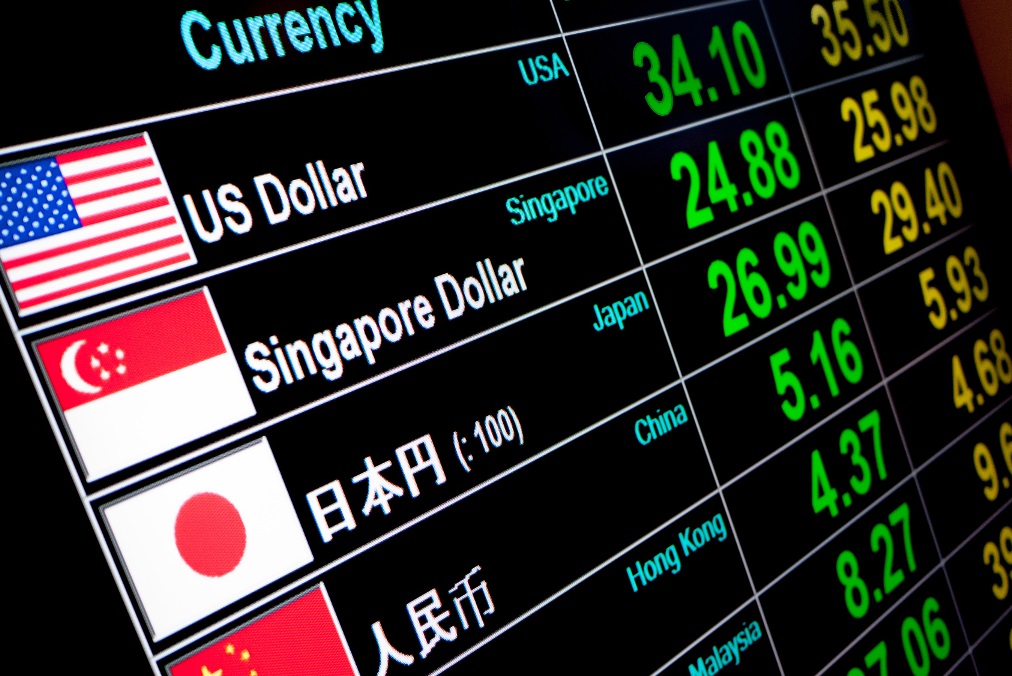
Asian currencies strengthened against the US dollar on Wednesday, November 4, 2026, as investors reacted to the US midterm election results and growing uncertainty surrounding American economic policy.
The US Dollar Index declined 0.5% to 101.34, allowing several major Asian currencies to recover. However, the Chinese yuan moved in the opposite direction after the People’s Bank of China announced measures to slow its recent appreciation.
Meanwhile, the Australian dollar remained under pressure despite another interest rate increase by the Reserve Bank of Australia.
Political developments in Washington, central bank decisions and geopolitical tensions continued to influence the foreign exchange market.
Asian Currencies Gain as US Dollar Weakens
Most Asian currencies advanced during Wednesday’s trading session as the dollar retreated from its recent highs.
The South Korean won strengthened approximately 0.5% to 1,337.98 per dollar, extending its recent gains.
Similarly, the Singapore dollar appreciated 0.1%, pushing the USD/SGD exchange rate down to 1.2795.
The Japanese yen also recorded a notable increase, gaining 0.7% against the greenback. The USD/JPY pair declined to approximately 157.64.
Meanwhile, the New Zealand dollar edged higher to $0.5598.
European currencies benefited from the broader dollar weakness. The euro climbed 0.5% to $1.1251, while the British pound advanced 0.4% to $1.3470.
However, the Australian dollar slipped slightly to $0.6964, reflecting uncertainty surrounding the country’s monetary policy outlook.
The movements demonstrated how political developments and changing interest rate expectations can influence global currency markets.
Australian Dollar Struggles Despite RBA Interest Rate Hike
The Australian dollar remained near a two-week low after the Reserve Bank of Australia increased its benchmark interest rate.
The central bank raised its cash rate by 25 basis points to 4.85%, its highest level in approximately 18 years.
The decision marked the fifth rate increase of 2026 as policymakers continued efforts to control inflation.
However, the vote revealed significant disagreement among officials.
Six members supported the increase, while three preferred leaving interest rates unchanged.
The division suggested that policymakers were becoming less united about the need for further monetary tightening.
Consequently, investors began considering whether Australia’s interest rate hiking cycle could be approaching its conclusion.
Expectations of fewer future rate increases limited support for the Australian dollar, despite the latest policy adjustment.
US Dollar Retreats Following Midterm Election Results
The US dollar had previously benefited from stronger economic data, rising Treasury yields and renewed investor interest in artificial intelligence-related stocks.
The currency recently approached its highest level of 2026 as expectations for additional Federal Reserve interest rate increases strengthened.
Economic indicators provided support for that outlook.
US manufacturing activity expanded at its fastest pace since 2021, while September job openings increased by 333,000 to 7.523 million.
The employment figures exceeded market expectations and suggested that labor demand remained resilient.
Additionally, elevated inflation data reinforced expectations that the Federal Reserve could maintain a restrictive monetary policy.
However, the dollar’s upward momentum weakened as results from the November 3 US midterm elections emerged.
Democratic candidates recorded important victories, including Senator Jon Ossoff’s re-election in Georgia.
In North Carolina, Democrat Roy Cooper also captured a Republican-held Senate seat.
As initial election results came in, investors reassessed the implications for US fiscal policy, economic growth and the Federal Reserve.
The benchmark 10-year Treasury yield declined by approximately four basis points to 4.919%.
Lower Treasury yields reduced support for the dollar and contributed to gains in several Asian currencies.
Iran Conflict Adds Uncertainty to Currency Markets
Geopolitical developments also influenced foreign exchange trading.
Investors continued monitoring diplomatic efforts to resolve the conflict involving the United States and Iran.
Reports suggested that President Donald Trump was prepared to allow further negotiations with Tehran, reducing expectations of immediate military escalation.
The possibility of a diplomatic breakthrough contributed to a decline in oil prices earlier in the week.
Brent crude traded near $103.85 per barrel after falling approximately 1% on Tuesday, reaching its lowest level in almost four weeks.
However, the risk of renewed military operations remained an important concern.
An escalation could disrupt global energy supplies, increase inflationary pressures and encourage investors to seek traditional safe-haven assets.
Such developments could potentially provide renewed support for the US dollar.
Consequently, the outlook for Asian currencies remains sensitive to changes in Middle East tensions and international energy prices.
Chinese Yuan Weakens After PBOC Policy Intervention
Unlike most regional currencies, the Chinese yuan declined following a significant policy announcement from Beijing.
The People’s Bank of China raised the foreign exchange reserve requirement ratio from 4% to 6%, with the adjustment scheduled to take effect on November 15.
The measure requires financial institutions to maintain a larger proportion of their foreign currency deposits as reserves.
By reducing available foreign currency liquidity, the central bank aims to moderate the yuan’s recent appreciation against the dollar.
Following the announcement, the offshore USD/CNH exchange rate increased approximately 0.2% to 6.6797.
The onshore USD/CNY pair also advanced 0.2% to 6.6799.
The yuan had previously recorded an extended period of strength, supported by robust Chinese exports and corporate foreign currency conversions.
However, the central bank’s intervention interrupted that momentum.
On Tuesday, the onshore currency weakened by as much as 0.4%, ending 13 consecutive sessions of appreciation.
The streak represented its longest period of gains since 1996.
Meanwhile, the offshore yuan experienced its largest single-day decline since May 15.
Despite the pullback, the Chinese currency remained more than 4% stronger against the dollar for the year, according to the reported market figures.
The policy adjustment highlights Beijing’s preference for a more gradual and controlled currency appreciation rather than a rapid rally.
South Korean Won Benefits From AI Semiconductor Boom
The South Korean won continued to demonstrate strength, supported by exceptional export growth and demand for artificial intelligence technology.
The currency gained approximately 13% against the US dollar during the third quarter of 2026.
This represented its strongest quarterly performance since late 1998.
The improvement was closely linked to South Korea’s position as a major global semiconductor producer.
According to government trade data, South Korean exports surged 93.7% year over year in October, while semiconductor shipments increased by 259.4%.
Demand for advanced memory chips and other computing components remained strong as technology companies expanded AI infrastructure investment.
The impressive performance of South Korea’s technology sector helped support the country’s trade outlook and investor confidence.
However, currency markets will continue monitoring whether the rapid expansion in semiconductor demand can be sustained.
US Jobs Data and Asian Central Banks Remain in Focus
Investors are also preparing for additional economic announcements that could influence currency markets.
The upcoming US October nonfarm payrolls report will provide fresh insight into labor market conditions.
DBS economists expect employment to increase by approximately 100,000 jobs, compared with the 29,000 positions added in September.
A stronger-than-expected report could reinforce expectations for additional Federal Reserve tightening and potentially support the dollar.
Conversely, weaker employment figures could increase pressure on the US currency.
In Asia, attention will also turn to the Bank Negara Malaysia monetary policy decision.
DBS expects the Malaysian central bank to leave its benchmark interest rate unchanged at 2.75%.
Meanwhile, investors will monitor October inflation figures from Taiwan, Thailand and the Philippines.
The respective inflation forecasts stand at 2.3%, 3.2% and 7.9%.
These reports could influence expectations for regional monetary policy and create additional movements in Asian currency pairs.
Asian FX Outlook: Dollar Direction and Central Bank Policies
The latest currency movements highlight the contrasting forces shaping Asian foreign exchange markets.
Most regional currencies benefited from the dollar’s retreat following the US midterm elections and declining Treasury yields.
However, the Chinese yuan weakened as Beijing introduced measures to limit excessive currency appreciation.
Meanwhile, Australia’s interest rate increase failed to provide meaningful support for the Australian dollar because investors questioned whether further tightening would follow.
South Korea’s strong export performance offered a more positive outlook for the won, particularly as global artificial intelligence investment continues expanding.
Looking ahead, US economic data, Federal Reserve expectations and Asian central bank decisions will remain key drivers of currency market volatility.
For now, Asian currencies have gained some ground against the dollar, although geopolitical uncertainty and changing monetary policy expectations could quickly alter the trend.