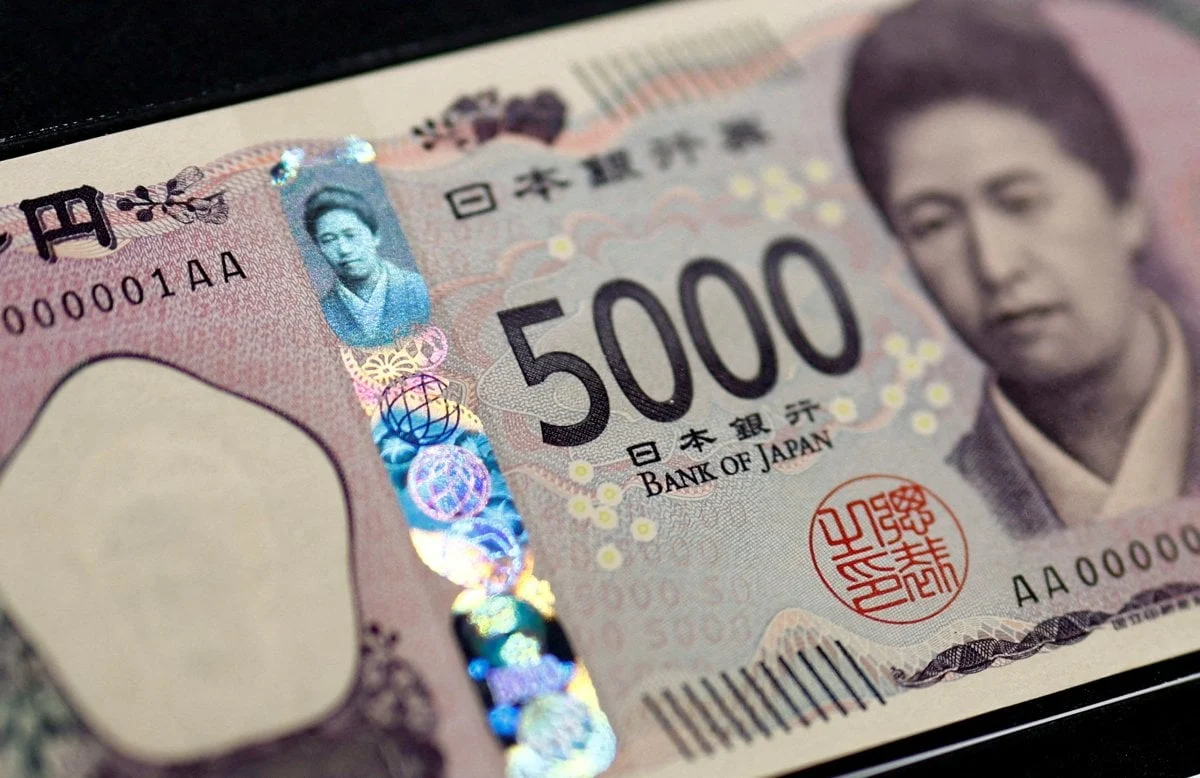
Asian currencies traded mixed on Thursday as the U.S. dollar strengthened slightly. Meanwhile, the Japanese yen extended its rally toward 158 per dollar, bringing the risk of currency intervention back into focus.
Investors also remained cautious ahead of further signals on Federal Reserve monetary policy and amid renewed tensions between the United States and Iran.
The U.S. Dollar Index rose 0.1% to 99.43. At the same time, EUR/USD slipped slightly to around $1.1595, while GBP/USD eased to approximately $1.3493.
Japanese Yen Strengthens Toward 158
The Japanese yen was the strongest mover among major Asian currencies.
USD/JPY fell 0.6% to around 157.81 after the yen strengthened sharply during the previous session. The currency had already gained around 1.2% during Wednesday’s New York trading.
The latest move has increased speculation over whether Japanese authorities could intervene again in the foreign exchange market.
BOJ Rate Hike Expectations Support the Yen
Bank of Japan board member Hajime Takata said on Wednesday that a 25-basis-point interest rate increase was not guaranteed.
He also suggested that consecutive rate hikes remained possible.
As a result, markets began pricing in a small chance of a larger 50-basis-point increase at the Bank of Japan’s September meeting.
Earlier in the week, traders had placed roughly a 90% probability on a smaller 25-basis-point move.
Expectations for higher Japanese interest rates have helped support the yen by narrowing the gap between Japanese and overseas borrowing costs.
Currency Intervention Risk Returns
The sharp yen move has also renewed debate over possible intervention by Japanese authorities.
DBS said it was doubtful that the latest rally was caused by direct intervention. The bank noted that the move was smaller than previous intervention episodes.
It also pointed to fundamental reasons behind the yen’s strength, particularly the possibility of larger or consecutive Bank of Japan rate hikes.
However, Japanese Finance Minister Satsuki Katayama and U.S. Treasury Secretary Scott Bessent have indicated that authorities remain prepared to intervene if necessary.
BOJ September Meeting Draws Attention
Investors are now closely watching the Bank of Japan’s September 18 policy meeting.
A three-day holiday follows the decision, raising speculation that Japanese authorities could potentially use thinner holiday trading conditions to intervene in currency markets.
Japan has previously taken similar action during holiday periods.
As a result, traders are watching Japan’s Silver Week holidays for signs of unusual activity in the yen.
Australian Dollar Supported by Economic Data
The Australian dollar was relatively stable, with USD/AUD trading around 1.40 and the local currency holding near $0.72.
Australia’s economy expanded 0.4% during the June quarter.
On an annual basis, GDP grew 2.1%, beating market expectations for growth of around 1.8%.
Australian trade data also remained positive.
The country recorded a trade surplus of A$1.923 billion in July, slightly below the A$1.929 billion surplus reported in June but comfortably above forecasts of A$1.39 billion.
New Zealand Dollar Recovers After RBNZ Decision
The New Zealand dollar strengthened slightly on Thursday after falling sharply during the previous session.
USD/NZD declined around 0.2%, leaving the kiwi near $0.59.
The Reserve Bank of New Zealand recently raised its official cash rate by 25 basis points to 2.75%.
However, ANZ said the central bank’s outlook was less hawkish than markets had expected. This reduced expectations for another interest rate increase in October.
Indian Rupee Extends Rally
The Indian rupee also strengthened against the U.S. dollar.
USD/INR fell around 0.8% to 94.237, extending recent gains for the Indian currency.
Foreign-currency non-resident deposits totaling approximately $127.23 billion have helped increase the Reserve Bank of India’s ability to support the rupee.
Asian Currencies Trade Mixed
Elsewhere in Asia, the South Korean won was largely unchanged.
USD/SGD slipped around 0.1%, while USD/MYR declined approximately 0.09% to 4.0395.
Investors are also awaiting the latest interest rate decision from Bank Negara Malaysia. The central bank is widely expected to keep its Overnight Policy Rate unchanged at 2.75%.
Chinese Yuan Steady After Services PMI
The Chinese yuan showed little movement despite stronger-than-expected services data.
USD/CNH traded around 6.72, while USD/CNY was near 6.7230.
China’s private services PMI rose to 51.4 in August from 50.4 in July, beating expectations of 50.6.
The reading remained above the 50-point level that separates expansion from contraction and suggested stronger growth in China’s domestic services sector.
Asian FX Markets Watch Rates and Intervention Risk
Asian currency markets remain highly sensitive to changes in global interest rate expectations.
The Japanese yen is currently receiving the most attention as speculation grows around future Bank of Japan rate hikes and possible government intervention.
At the same time, traders continue to monitor Federal Reserve policy, geopolitical tensions and economic data across the region for further direction.