Asia Tech Selloff Deepens as Nikkei Slides to June Low
Japan’s Nikkei 225 fell sharply on Friday, reaching its lowest level since June 11 as a widespread selloff hit Asian technology stocks.
The Japanese benchmark dropped more than 5% during the session. Investors continued to reduce exposure to artificial intelligence-related companies after semiconductor stocks suffered heavy losses on Wall Street overnight.
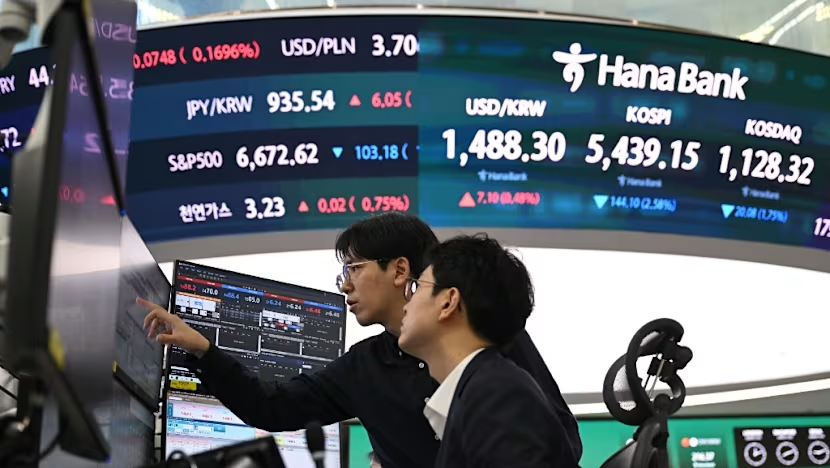
Chinese technology shares also extended their decline. Meanwhile, South Korean financial markets remained closed for a public holiday.
Japanese Technology Stocks Lead the Decline
Major technology and electronic component manufacturers were among the worst-performing stocks in Japan.
Memory chip producer Kioxia Holdings plunged by more than 16%, recording one of its largest daily declines in recent months. Murata Manufacturing fell by nearly 12%, while electronic components maker TDK lost more than 6%.
Sony was one of the few major Japanese technology companies to resist the broader downturn. Its shares gained approximately 1.6% despite the weakness across the market.
The steep losses among heavyweight technology companies placed significant pressure on the Nikkei 225 and accelerated the wider Japanese stock market decline.
China AI Stocks Extend Their Retreat
Selling pressure also spread across mainland China, particularly among small and medium-sized technology companies.
The CSI 1000 Index declined by more than 3%, falling to its lowest level since March 24. The index was dragged lower by heavy losses in artificial intelligence, semiconductor and technology hardware stocks.
Chinese AI chip designer Cambricon Technologies dropped by more than 6%. Foxconn Industrial Internet also fell by over 5%.
Other semiconductor and electronics companies, including SMIC, NAURA Technology and Luxshare Precision, moved lower. The declines reflected broad weakness throughout China’s AI hardware and semiconductor supply chain.
Hong Kong Technology Shares Fall
Hong Kong stocks joined the regional selloff, with the Hang Seng Index losing more than 2%.
Technology platforms Meituan and Kuaishou each fell by approximately 6%. Major companies such as Tencent, Baidu, Alibaba and Xiaomi recorded losses ranging from 2% to 4%.
The weakness showed that investors were not only selling semiconductor manufacturers. The retreat also affected internet platforms and other companies previously expected to benefit from growing AI investment.
Wall Street Chip Selloff Pressures Asian Markets
The decline in Asian technology stocks followed a difficult overnight session for the US technology sector.
Investors sold several of the year’s strongest-performing AI-linked companies as concerns grew about high valuations and crowded market positions.
Memory and storage companies Sandisk, Western Digital and Seagate each lost more than 9%. Intel and Micron declined by approximately 6%, adding to evidence that investors were rotating away from expensive AI stocks.
The pullback suggests that some traders are securing profits after the powerful rally in artificial intelligence and semiconductor companies.
IBM and SpaceX Face Additional Pressure
IBM also recorded one of its largest single-day declines after warning that customers were shifting more of their spending toward AI infrastructure.
The announcement raised concerns that traditional technology companies could face pressure as businesses redirect their budgets toward artificial intelligence systems, data centres and advanced computing equipment.
Recently listed SpaceX also continued to retreat from its post-IPO highs. The decline reflected cooling investor enthusiasm for highly valued growth companies associated with the AI investment trend.
Semiconductor Outlook Remains Positive
Despite the sharp market decline, some analysts remain optimistic about the longer-term outlook for Asian technology and semiconductor companies.
ANZ said the global semiconductor supercycle was not yet showing signs of ending. The bank pointed to stronger-than-expected second-quarter economic growth across much of Asia, although mainland China remained an exception.
According to ANZ, the Global Electronic Computing Purchasing Managers’ Index indicates that regional economic growth could accelerate during the third quarter.
The bank also expects continued AI investment to support Asian economies throughout the second half of 2026.
Strong demand for semiconductors, computing infrastructure and AI hardware could help the region manage higher oil prices. It may also provide support if the Federal Reserve introduces modest additional monetary tightening.
Short-Term Volatility Versus Long-Term AI Growth
The latest selloff highlights the growing divide between short-term market risks and the long-term artificial intelligence investment outlook.
High valuations and crowded positioning could leave AI stocks vulnerable to further corrections. However, continued investment in data centres, advanced chips and computing infrastructure may still support the semiconductor industry over the coming years.
Investors will now be watching whether the decline develops into a deeper technology correction or creates new opportunities in companies with strong earnings and sustainable AI-related growth.