Asian Stocks Mixed as Iran Uncertainty Weighs on Regional Markets
Asian stock markets traded mixed on Tuesday as investors assessed conflicting developments surrounding the U.S.-Iran conflict, while Japanese and South Korean equities retreated from recently established record highs.
The region initially drew support from Wall Street’s strong performance, where major U.S. indexes closed at fresh records thanks to continued strength in semiconductor and artificial intelligence-related stocks.
However, that momentum began to fade during Asian trading hours, with S&P 500 futures slipping 0.4%, signaling a more cautious market tone.
Conflicting U.S.-Iran Signals Keep Investors Cautious
Investor sentiment was further pressured by uncertainty surrounding diplomatic efforts between Washington and Tehran.
Reports released late Monday suggested that Iran had halted communications with the United States through intermediaries, raising doubts about the progress of ongoing negotiations.
At the same time, U.S. President Donald Trump stated that discussions remained active and expressed confidence that an agreement could potentially be reached within the next week.
The mixed messages left investors uncertain about the geopolitical outlook and contributed to cautious trading across global markets.
Nikkei and KOSPI Retreat From Record Levels
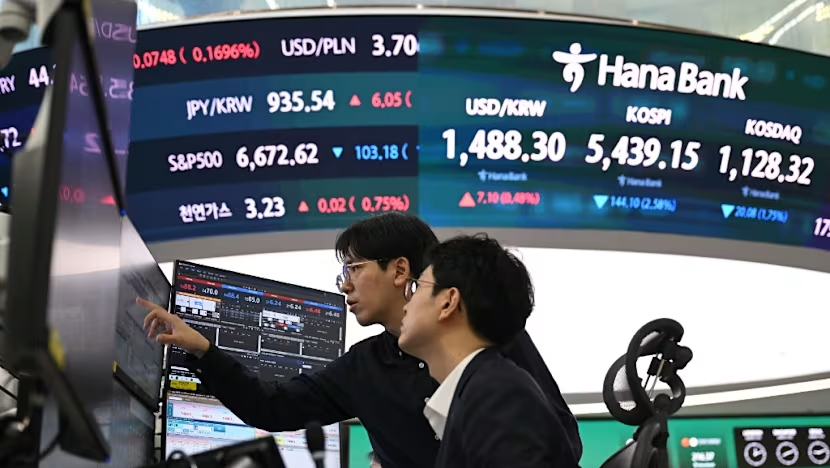
Japan’s Nikkei 225 and South Korea’s KOSPI emerged as the weakest performers among major Asian indexes, with both benchmarks declining roughly 2% from their recent record highs.
Technology and semiconductor stocks, which had been key drivers of the rally in both markets, came under pressure as investors locked in profits following a strong advance throughout May.
The artificial intelligence boom and optimism surrounding chip demand had fueled substantial gains across the sector, supported in part by Nvidia’s latest AI product announcements earlier this week.
Tuesday’s decline reflected a temporary cooling of enthusiasm after weeks of strong upward momentum.
South Korea Inflation Raises Rate Hike Expectations
South Korean equities also faced additional pressure from stronger-than-expected inflation data.
Consumer price inflation accelerated to a 26-month high in May, reinforcing expectations that the Bank of Korea could raise interest rates later this year.
The prospect of tighter monetary policy weighed on investor sentiment and added to selling pressure in the country’s stock market.
Hong Kong Outperforms Thanks to Technology Shares
Hong Kong stood out as one of the strongest-performing markets in Asia.
The Hang Seng Index gained 0.8%, supported by advances in several major technology companies.
Electric vehicle manufacturer BYD was among the biggest contributors after reporting its first monthly increase in vehicle sales in eight months. The stock climbed nearly 5% following the announcement.
Meanwhile, Tencent surged almost 8% after a Financial Times report indicated that the company plans to introduce an integrated artificial intelligence agent within its popular WeChat platform.
China Markets Deliver Mixed Performance
Mainland Chinese markets produced mixed results.
The CSI 300 Index rose 0.7%, benefiting from selective buying in large-cap shares, while the Shanghai Composite Index edged slightly lower.
Investors continued to balance concerns about economic growth with optimism surrounding government support measures and the ongoing expansion of artificial intelligence technologies.
Australian Stocks Fall on Inflation Concerns
Australia’s ASX 200 declined 0.5% after comments from Reserve Bank of Australia board member Ian Harper highlighted persistent inflation risks.
Harper warned that inflation remains a significant challenge for policymakers, raising concerns that additional interest rate increases may still be necessary.
The comments reinforced expectations that the RBA could maintain a hawkish stance after already delivering a cumulative 75 basis points of rate hikes so far this year.
Other Regional Markets Show Mixed Results
Elsewhere in Asia, Singapore’s Straits Times Index advanced 0.6%, supported by strength in financial and industrial stocks.
Meanwhile, futures tied to India’s Nifty 50 Index fell 0.8%, indicating that Indian equities could extend their recent pullback when trading resumes.
As investors continue to monitor developments in the Middle East, inflation trends, and central bank policy expectations, volatility across Asian markets is likely to remain elevated in the near term.