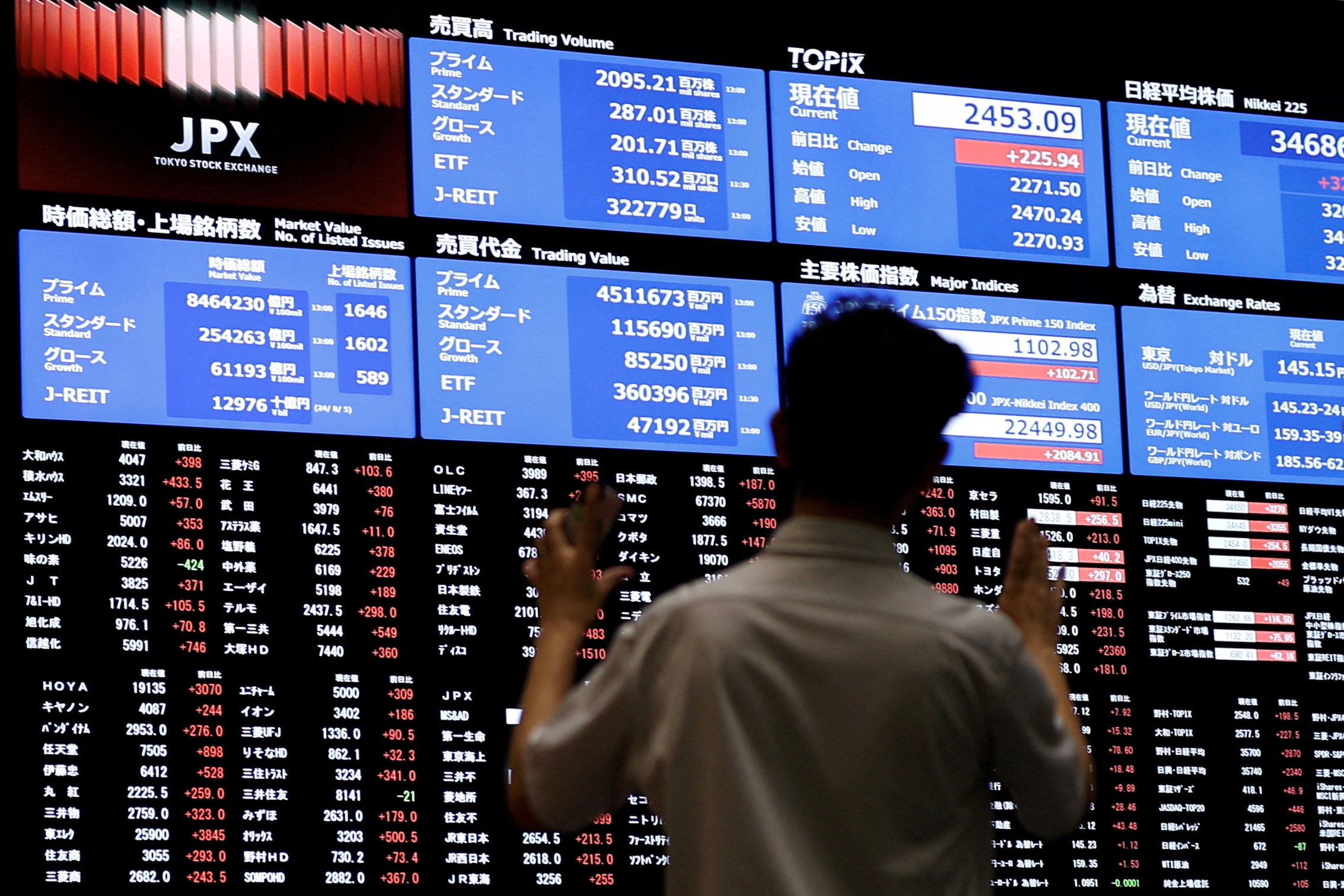
Most Asian stock markets moved higher on Tuesday after stronger-than-expected business activity data supported Chinese equities.
Technology shares also extended their recent rally, putting several regional indexes on course for one of their strongest quarterly performances in years.
South Korea and Japan led the gains during the second quarter as optimism surrounding artificial intelligence drove semiconductor and technology stocks sharply higher.
Wall Street Tech Rally Supports Asian Markets
Asian markets received a positive lead from Wall Street, where technology stocks recorded strong gains during the previous session.
However, U.S. stock futures traded largely unchanged during Asian hours.
Investors remained cautious ahead of possible peace talks between the United States and Iran. Key U.S. employment data due later in the week also limited risk-taking.
China Stocks Gain After Stronger PMI Data
China’s CSI 300 index rose more than 1%, while the Shanghai Composite posted a smaller gain.
The CSI 300 was on track to finish the second quarter more than 10% higher.
China’s official manufacturing Purchasing Managers’ Index rose to 50.3 in June, returning to expansion territory.
The non-manufacturing PMI increased to 50.2, while the composite PMI climbed to 50.6.
A reading above 50 indicates an expansion in business activity.
High-Tech Exports Support China’s Economy
The stronger PMI figures showed that China’s economy continued to benefit from resilient exports, particularly in high-technology industries.
External demand remained the main source of economic support and helped offset continued weakness in domestic consumption.
ING analysts said the data showed some signs of strength. However, they still expected Chinese economic growth to slow during the second quarter.
A weaker growth outlook could encourage Beijing to introduce additional economic stimulus in the coming months.
AI Chip Rally Drives Strong Quarterly Gains
Tuesday marked the final trading session of the second quarter.
Asian equities were set to complete one of their strongest quarters in recent years, largely because of a powerful rally in semiconductor shares linked to artificial intelligence.
Japan’s Nikkei 225 advanced more than 1% and remained on course for a quarterly gain exceeding 36%.
South Korea’s KOSPI also rose around 1% and was heading toward an increase of almost 65% for the quarter after reaching several record highs.
South Korea Leads Global Equity Markets
The MSCI Asia ex-Japan index gained approximately 21% over the previous three months.
South Korea led the regional advance and became the world’s best-performing major stock market during the year.
Strong demand for AI-related chips provided substantial support to leading Korean technology companies.
However, not every Asian market benefited from the rally.
Hong Kong’s Hang Seng Index fell more than 1% on Tuesday and was expected to lose around 7.5% during the quarter.
Australian Stocks Steady After RBA Minutes
Australia’s ASX 200 traded largely unchanged.
Minutes from the Reserve Bank of Australia’s June meeting showed that policymakers remained concerned about inflation.
The central bank indicated that it was prepared to raise interest rates further following an aggressive tightening cycle earlier in the year.
Japanese Stocks Rise Despite Weak Production Data
Japan’s TOPIX index gained approximately 0.7%.
The increase came despite industrial production rising less than economists had expected in May.
Separate data showed that Japan’s unemployment rate remained stable.
Indonesian Stocks Extend Heavy Losses
Indonesia’s Jakarta Composite Index fell around 2.7%.
Foreign investors continued to withdraw money from the market because of concerns about policy credibility, transparency and a possible downgrade by MSCI.
The Indonesian benchmark remained the world’s worst-performing major equity index during the year.
Philippine and Thai Markets Under Pressure
Investors also assessed trade and inflation data from the Philippines.
Oil price volatility remained an important concern because the country depends heavily on imported energy.
Thailand’s industrial production figures pointed to continued weakness in the manufacturing sector.
The Thai SET Index traded largely unchanged, while the Philippine PSEi Composite fell around 0.9%.
Investors Await U.S. Jobs and Inflation Data
Attention was expected to shift toward European inflation figures, U.S. consumer confidence and the JOLTS job openings report.
The closely watched U.S. nonfarm payrolls report was due on Thursday.
Investors were also preparing for comments from Federal Reserve Chair Kevin Warsh, developments in U.S.-Iran negotiations and fresh economic data from India.
These events could provide important clues about interest rates, geopolitical risks and market direction heading into the third quarter.