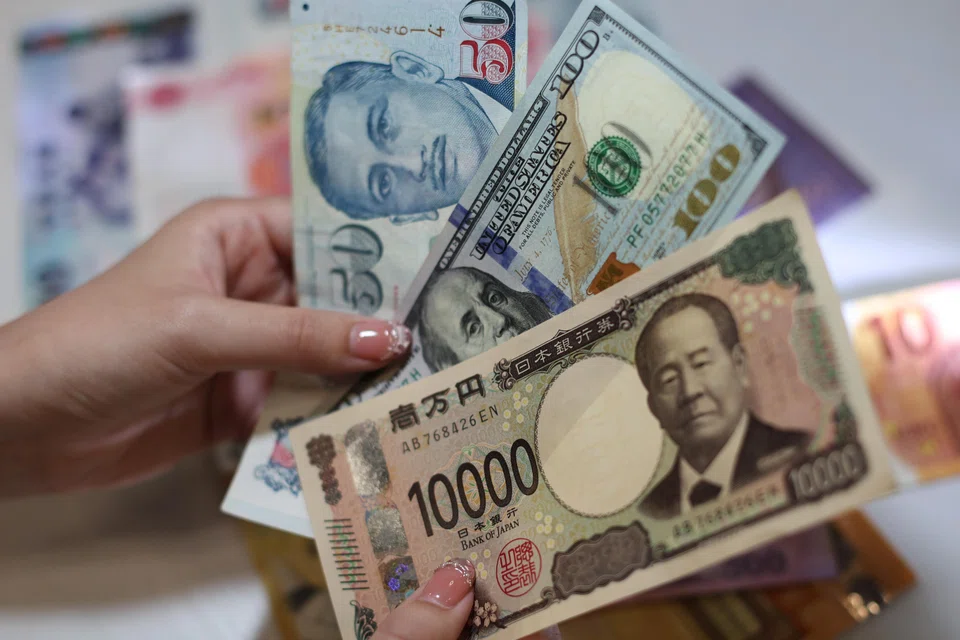
Most Asian currencies traded within narrow ranges on Wednesday, while the US dollar extended its recent decline.
Softer-than-expected US inflation data reduced expectations that the Federal Reserve would raise interest rates in the near term. However, escalating tensions in the Middle East and elevated oil prices kept investors cautious.
US Dollar Weakens After Softer Inflation Data
The US Dollar Index remained close to 100.8 after recording its largest one-day decline in almost two weeks.
The retreat followed weaker US consumer inflation figures, which reduced the likelihood of an immediate Federal Reserve rate increase.
A weaker dollar offered modest support to Asian currencies. Nevertheless, gains across the region remained limited as investors continued to avoid excessive risk.
Higher oil prices also created concerns that inflationary pressures could return, potentially affecting the Federal Reserve’s future policy decisions.
Euro Gains as Dollar Comes Under Pressure
The euro strengthened against the dollar, with EUR/USD trading near $1.143.
Cooling US inflation reduced demand for the dollar and supported the common currency.
The euro also benefited from expectations that higher energy prices could encourage the European Central Bank to maintain a relatively hawkish monetary policy stance.
However, the dollar’s losses remained contained after Federal Reserve Chair Kevin Warsh repeated the central bank’s commitment to returning inflation to its 2% target.
Investors are also assessing whether renewed hostilities between the United States and Iran could push oil prices higher and create fresh inflation risks.
Weak China GDP Fails to Pressure the Yuan
China’s latest economic data presented a mixed picture.
The country’s gross domestic product grew by 4.3% year-on-year during the second quarter. The result came below market expectations.
Strong exports continued to support China’s economy. However, weak domestic demand and slower capital investment offset much of this strength.
Despite the disappointing GDP figures, the Chinese yuan remained stable because of the broader decline in the US dollar.
USD/CNY traded near 6.77 yuan, while the offshore USD/CNH pair was also largely unchanged.
China’s Economic Imbalance Becomes More Visible
Additional data highlighted a widening gap between China’s export sector and its domestic economy.
Industrial production expanded faster than expected in June, supported by strong external demand.
In contrast, fixed asset investment declined more sharply than forecast. It was the third consecutive monthly contraction.
Retail sales increased unexpectedly during June. However, growth remained weak at only 1%.
The figures showed that export-driven industrial activity continues to support China’s economy, while subdued consumer spending and investment remain major obstacles.
Beijing Faces Pressure to Introduce More Stimulus
The weaker economic data strengthened expectations that Beijing could announce additional stimulus measures.
Chinese policymakers may increase fiscal support, accelerate infrastructure spending or introduce new policies aimed at improving consumer demand.
However, further monetary policy easing could place pressure on the yuan.
Lower interest rates may support economic growth, but they could also reduce the attractiveness of Chinese assets relative to investments in markets offering higher yields.
Japanese Yen Remains Near Multi-Decade Lows
The Japanese yen remained under close observation, with USD/JPY trading near 162.2.
Investors continued to assess recent comments from Japanese Finance Minister Satsuki Katayama regarding the Government Pension Investment Fund.
Katayama suggested that the fund’s asset allocation could be reviewed if financial market conditions changed significantly.
Japanese policymakers have also discussed measures designed to encourage greater investment in domestic assets.
The comments increased speculation that authorities are considering longer-term policies to support Japan’s financial markets.
However, the yen remained close to its weakest level in approximately four decades.
South Korean Won Supported by Semiconductor Exports
The South Korean won traded with limited movement, with USD/KRW remaining close to 1,489.
June trade data showed that exports increased by 70.7% compared with the previous year.
Although the result came slightly below forecasts, it highlighted strong international demand for South Korea’s artificial intelligence-related semiconductor products.
The country’s technology and chip industries continue to benefit from rapid global investment in AI infrastructure.
New Zealand Dollar Outperforms
The New Zealand dollar remained one of the strongest regional currencies.
USD/NZD declined by approximately 0.2%, leaving the kiwi close to its highest level in a month.
The currency continued to receive support from the Reserve Bank of New Zealand’s recent interest rate increase and its relatively hawkish policy position.
ING foreign exchange strategist Francesco Pesole said the New Zealand dollar had been the strongest-performing G10 currency since the latest escalation in Middle East tensions.
Investors have favoured currencies backed by central banks that still have room to tighten monetary policy.
However, Pesole warned that markets may already be expecting an aggressive series of additional interest rate increases from the Reserve Bank of New Zealand.
Australian and Singapore Dollars Edge Higher
The Australian dollar remained stable, with USD/AUD falling by around 0.2% to approximately 1.431.
USD/SGD also declined slightly as the Singapore dollar benefited from broader weakness in the US currency.
Meanwhile, USD/INR increased by around 0.1%.
Investors were awaiting India’s latest trade balance and wholesale inflation figures for further information about the country’s economic outlook.
US Producer Inflation Becomes the Next Focus
Market attention will now turn to the latest US Producer Price Index report.
Another softer-than-expected inflation reading could reinforce expectations that the Federal Reserve will keep interest rates unchanged.
However, investors remain concerned that higher oil prices could create renewed inflationary pressure.
For now, Asian currencies are receiving some support from the weaker dollar. Nevertheless, geopolitical risks, energy prices and uncertainty surrounding future interest rate decisions continue to limit stronger gains.