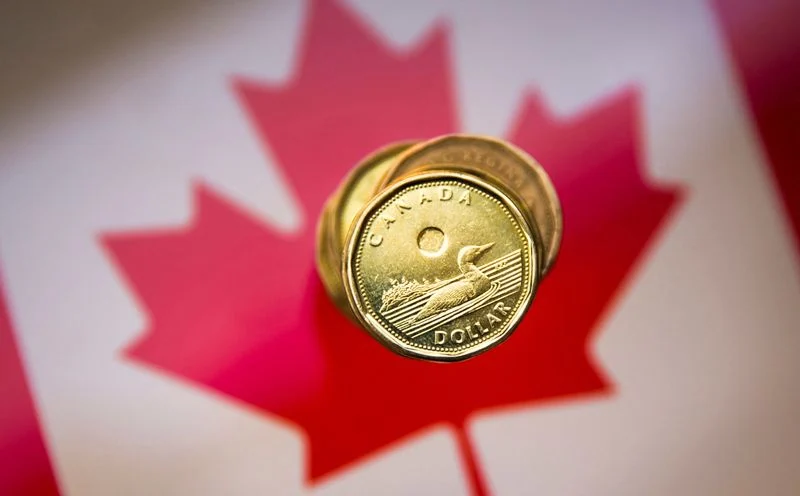
The Canadian dollar is expected to strengthen less than previously forecast over the next year as uncertainty surrounding the U.S.-Mexico-Canada Agreement weighs on economic growth.
A Reuters poll found that concerns over the trade deal are also reducing expectations that the Bank of Canada will raise interest rates.
Canadian Dollar Forecasts Lowered
The median forecast from 39 foreign exchange analysts surveyed between June 26 and July 1 showed a weaker outlook for the Canadian dollar.
Analysts expect the currency to strengthen by around 1.3% over the next three months to 1.40 Canadian dollars per U.S. dollar. This is equal to approximately 71.43 U.S. cents.
The previous monthly survey had forecast an exchange rate of 1.37 Canadian dollars per U.S. dollar.
Over the next 12 months, the Canadian dollar is expected to gain about 4.3% to 1.36 per U.S. dollar. However, this is weaker than the previous forecast of 1.34.
USMCA Uncertainty Weighs on Canada
The Trump administration declined to extend the USMCA trade agreement on Wednesday.
The decision started a 10-year process that could eventually lead to the agreement being phased out unless the three countries reach a revised deal.
The United States is seeking changes designed to bring more manufacturing jobs back to the country and reduce its trade deficits with Canada and Mexico.
The agreement is known as CUSMA in Canada.
Canadian Exports Face Tariff Pressure
Canada sends around 70% of its exports to the United States.
Major exports include steel, aluminium, vehicles and lumber. Several of these industries have already been affected by U.S. tariffs.
The uncertainty surrounding future trade rules is placing additional pressure on Canadian businesses and investment.
Recent economic data also indicated that Canada was moving towards a technical recession.
Interest Rate Expectations Hurt the Loonie
Bradley Saunders, North America economist at Capital Economics, said the Canadian dollar had weakened significantly against the U.S. dollar in recent weeks.
He linked the decline to changing interest rate expectations in Canada and the United States.
Capital Economics expects USMCA uncertainty to restrict Canadian economic growth and reduce the likelihood of Bank of Canada rate hikes this year.
At the same time, persistent core inflation and stronger U.S. growth could encourage the Federal Reserve to reverse some of its earlier rate cuts.
Investors Increase Bearish Canadian Dollar Bets
Speculators have increased their negative positions against the Canadian dollar to their highest level since December.
The currency recently fell to a 14-month low of 1.4248 Canadian dollars per U.S. dollar.
Canada’s two-year government bond yield also dropped more than 140 basis points below the equivalent U.S. yield.
This was the widest gap between the two countries’ short-term yields since May of the previous year.
A wider yield gap can make Canadian assets less attractive to international investors, placing further pressure on the currency.
Bank of Canada Rate Hike Bets Decline
The Bank of Canada has said there is limited evidence that rising energy prices are causing widespread inflation across the economy.
Financial markets are now pricing in only around 10 basis points of monetary policy tightening this year.
That compares with approximately 60 basis points expected in May.
The sharp decline in rate hike expectations has weakened demand for the Canadian dollar.
Federal Reserve Maintains Firm Inflation Stance
Federal Reserve Chair Kevin Warsh said the U.S. central bank would remain committed to its 2% inflation target.
He also warned that policymakers would disappoint investors expecting a return to loose monetary policy.
A separate Reuters survey showed growing resistance to predictions of a significantly weaker U.S. dollar.
More analysts now expect the greenback to record smaller declines or even strengthen over the near term.
This could create further challenges for the Canadian dollar, particularly if U.S. interest rates remain higher than Canadian rates.