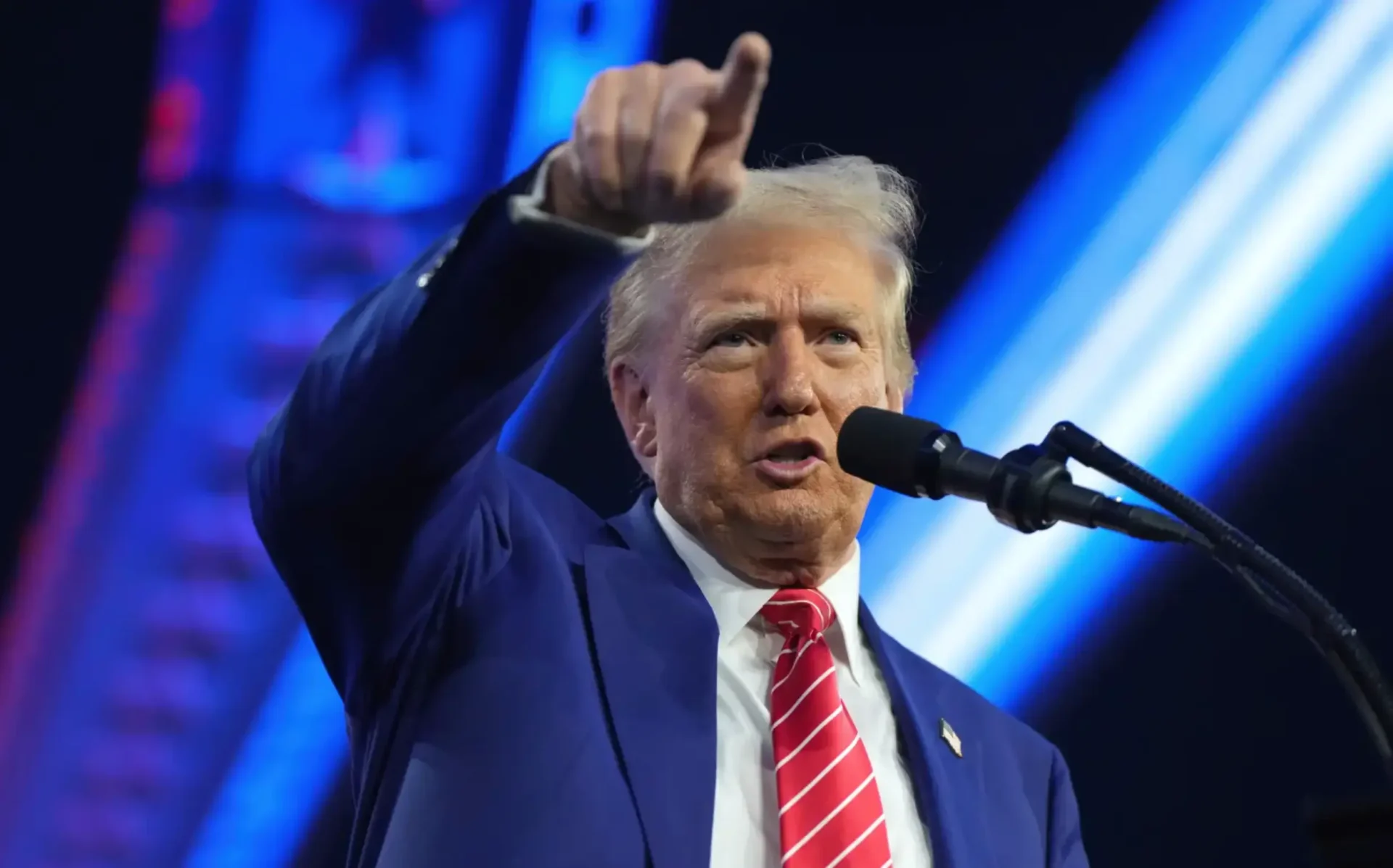
President Donald Trump blamed Democrats for the sharp Wall Street selloff following their sweeping victory in the November 2026 US midterm elections. The president criticized the market downturn and warned that falling stock prices had negatively affected Americans’ retirement savings.
Trump described Thursday’s market collapse as one of Wall Street’s worst trading sessions, pointing to substantial losses in 401(k) retirement accounts.
The selloff followed a dramatic political shift in Washington, where Democrats secured control of both chambers of Congress. Investors also grew concerned about the potential consequences for artificial intelligence companies and major technology investments.
Trump Blames Democrats for Wall Street Selloff
President Trump linked the stock market decline to the Democratic Party’s strong performance in the November 3 midterm elections.
Democrats gained control of both the House of Representatives and the Senate, delivering a significant political setback to the Republican Party.
The election results included Democratic victories in at least seven previously Republican-held Senate seats and more than two dozen House districts.
Democrats also secured important gubernatorial victories across several states, strengthening their influence over both federal and state-level policymaking.
Trump argued that the election outcome contributed to the financial market downturn, emphasizing the impact on Americans holding investments through retirement accounts.
However, market analysts identified several additional factors behind the selloff, including concerns about artificial intelligence spending, technology stock valuations, and potential regulatory changes.
Wall Street Rally Reverses After Democratic Midterm Victory
US stocks initially responded positively to the midterm election results.
On Wednesday, the Dow Jones Industrial Average surged 1,569 points, representing an advance of approximately 3%.
The S&P 500 gained 1.6%, while the technology-heavy Nasdaq Composite climbed 1.4%.
Investors initially welcomed the reduction in political uncertainty following the elections, helping drive a broad recovery across major stock indexes.
However, the optimism proved short-lived.
By Thursday, investors had shifted their attention toward the potential implications of Democratic congressional control for the technology industry.
Concerns about increased regulation and the future of artificial intelligence infrastructure projects triggered renewed selling pressure.
The resulting downturn erased much of the previous session’s gains.
Dow Plunges 1,833 Points as Nasdaq Crashes 5.5%
Wall Street suffered substantial losses on Thursday as selling intensified across major US stock indexes.
The S&P 500 declined 4.4% to 7,353.73 points, recording its largest daily loss since the market turmoil triggered by US tariff announcements in April 2025.
Meanwhile, the Dow Jones Industrial Average plunged 1,833 points, equivalent to approximately 3.4%.
The Nasdaq Composite experienced an even steeper decline, falling 5.5% in its worst trading session in roughly 18 months.
Smaller companies also came under pressure, with the Russell 2000 index dropping approximately 4.4%.
The widespread losses reflected a significant deterioration in investor confidence, particularly toward high-growth technology businesses.
According to Reuters, approximately $2 trillion in Nasdaq market capitalization was erased during Thursday’s selloff.
The decline highlighted the extent to which concerns surrounding artificial intelligence investment had spread across US financial markets.
AI Stocks Suffer Heavy Losses Amid Regulatory Concerns
Technology and semiconductor companies were among the hardest-hit sectors during the Wall Street selloff.
Investors became increasingly concerned that Democratic lawmakers could introduce additional restrictions affecting artificial intelligence development and data center construction.
Major chipmakers experienced substantial share price declines as these concerns intensified.
Nvidia shares fell approximately 9%, while Advanced Micro Devices (AMD) plunged 17%.
Memory chip manufacturer Micron Technology also suffered heavy losses, declining more than 17%.
These companies have benefited from strong demand for processors and memory used in artificial intelligence systems.
However, their elevated valuations have also made them vulnerable to changes in expectations surrounding future AI infrastructure spending.
The latest market downturn suggests that investors are reassessing whether the industry’s projected growth can justify the enormous capital investments supporting the artificial intelligence boom.
US Data Center Restrictions Raise New Questions for Big Tech
The Democratic Party’s election victories also coincided with growing opposition to large-scale data center construction across the United States.
At least 38 jurisdictions approved or supported restrictions affecting data center development, reflecting increasing public concerns about electricity consumption, water usage, and environmental impacts.
Such facilities play an important role in supporting artificial intelligence systems, cloud computing services, and advanced digital infrastructure.
However, their substantial energy requirements have attracted criticism from local communities and policymakers.
Texas Governor-elect Gina Hinojosa has advocated a temporary moratorium on new data center approvals until stronger safeguards can be established.
Her position has drawn particular attention because Texas has become a major destination for technology companies investing in AI infrastructure.
Potential construction delays or stricter approval requirements could affect expansion plans across the sector.
For semiconductor manufacturers, slower data center investment could also influence future demand for advanced computing equipment.
Nevertheless, the precise impact of proposed regulatory changes remains uncertain, and no direct relationship between individual election outcomes and stock market losses has been established.
Historic Post-Midterm Losses Shake Investor Confidence
Thursday’s market downturn stood out not only because of its magnitude but also because of its timing.
According to the reported historical comparison, the Dow Jones Industrial Average recorded its worst second trading session following a US midterm election in records extending back to 1896.
The selloff represented a dramatic reversal from Wednesday’s rally, when investors initially reacted positively to the election results.
However, Thursday’s broader stock market declines were not unprecedented.
The S&P 500’s 4.4% loss was its largest since April 2025, rather than an all-time record.
The distinction is important because the session was historically unusual in its post-election context, even though financial markets have experienced more severe declines in previous crises.
Wall Street Outlook Depends on AI Spending and Political Developments
The latest Wall Street selloff demonstrates how quickly investor sentiment can change following major political developments.
President Trump attributed the decline to Democratic election victories, while market participants also focused on technology valuations, artificial intelligence spending, and potential restrictions on data center development.
The significant losses in Nvidia, AMD, and Micron highlight growing concerns about the sustainability of the AI investment boom.
At the same time, uncertainty surrounding the future balance of political power in Washington could influence expectations for technology regulation and economic policy.
Investors will continue monitoring congressional developments, corporate earnings, and the outlook for artificial intelligence infrastructure spending.
Although markets could stabilize as political uncertainty diminishes, concerns about elevated technology valuations and future regulatory restrictions may continue to influence Wall Street’s direction.