The Wall Street selloff intensified on Thursday as artificial intelligence stocks and semiconductor companies suffered heavy losses, reversing the previous day’s post-election recovery.
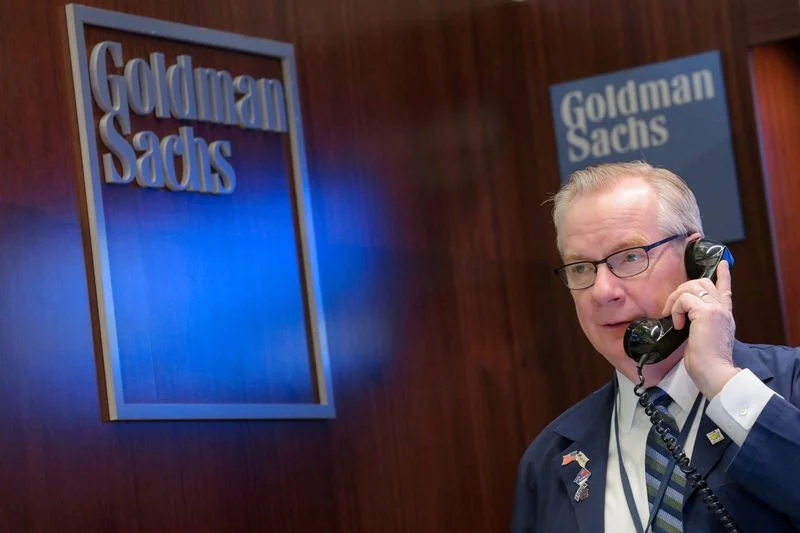
Goldman Sachs described the market reversal as extraordinary, with its equity trading desk reporting a dramatic shift in investor behavior following Wednesday’s strong rally.
The technology-heavy Nasdaq Composite plunged approximately 5.5%, entering correction territory. Meanwhile, the S&P 500 dropped 4.3%, while the Dow Jones Industrial Average declined 3.4%.
Both the Nasdaq and S&P 500 recorded their worst intraday performances since April 4, 2025. The Dow also erased its gains from Wednesday’s trading session.
The sharp decline raised questions about investor positioning, artificial intelligence valuations, and the sustainability of the technology sector’s recent performance.
Goldman Sachs Explains the Wall Street Selloff
According to Goldman Sachs, the market turmoil largely reflected a sudden reversal in institutional investor positioning following the US midterm elections.
Ahead of the election results, many traditional investment managers had significantly reduced their market exposure to limit potential risks.
However, Wednesday’s post-election rally caught some of these investors unprepared.
As stock prices recovered, fund managers began rebuilding positions to avoid missing further gains.
The situation changed dramatically on Thursday when selling pressure returned across major US stock indexes.
Goldman Sachs reported that hedge funds quickly reversed purchases made during the previous session, particularly in large technology companies involved in artificial intelligence infrastructure.
These companies, often described as hyperscalers, have become central to the global AI investment boom.
The rapid shift from buying to selling contributed to significant market volatility and accelerated the broader decline.
Nasdaq Plunges as AI and Semiconductor Stocks Collapse
Technology companies experienced some of the largest losses during Thursday’s market downturn.
The Nasdaq Composite fell approximately 5.5%, while the S&P 500 lost more than 4%.
Several major semiconductor and artificial intelligence-related companies recorded particularly steep declines.
Nvidia shares dropped approximately 9.3%, while Taiwan Semiconductor Manufacturing Company (TSMC) fell around 10.8%.
CoreWeave, a company focused on cloud infrastructure for artificial intelligence, declined approximately 9.8%.
Microsoft also came under pressure, with its shares falling about 3.6%.
The widespread declines highlighted growing concerns about the valuations of technology companies that have benefited from substantial investor enthusiasm surrounding artificial intelligence.
As investors reduced their exposure to the sector, selling pressure spread across the broader US stock market.
Options Markets Underestimated the Scale of the Crash
Goldman Sachs highlighted another unusual aspect of Thursday’s market decline: the magnitude of the selloff compared with expectations reflected in options prices.
According to the bank’s trading desk, the technology sector’s decline was approximately five times larger than the move implied by Wednesday’s one-day options straddle.
An options straddle is a trading strategy involving the purchase or sale of both a call option and a put option with the same strike price and expiration date.
Traders often use its pricing to assess market expectations for future volatility.
The substantial difference between anticipated and actual market movements suggests that options markets had not fully priced in the possibility of such a severe reversal.
Goldman Sachs also identified broad-based selling through macro-oriented financial instruments as the primary driver of the downturn.
This indicated that the decline was not simply the result of investors liquidating individual company shares.
Instead, the selling reflected a wider reduction in exposure to equities and market risk.
Investors Question the Cost of the AI Investment Boom
The Wall Street selloff also exposed a shift in how investors are evaluating the artificial intelligence industry.
Previously, market enthusiasm focused heavily on the long-term potential demand for AI computing power.
Investors expected technology companies to benefit from the rapid expansion of data centers, advanced semiconductor production, and AI-related infrastructure.
However, the debate is increasingly shifting toward the financial costs and practical challenges associated with deploying these technologies.
Rising borrowing costs have made large-scale infrastructure projects more expensive.
At the same time, growing political opposition to data center construction has introduced additional uncertainty surrounding future expansion plans.
Potential regulatory changes following the US midterm elections have further complicated the outlook.
Investors are now questioning how quickly companies can translate enormous AI infrastructure investments into sustainable revenue and profitability.
These concerns have contributed to selling pressure across semiconductor manufacturers, cloud computing providers, and other businesses closely connected to the artificial intelligence industry.
Hedge Fund Selling Amplifies Market Volatility
Goldman Sachs indicated that institutional trading activity played a significant role in accelerating Thursday’s losses.
Hedge funds that had repurchased technology shares during Wednesday’s rally moved rapidly to sell those positions when sentiment deteriorated.
The sudden reversal created additional pressure on stocks already experiencing substantial declines.
Meanwhile, broader selling through macro-related products intensified market volatility.
The bank’s trading desk described the early session as being marked by unusually intense selling activity.
However, trading conditions became somewhat more stable later in the day.
Goldman Sachs attributed part of the stabilization to volatility-focused relative-value funds entering the market to take advantage of pricing distortions in options.
These strategies seek opportunities when volatility instruments trade at prices that appear inconsistent with their relative risk characteristics.
Their activity helped moderate some of the market’s extreme movements, although uncertainty remained elevated.
Nvidia, Microsoft and TSMC Attract Dip Buyers
Despite the sharp decline, Goldman Sachs observed early signs of renewed investor interest toward the end of Thursday’s trading session.
Some market participants began exploring opportunities to purchase shares of major technology companies following their substantial losses.
The bank identified Nvidia, TSMC, Microsoft, and CoreWeave among the companies attracting interest from potential dip buyers.
The emerging demand suggested that some investors viewed the selloff as an opportunity to acquire technology stocks at lower valuations.
However, Goldman Sachs cautioned that identifying the end of a major selling wave remains difficult.
During periods of forced selling and widespread risk reduction, stock prices can fall below levels that investors consider justified by company fundamentals.
Conversely, once selling pressure subsides, markets can experience powerful rebounds as investors rebuild positions.
The bank’s analysis therefore highlighted both the risks and potential opportunities created by extreme market volatility.
Wall Street Outlook Remains Uncertain After Historic Selloff
The latest Wall Street downturn illustrates how quickly investor sentiment can change when political uncertainty, institutional positioning, and technology valuations collide.
The rapid reversal following Wednesday’s post-election rally exposed vulnerabilities in a market heavily influenced by expectations for artificial intelligence growth.
Although some investors have begun searching for opportunities among beaten-down technology shares, the broader outlook remains uncertain.
Market participants will continue monitoring institutional trading activity, semiconductor stock performance, AI infrastructure spending, and potential regulatory developments.
The sustainability of any recovery may depend on whether selling pressure eases and investors regain confidence in the financial outlook for major technology companies.
For now, the Goldman Sachs analysis suggests that market volatility could remain elevated as investors reassess their exposure to artificial intelligence and other high-growth sectors.