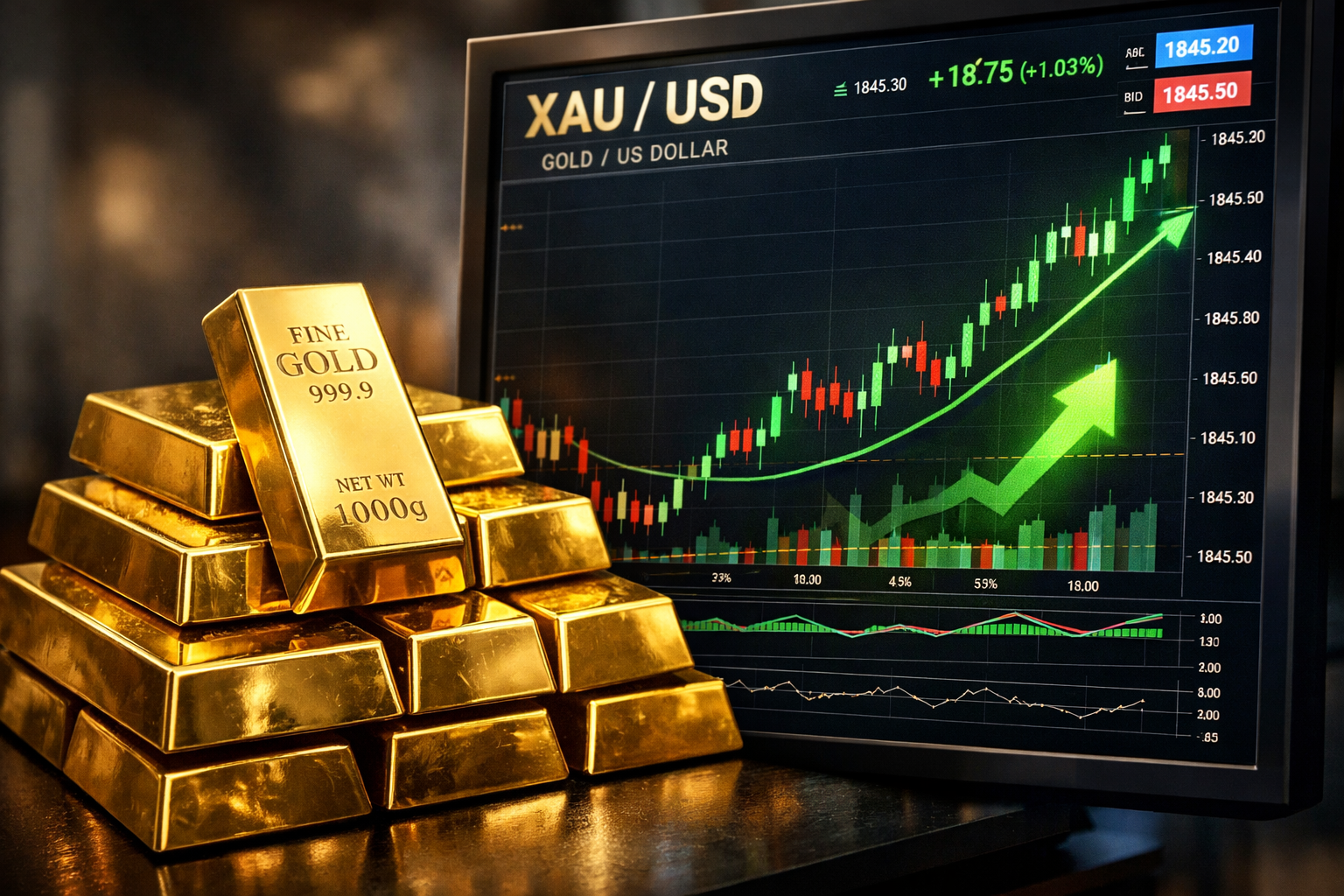
Gold prices recovered on Monday, November 2, as investors returned to the precious metal following its sharpest monthly decline since the 2008 financial crisis. Bargain hunting and falling oil prices helped support the rebound, although broader market uncertainty continued to limit gains.
The recovery followed a difficult October for bullion, with gold experiencing heavy selling pressure amid rising US Treasury yields, a stronger dollar, and weakness in global equity markets.
Meanwhile, geopolitical tensions involving the United States and Iran remained a major concern, leaving investors uncertain about the sustainability of gold’s latest recovery.
Gold Price Climbs Above $3,900 After Historic October Selloff
Spot gold gained approximately 0.8% to trade at $3,907.17 per ounce, while US gold futures advanced 0.5% to $3,916.32.
The gains followed a particularly difficult trading session in which bullion plunged 3.7%, pushing prices to a one-year low.
The decline capped gold’s worst October performance since 2008, highlighting the intensity of recent selling pressure across the precious metals market.
However, lower prices encouraged investors to return, helping gold recover some of its recent losses.
The rebound suggests that bargain hunters remain willing to purchase bullion following substantial declines, although a sustained recovery has yet to be established.
Other precious metals recorded mixed performances.
Silver prices increased 1.9% to $50.06 per ounce, outperforming gold during the session.
Meanwhile, platinum declined 3.4% to $1,434.65 per ounce, while spot palladium fell 2.6% to $980.35.
Palladium futures registered a modest increase of 0.1% to $978.25.
The US Dollar Index also edged higher, gaining 0.1% to reach 101.93.
Falling Oil Prices Ease Inflation Concerns
Gold received additional support as crude oil prices declined for a second consecutive trading session.
The weakness in energy markets followed renewed hopes that diplomatic efforts could reduce tensions between Washington and Tehran.
US Secretary of State Marco Rubio indicated that President Donald Trump preferred a diplomatic resolution to the ongoing conflict with Iran.
His comments raised expectations that negotiations could help prevent further military escalation and reduce the risk of additional disruptions to global energy supplies.
Lower oil prices can ease inflationary pressures by reducing energy and transportation costs across the economy.
Such developments may influence expectations for future interest rate decisions, which remain an important driver of gold prices.
However, uncertainty surrounding the conflict continues to complicate the outlook for both energy markets and precious metals.
US-Iran Tensions Keep Geopolitical Risks Elevated
Despite hopes for a diplomatic settlement, the possibility of renewed military confrontation remains a significant concern for investors.
President Trump has repeatedly warned that the United States could resume military strikes against Iran following the November 3 midterm elections.
Iranian officials have also threatened a broader retaliatory response if further attacks occur.
Meanwhile, several Persian Gulf countries have expressed concerns that another round of US military action could trigger a more extensive regional conflict.
A renewed escalation could threaten critical energy infrastructure and disrupt oil shipments, potentially pushing energy prices higher.
For gold investors, the situation creates competing market forces.
Heightened geopolitical uncertainty can increase demand for safe-haven assets such as bullion.
However, a sharp increase in oil prices could also intensify inflation concerns and encourage central banks to maintain restrictive monetary policies.
The resulting pressure on interest rates and bond yields could limit gold’s upside potential.
Technology Stock Selloff Adds Pressure to Gold Markets
Gold’s recent weakness has also been linked to broader turbulence in global equity markets.
Technology stocks have experienced significant selling pressure as investors reassess the profitability of massive investments in artificial intelligence.
Concerns about elevated valuations and uncertain returns from AI infrastructure spending have weighed on Wall Street.
The resulting market volatility has also affected gold, despite its traditional reputation as a defensive investment.
During periods of sharp equity market declines, some investors liquidate gold holdings to cover losses, meet margin requirements, or raise additional cash.
Such activity can temporarily push bullion prices lower even when financial market uncertainty would normally support safe-haven demand.
The recent technology-driven selloff therefore represents another potential obstacle to a sustained recovery in precious metals.
Rising US Treasury Yields Challenge Gold’s Recovery
Analysts at ANZ warned that elevated US Treasury yields are becoming an increasingly important challenge for gold prices.
Higher bond yields generally make interest-bearing investments more attractive compared with gold, which does not generate regular income.
A stronger US dollar can also weigh on bullion by making the metal more expensive for investors using other currencies.
ANZ highlighted the resilience of the US economy, noting that consumer spending was growing at an annualized rate of approximately 3.8%.
Continued economic strength could reduce expectations for aggressive monetary easing, potentially keeping borrowing costs elevated.
These conditions may limit gold’s ability to sustain a strong upward trend in the near term.
Nevertheless, the relationship between gold prices and interest rates has become less predictable.
Gold ETFs Attract Strong Demand Despite Higher Bond Yields
Despite the challenges created by rising interest rates, investor demand for gold-backed exchange-traded funds (ETFs) has remained resilient.
According to ANZ, gold ETFs attracted more than 50 tonnes of inflows during September, even as US Treasury yields exceeded 5%.
The substantial inflows suggest that investors continue to view gold as an important portfolio asset despite the availability of higher returns from government bonds.
Traditionally, gold prices have tended to weaken when bond yields rise because the opportunity cost of holding non-interest-bearing assets increases.
However, recent investment flows indicate that this relationship may be weakening.
Demand for portfolio diversification, concerns about geopolitical instability, and broader uncertainty surrounding financial markets may be helping support gold investment.
The strong ETF inflows also suggest that institutional demand could remain an important factor influencing bullion prices.
Gold Price Outlook: ANZ Sees Consolidation Near $4,000
Looking ahead, ANZ expects elevated bond yields and a relatively strong US dollar to restrict gold’s recovery in the near term.
The bank believes bullion could experience a period of consolidation around the psychologically important $4,000-per-ounce level.
Gold may also trade below that threshold before establishing a more sustainable upward trend.
Although recent bargain hunting has helped stabilize prices, analysts remain cautious about the possibility of an immediate return to sustained gains.
Much will depend on changes in US Treasury yields, dollar movements, geopolitical developments, and investor demand for safe-haven assets.
A decline in bond yields or renewed demand for gold-backed investment products could help strengthen the precious metal’s outlook.
Conversely, continued dollar strength and elevated borrowing costs could prolong the current period of uncertainty.
Gold Investors Monitor Inflation, Oil Prices and Market Volatility
Gold’s recovery above $3,900 offers some relief following October’s historic selloff, but several important risks remain.
Lower oil prices have reduced some immediate inflation concerns, while bargain hunters have provided support following the recent price decline.
However, uncertainty surrounding the US-Iran conflict, volatility in technology stocks, and elevated Treasury yields continue to influence bullion’s performance.
The upcoming US midterm elections could also affect broader market sentiment, particularly if the results change expectations for fiscal policy and geopolitical developments.
For now, gold investors will be watching whether the metal can maintain its recovery and move toward the $4,000 level.
The balance between safe-haven demand and the pressure from higher yields is likely to remain a key factor determining gold’s next major price movement.