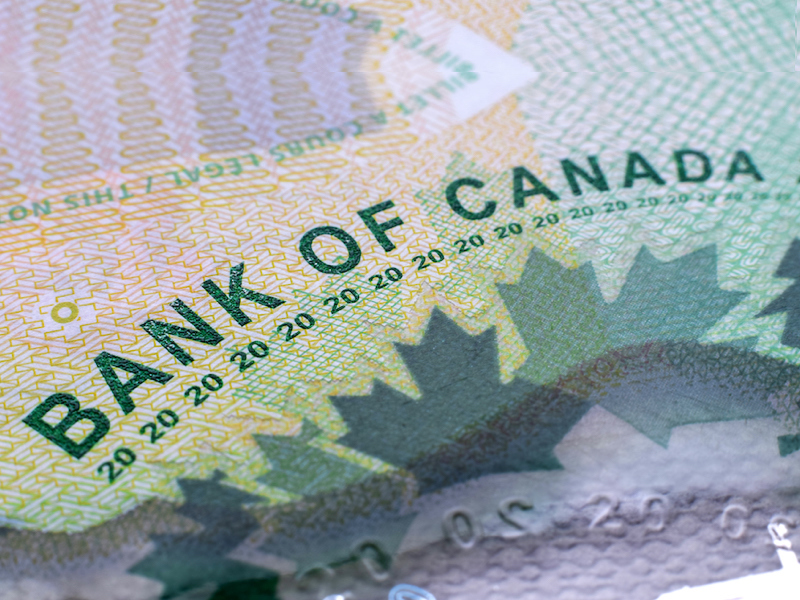
The Bank of Canada raised its benchmark interest rate by 25 basis points to 2.50% on Wednesday, marking its first rate hike in more than three years.
The decision comes as rising energy prices threaten to push inflation higher across the Canadian economy. Policymakers also warned that additional interest rate increases could become necessary if inflationary pressures continue.
The central bank revised its inflation forecasts sharply higher while expressing cautious optimism about Canada’s economic growth outlook.
Bank of Canada Raises Interest Rates to 2.50%
The Bank of Canada’s latest interest rate decision represents a significant shift in monetary policy following an extended period without rate increases.
Governor Tiff Macklem explained that stronger-than-expected economic activity and persistent inflation risks justified the move.
The central bank is particularly concerned that elevated oil and fuel prices could spread into other sectors, making inflation more difficult to control.
Macklem indicated that further monetary tightening remains possible. However, he emphasized that policymakers would proceed carefully because of uncertainty surrounding global economic conditions.
The October decision marks the Bank of Canada’s first interest rate increase since July 2023 and its first policy adjustment in approximately one year.
Despite the increase, the benchmark rate remains below the estimated neutral level, where monetary policy neither stimulates nor significantly restricts economic activity.
Canada Inflation Forecast Rises Sharply for 2027
The central bank significantly increased its inflation projections as higher energy costs continued to affect consumer prices.
Inflation is now expected to average approximately 3.1% in 2027, compared with the previous forecast of 2.0% published in July.
Canada’s annual inflation rate reached 3.1% in September, exceeding the upper limit of the central bank’s 1% to 3% inflation-control range.
The increase was driven primarily by higher energy prices and transportation expenses.
Bank of Canada officials expect inflation to reach approximately 3.5% by the end of 2026 before remaining close to 3% throughout much of 2027.
Consumer price growth is projected to return toward the central bank’s 2% target around the middle of 2028.
Higher Energy Prices Increase Inflation Risks
According to Macklem, prolonged increases in fuel prices could eventually affect a broader range of goods and services.
Businesses facing higher transportation, manufacturing and distribution costs may pass those expenses on to consumers.
The central bank’s business surveys suggest that such price increases could become more widespread over the coming year.
This possibility has raised concerns that inflation could remain elevated even after the initial energy price shock begins to fade.
However, uncertainty surrounding the Middle East conflict continues to complicate the outlook.
A faster resolution of geopolitical tensions could reduce energy costs and ease inflationary pressures.
Economists Warn Higher Rates Could Slow Canada’s Recovery
Not all economists support the Bank of Canada’s decision to raise interest rates.
Some analysts argue that underlying inflation remains relatively contained, with several core inflation measures hovering near 2%.
Core inflation excludes or reduces the influence of volatile price movements, providing a clearer picture of underlying inflationary pressures.
Critics also warn that higher borrowing costs could weaken Canada’s economic recovery, particularly as households and businesses continue to face financial pressure.
The country’s labor market remains relatively soft, while ongoing trade tensions with the United States have created additional uncertainty.
Higher interest rates could further discourage consumer spending, business investment and borrowing.
Nevertheless, Bank of Canada officials believe the risks associated with persistent inflation justify withdrawing some monetary stimulus.
US Tariffs Threaten Canadian Economic Growth
Trade tensions between Canada and the United States remain another major challenge for the economy.
Macklem warned that additional US tariffs could slow economic activity during the final quarter of 2026.
The central bank expects economic growth to moderate following a stronger-than-anticipated second quarter.
Canada’s economy expanded at an annualized rate of 3.3% during the second quarter, supported by resilient domestic activity.
However, growth is projected to slow to approximately 2.0% in the third quarter and 0.8% in the fourth quarter.
Despite these near-term challenges, policymakers expect economic conditions to improve gradually during 2027.
Stronger consumer spending, recovering exports and increased business investment are expected to support the recovery.
Bank of Canada Upgrades GDP Growth Forecasts
The Bank of Canada also revised its economic growth projections, reflecting stronger activity earlier in the year.
The central bank now expects Canada’s economy to expand by approximately 1.0% in 2026, compared with its previous forecast of 0.7%.
Looking further ahead, GDP growth is projected to reach 2.0% in both 2027 and 2028.
These estimates represent an improvement from the earlier projections of 1.8% for both years.
Macklem suggested that stronger economic growth could help reduce unused productive capacity across the Canadian economy.
However, the recovery remains vulnerable to trade restrictions, geopolitical tensions and persistent inflation.
Will the Bank of Canada Raise Interest Rates Again?
The possibility of another Bank of Canada rate hike remains a central concern for financial markets.
Although policymakers have not committed to further increases, they have indicated that additional tightening may be required if inflation remains elevated.
Future decisions will depend on incoming economic data, particularly inflation, employment, consumer spending and business activity.
The central bank must balance the need to control inflation against the risk of slowing an already fragile economic recovery.
For Canadian households, additional interest rate increases could translate into higher borrowing costs, particularly for variable-rate mortgages and other loans linked to benchmark rates.
Meanwhile, currency markets will closely monitor the Bank of Canada’s monetary policy outlook for potential implications for the Canadian dollar.
The next scheduled interest rate announcement is December 9, 2026.
For now, the central bank’s decision signals a renewed focus on inflation control, with further policy adjustments possible if price pressures fail to ease.