Germany’s private sector continued to expand in October, although business activity grew at a slower pace as demand for new orders remained subdued, according to preliminary survey data released on Friday.
The S&P Global Flash Composite Purchasing Managers’ Index (PMI) declined to 52.8 in October from 53.8 in September. Despite the slowdown, the index remained above the 50-point threshold for the fourth consecutive month, signaling continued economic expansion.
The reading also fell short of economists’ expectations of 53.3, according to a Reuters poll.
The composite PMI measures activity across Germany’s manufacturing and services sectors, which together represent more than two-thirds of the eurozone’s largest economy. Readings above 50 indicate expansion, while figures below that level signal contraction.
Germany’s Economic Recovery Remains Fragile
Phil Smith, economics associate director at S&P Global Market Intelligence, noted that October’s results pointed to a sustained recovery in German business activity.
However, the slower pace of expansion highlighted the vulnerability of Germany’s economic recovery, despite several consecutive months of improving conditions.
Manufacturing Outperforms the Services Sector
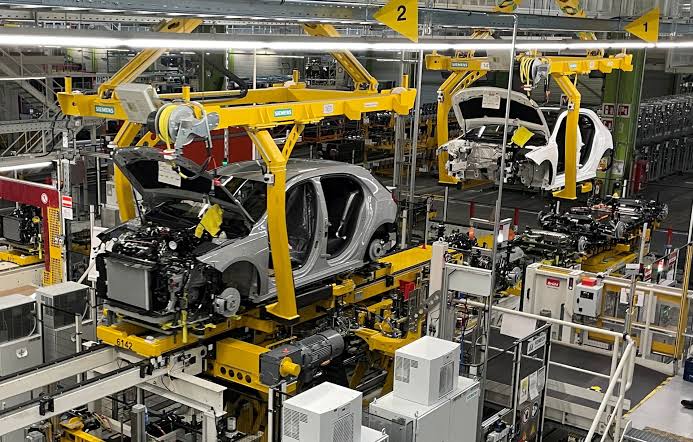
Germany’s manufacturing sector maintained relatively strong momentum in October, with factory production continuing to increase at a solid pace.
The manufacturing PMI climbed to 54.2, its highest level in two months, compared with 53.9 in September.
Meanwhile, the services sector recorded significantly weaker growth. Its PMI declined to 51.7 from 52.9 in September, although activity continued to expand for the second consecutive month.
The divergence highlighted stronger industrial performance compared with the more subdued recovery in services.
Weak Demand Weighs on New Business
New business across Germany’s private sector increased only marginally during October, reflecting continued uncertainty among customers.
Services companies reported stagnant demand as clients postponed purchasing decisions and faced tighter spending budgets.
Manufacturing orders also lost momentum, with growth slowing to a three-month low. Nevertheless, export demand continued to provide some support to industrial activity.
Inflation Pressures Ease as Business Confidence Diverges
Price inflation across Germany’s private sector moderated in October, with the rate of increase in prices charged for goods and services reaching a seven-month low.
However, inflation remained comfortably above its long-term average, indicating that underlying price pressures had not completely disappeared.
Looking ahead, German businesses generally maintained a positive outlook for production and activity over the next 12 months.
Confidence among services companies improved to its highest level since February, suggesting expectations of stronger demand in the coming months.
In contrast, manufacturing companies became more cautious. Their expectations dropped to the lowest level since July, largely reflecting concerns about rising input costs.
Overall, Germany’s October PMI data pointed to an economy that continues to recover but remains exposed to weak demand, uneven sector performance and persistent cost pressures.