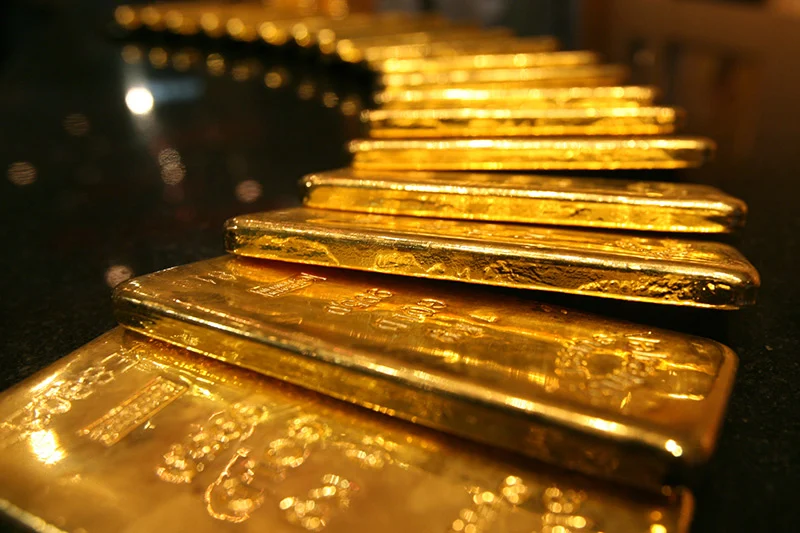
Gold prices declined on Wednesday, trading near $4,120 per ounce as uncertainty surrounding potential peace efforts in the US-Iran conflict continued to unsettle financial markets.
Concerns about persistent inflation and the possibility of additional Federal Reserve interest rate hikes also pressured precious metals.
Spot gold fell 0.2% to $4,117.31 per ounce by 02:36 ET (06:36 GMT), while US gold futures dropped 0.2% to $4,134.92.
The broader precious metals market also weakened as investors assessed geopolitical developments and the outlook for US monetary policy.
Gold and Silver Prices Fall as Precious Metals Weaken
Selling pressure extended beyond gold, with several major precious metals recording losses during Wednesday’s session.
Silver prices declined 1.2% to $57.2955 per ounce, while platinum dropped 1.8% to $1,627.45.
Palladium also weakened, falling 1.6% to $1,088.40.
Meanwhile, the US Dollar Index edged 0.1% higher to 101.80, adding modest pressure to dollar-denominated commodities.
Gold has now lost more than 1% since the beginning of the week.
More significantly, the precious metal remains approximately 20% below its level when the US-Iran conflict began in late February.
The conflict has disrupted global energy markets, driving oil prices higher and intensifying inflation concerns.
These developments have complicated the outlook for central banks, particularly the Federal Reserve.
Higher interest rates typically reduce the attractiveness of gold because the metal does not generate interest income.
Iran Peace Uncertainty and Oil Prices Pressure Gold
Developments surrounding potential negotiations to end the US-Iran war remained a major influence on gold prices.
Crude oil stabilized on Wednesday after retreating from a five-month high during the previous session.
However, optimism about a possible peace agreement weakened after a diplomat dismissed reports suggesting that a deal was close.
Gold initially benefited from falling energy prices as investors anticipated that reduced geopolitical tensions could ease inflationary pressures.
Nevertheless, those gains quickly disappeared when oil prices recovered.
The shifting expectations also affected currency and bond markets, with the US dollar and Treasury yields moving lower during the period of volatility.
Persistent uncertainty over the conflict continues to influence inflation expectations, making it difficult for investors to assess the future direction of interest rates.
Falling Treasury Yields Offer Limited Support to Gold
US government bond markets also responded to changing oil prices and weaker economic indicators.
Longer-dated Treasury bond prices increased as crude oil retreated, pushing yields lower.
Recent US economic data added to concerns about slowing growth.
September housing starts declined, while pending home sales dropped to a record low.
The figures pointed to continued weakness in the American housing market, raising questions about the economy’s resilience amid elevated borrowing costs.
Lower Treasury yields can support gold by reducing the opportunity cost of holding an asset that pays no interest.
However, persistent inflation concerns and expectations of additional monetary tightening have limited the precious metal’s recovery.
Federal Reserve Rate Decision Remains in Focus
Investors are now turning their attention to the Federal Reserve’s upcoming monetary policy meeting on October 27-28.
Markets currently expect the central bank to keep interest rates unchanged at its next meeting.
Federal Reserve Chair Kevin Warsh offered few indications about the timing of future policy adjustments during his latest public remarks.
His comments did little to change expectations that policymakers would maintain their current interest rate stance in October.
The remarks came shortly before the Federal Reserve entered its customary communications blackout period ahead of the meeting.
According to the market probabilities cited in the report, traders assigned less than a 17% chance to a 25-basis-point interest rate increase in October.
However, expectations for additional tightening later in the year remained elevated.
Markets indicated approximately an 85% probability of another Federal Reserve rate hike before the end of 2026.
Inflation continuing to exceed the central bank’s 2% target remains an important factor behind those expectations.
Gold Price Outlook Hinges on Inflation and Interest Rates
Looking ahead, the direction of gold prices will likely depend on developments in the US-Iran conflict, energy markets, and Federal Reserve monetary policy.
A sustained decline in oil prices could ease inflation concerns and reduce expectations for additional interest rate increases.
Conversely, renewed geopolitical tensions and higher energy costs could reinforce inflationary pressures, potentially keeping monetary conditions restrictive.
Investors will also closely monitor upcoming economic indicators for evidence of weakening growth or persistent inflation.
With gold trading near $4,120 per ounce, the outlook remains uncertain as investors balance geopolitical risks against the prospect of higher US interest rates.