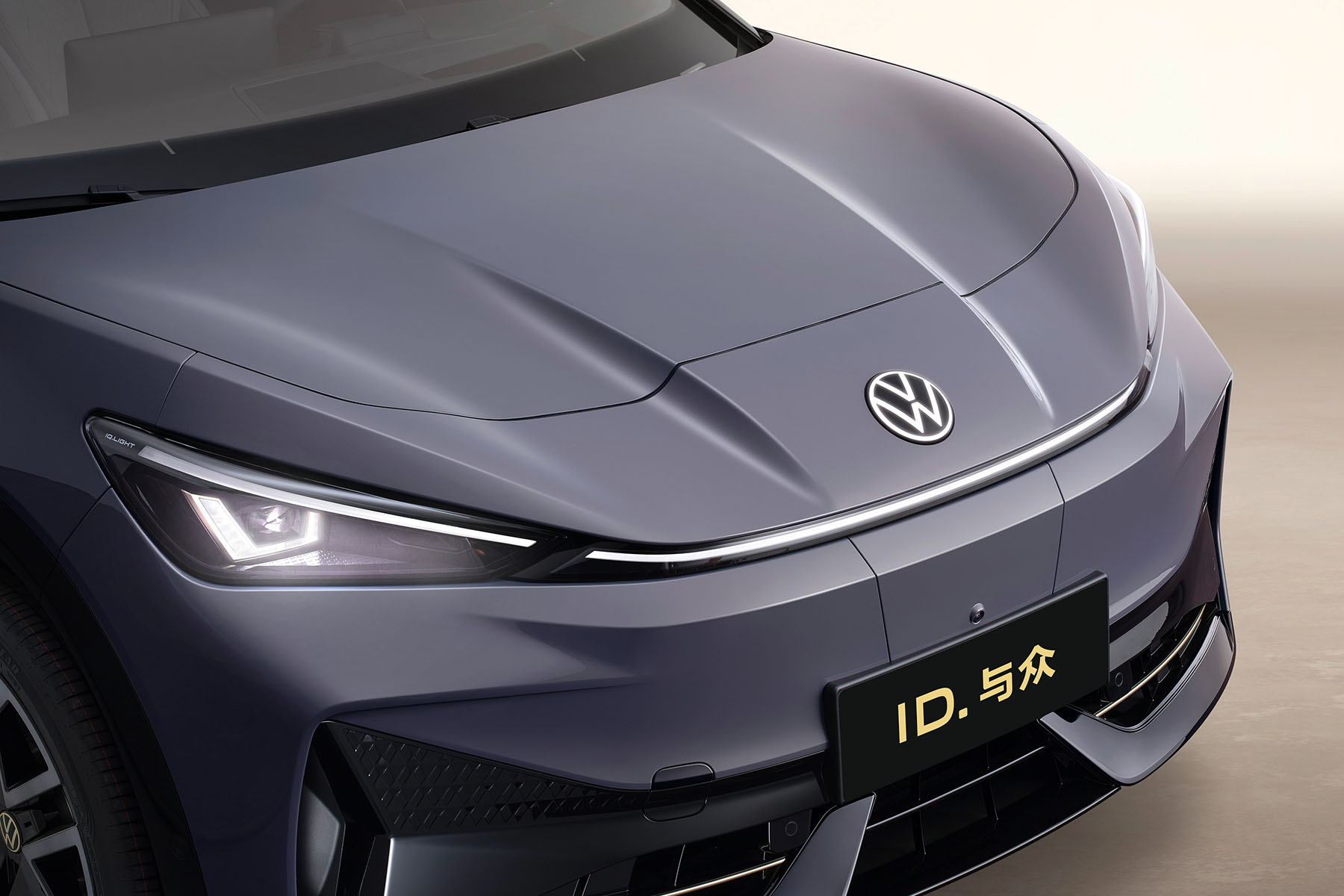
Volkswagen’s partnership with Chinese electric vehicle manufacturer Xpeng is facing significant challenges as the German automaker struggles to regain its position in the world’s largest automotive market.
The Volkswagen-Xpeng partnership, established in 2023, was intended to accelerate electric vehicle development and help the company compete with China’s rapidly expanding domestic manufacturers.
However, disappointing sales of the jointly developed ID. UNYX 08 electric SUV have raised questions about whether the strategy can deliver the turnaround Volkswagen urgently needs.
According to company planning documents reviewed by Reuters, the electric SUV recorded average monthly sales of just 267 vehicles between its April 2026 launch and August. That was substantially below Volkswagen’s initial target of 3,622 units per month.
Volkswagen’s China EV Sales Fall Short of Expectations
Volkswagen once dominated China’s automotive industry, maintaining its position as the country’s leading automaker for decades until 2022.
However, the rapid expansion of domestic electric vehicle manufacturers has dramatically changed the competitive landscape.
China previously accounted for nearly half of Volkswagen Group’s profits. Today, that contribution has declined to approximately 10%.
The deterioration has contributed to the largest restructuring in the company’s 89-year history.
Volkswagen hoped that partnering with Xpeng would help it develop technologically advanced electric vehicles more quickly and at competitive prices.
Nevertheless, the weak commercial performance of the ID. UNYX 08 suggests that access to Chinese technology alone may not be enough to restore its market position.
Xpeng Partnership Struggles Against Chinese EV Competitors
The ID. UNYX 08 entered the Chinese market with a starting price of approximately $34,260.
However, the vehicle faced intense competition from domestic manufacturers offering more advanced technology at similar prices.
Xiaomi’s YU7 electric SUV featured sophisticated sensor technology, while Zeekr’s 7X offered competitive fast-charging capabilities.
The sales figures illustrate the scale of Volkswagen’s challenge.
Between April and August, Xiaomi sold nearly 57,000 YU7 vehicles, while Zeekr delivered more than 21,000 units of the 7X.
During the same period, Volkswagen sold approximately 1,300 ID. UNYX 08 vehicles, according to automotive consultancy ThinkerCar.
The substantial difference highlights changing consumer preferences in China, where buyers increasingly prioritise software capabilities, technology and value over traditional automotive brand recognition.
Industry analysts have also questioned whether Volkswagen’s development timelines can keep pace with China’s rapidly evolving electric vehicle market.
Limited Dealership Network Adds to Volkswagen’s Problems
Weak sales were not solely the result of product competitiveness.
Volkswagen also faced difficulties reaching customers through its distribution strategy.
Instead of using its established network of more than 3,000 dealerships operated alongside joint-venture partners FAW and SAIC, the company primarily distributed the ID. UNYX 08 through Volkswagen Anhui.
The newer electric vehicle venture had a significantly smaller retail presence, limiting awareness and accessibility among potential customers.
According to people familiar with the company’s operations, many consumers were unaware that the vehicle was available.
Volkswagen acknowledged the importance of expanding its distribution network.
The company said Volkswagen Anhui had increased its retail presence to 166 outlets and was cooperating with FAW-Volkswagen at selected dealerships.
It also reported improving sales across the Anhui range, including the earlier UNYX 06 and UNYX 07 models.
However, the comparatively limited network remained a disadvantage against established domestic competitors.
Volkswagen Cuts ID. UNYX 08 Sales Forecasts
Internal planning documents reveal how significantly Volkswagen’s initial expectations have changed.
In 2024, the automaker projected sales of approximately 32,600 ID. UNYX 08 vehicles by the end of 2026.
It also anticipated selling 70,400 units in 2027, with annual deliveries eventually exceeding 120,000 vehicles later in the model’s production cycle.
However, the company revised its expectations earlier in 2026.
Its annual sales forecast for the current year was reduced by more than 60% to approximately 12,300 vehicles.
The 2027 target was also lowered to 64,000 units, around 10% below the original projection.
Despite these adjustments, actual sales during the vehicle’s initial months remained substantially below expectations.
Volkswagen has reportedly responded by advertising discounts of approximately 17% compared with the SUV’s original launch price.
The price reductions could improve the vehicle’s competitiveness, although their impact on demand remains uncertain.
Volkswagen Makes Another Major Bet on Xpeng Technology
Despite the disappointing launch of the ID. UNYX 08, Volkswagen continues to pursue ambitious plans for its next Xpeng-linked vehicle.
The ID. UNYX 09 sedan is scheduled to reach Chinese showrooms in October 2026.
According to internal planning documents, Volkswagen initially anticipated average monthly sales approaching 4,900 vehicles.
The company also projected annual sales exceeding 90,000 units by 2034.
However, the weak performance of the ID. UNYX 08 has increased uncertainty surrounding these expectations.
People familiar with Volkswagen’s planning process told Reuters that ambitious sales forecasts can play an important role in securing approval for new vehicle projects from the company’s German headquarters.
This can encourage overly optimistic projections that may prove difficult to achieve in China’s highly competitive market.
Volkswagen maintains that its cooperation with Xpeng has already produced important technological benefits.
The company said the partnership helped develop a new electric vehicle architecture for locally manufactured models, completing the project in just 18 months.
Volkswagen also identified the UNYX 08 SUV and UNYX 09 sedan as additional results of the cooperation.
Xpeng declined to comment on the reported developments.
Volkswagen’s Previous China Partnerships Reveal Wider Challenges
The partnership with Xpeng is part of Volkswagen’s broader effort to obtain the technology and expertise needed to compete against Chinese electric vehicle manufacturers.
Over recent years, the German automaker has explored or established cooperation agreements covering batteries, vehicle software, autonomous driving and charging infrastructure.
However, several projects have encountered difficulties.
In 2019, Volkswagen outlined plans to introduce nearly 40 locally produced new-energy vehicle models by 2025.
The company also set an ambitious target of delivering 1.5 million electric and plug-in hybrid vehicles in China during that year.
In comparison, Volkswagen delivered 115,500 battery-electric vehicles in China in 2025, according to company figures. The two figures cover different vehicle categories, but the result nevertheless illustrates the difficulties surrounding its electrification strategy.
Volkswagen also explored potential cooperation with other Chinese manufacturers as competition intensified.
According to people cited by Reuters, discussions or assessments included possible partnerships involving BYD and Leapmotor.
One proposal reportedly involved using BYD’s Dolphin electric vehicle platform for Volkswagen’s Jetta brand.
However, no agreement materialised.
Following publication of the Reuters report, Volkswagen denied having held discussions with BYD about a potential collaboration.
Stellantis ultimately established its own partnership with Leapmotor in 2023.
Charging Infrastructure and Technology Ventures Face Setbacks
Some of Volkswagen’s completed Chinese partnerships have also experienced operational and legal difficulties.
A joint venture with charging technology company Du-Power, established in 2020, became involved in shareholder disputes and litigation.
The disagreements included allegations concerning unpaid supplier bills and damage to business interests.
Du-Power filed legal proceedings against Volkswagen China and executives associated with the venture in 2024.
Volkswagen said China’s Supreme People’s Court dismissed the startup’s claims in March 2026.
Separately, a cancelled flying-car initiative involving a Chinese partner became entangled in legal disputes.
These developments illustrate the complexities facing international automakers seeking to accelerate innovation through partnerships with local technology companies.
China’s EV Market Transformation Threatens Foreign Automakers
Volkswagen’s difficulties reflect a broader transformation of China’s automotive industry.
Domestic manufacturers such as BYD and Geely have gained significant market share by developing technologically advanced vehicles at competitive prices.
Chinese companies have also shortened product development cycles, allowing them to introduce new models more frequently than many established international manufacturers.
According to an internal Volkswagen communication reviewed by Reuters, the company expects China’s passenger vehicle market to contract by approximately 20% in 2026.
That would represent a decline of roughly 4.5 million vehicles.
Volkswagen China chief executive Ralf Brandstätter described the industry as experiencing an exceptional downturn.
He also highlighted shrinking industry profit margins, which had fallen to approximately 1.5%.
Meanwhile, typical vehicle development cycles have reportedly shortened from seven years to just three.
Some newly launched electric vehicles are also experiencing sharp sales declines within their first three months on the market.
These developments are putting considerable pressure on manufacturers to reduce costs, accelerate innovation and adapt production capacity.
Volkswagen’s China Market Share Has Halved Since 2019
The shift in China’s automotive market is particularly evident in Volkswagen’s declining market share.
In 2019, approximately one in five passenger vehicles sold in China belonged to the Volkswagen Group.
However, during the first eight months of 2026, that share had fallen to roughly 10%, according to the China Passenger Car Association.
The decline demonstrates how rapidly domestic competitors have gained ground.
Volkswagen’s management has recognised the need to adjust its manufacturing operations and eliminate unnecessary duplication across its Chinese brands and business units.
The company is also facing pressure to reduce excess production capacity as the broader automotive market contracts.
However, restructuring a large international automotive business presents significant challenges, especially when competitors can introduce new products at a faster pace.
Can Volkswagen Recover Its Position in China’s EV Market?
Volkswagen’s future in China will depend on whether it can successfully combine established manufacturing expertise with the software capabilities, pricing and development speed demanded by local consumers.
The Xpeng partnership remains an important component of that strategy.
Although the ID. UNYX 08 has struggled commercially, Volkswagen continues to emphasise the technological progress achieved through its cooperation with the Chinese manufacturer.
The upcoming ID. UNYX 09 sedan could provide another indication of whether the partnership can generate stronger sales.
However, growing competition from BYD, Xiaomi, Geely and other domestic manufacturers leaves Volkswagen with limited room for further delays.
Industry experts have compared the company’s challenges with those previously experienced by established technology brands that underestimated rapidly changing markets.
Nevertheless, Bill Russo, founder of automotive consultancy Automobility, believes Volkswagen still has opportunities to recover.
The critical challenge is whether the German automaker can transform its operations quickly enough to remain competitive.
For investors, Volkswagen’s China strategy represents a significant test of the company’s ability to protect profitability, rebuild market share and adapt to a global automotive industry increasingly influenced by Chinese electric vehicle technology.