China’s benchmark lending rates remained unchanged in October 2026, marking the 17th consecutive month without an adjustment. The decision reflects Beijing’s cautious monetary policy approach as authorities balance economic growth support with concerns about banking sector profitability.
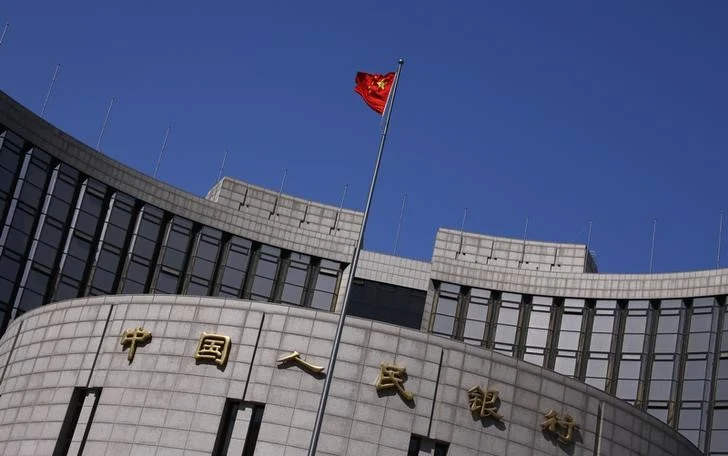
The People’s Bank of China (PBOC) maintained its one-year loan prime rate (LPR) at 3.00%, while the five-year LPR remained at 3.50%.
Both decisions matched economists’ expectations, suggesting that Chinese policymakers are not currently under pressure to introduce additional interest rate cuts.
China Keeps Key Lending Rates Unchanged
China’s decision to maintain borrowing costs provides stability for businesses, households and financial institutions.
The one-year loan prime rate serves as an important benchmark for corporate and household lending. Consequently, changes to this rate can influence financing costs, business investment and consumer borrowing.
Meanwhile, the five-year LPR is widely used as a reference for mortgage rates and other long-term loans.
Keeping both rates unchanged suggests that the PBOC is prioritising financial stability while monitoring economic developments.
Lower borrowing costs could encourage investment and consumer spending. However, further rate reductions could also put pressure on commercial banks’ profit margins.
China’s Economic Growth Accelerates to 4.5%
The interest rate decision follows stronger-than-expected economic figures from the world’s second-largest economy.
China’s gross domestic product expanded by 4.5% year-over-year during the third quarter of 2026, accelerating from 4.3% in the previous quarter.
The improvement was largely supported by resilient exports, which helped offset weakness in domestic consumption.
However, China’s property sector continued to struggle, while subdued household demand remained a significant challenge.
The stronger economic performance has reduced the immediate need for aggressive monetary stimulus.
Nevertheless, the uneven recovery suggests that policymakers may need to consider additional targeted measures if domestic demand fails to improve.
What Does the PBOC Decision Mean for China’s Economy?
The unchanged lending rates indicate that Chinese authorities are adopting a measured approach to monetary policy.
Rather than introducing broad-based interest rate cuts, policymakers appear focused on supporting economic activity without creating additional pressure on the banking system.
Several sectors remain particularly sensitive to borrowing costs.
Property developers and homebuyers depend heavily on mortgage financing, making the housing market especially exposed to changes in the five-year loan prime rate.
Small businesses and manufacturers are also affected by corporate lending conditions, particularly when investment demand remains subdued.
Meanwhile, banks must balance competitive lending rates with the need to protect profitability.
Will China Cut Interest Rates Later in 2026?
Investors will continue monitoring signals from the People’s Bank of China regarding future monetary easing and economic support measures.
Beijing is seeking to achieve its official 2026 economic growth target of 4.5% to 5.0%.
The latest GDP figures suggest that China remains on track to meet that objective, reducing the urgency for immediate interest rate reductions.
However, continued weakness in housing demand, private investment and consumer spending could influence future policy decisions.
For now, China’s decision to leave benchmark lending rates unchanged highlights its preference for monetary stability while assessing whether the recent improvement in economic growth can be sustained.