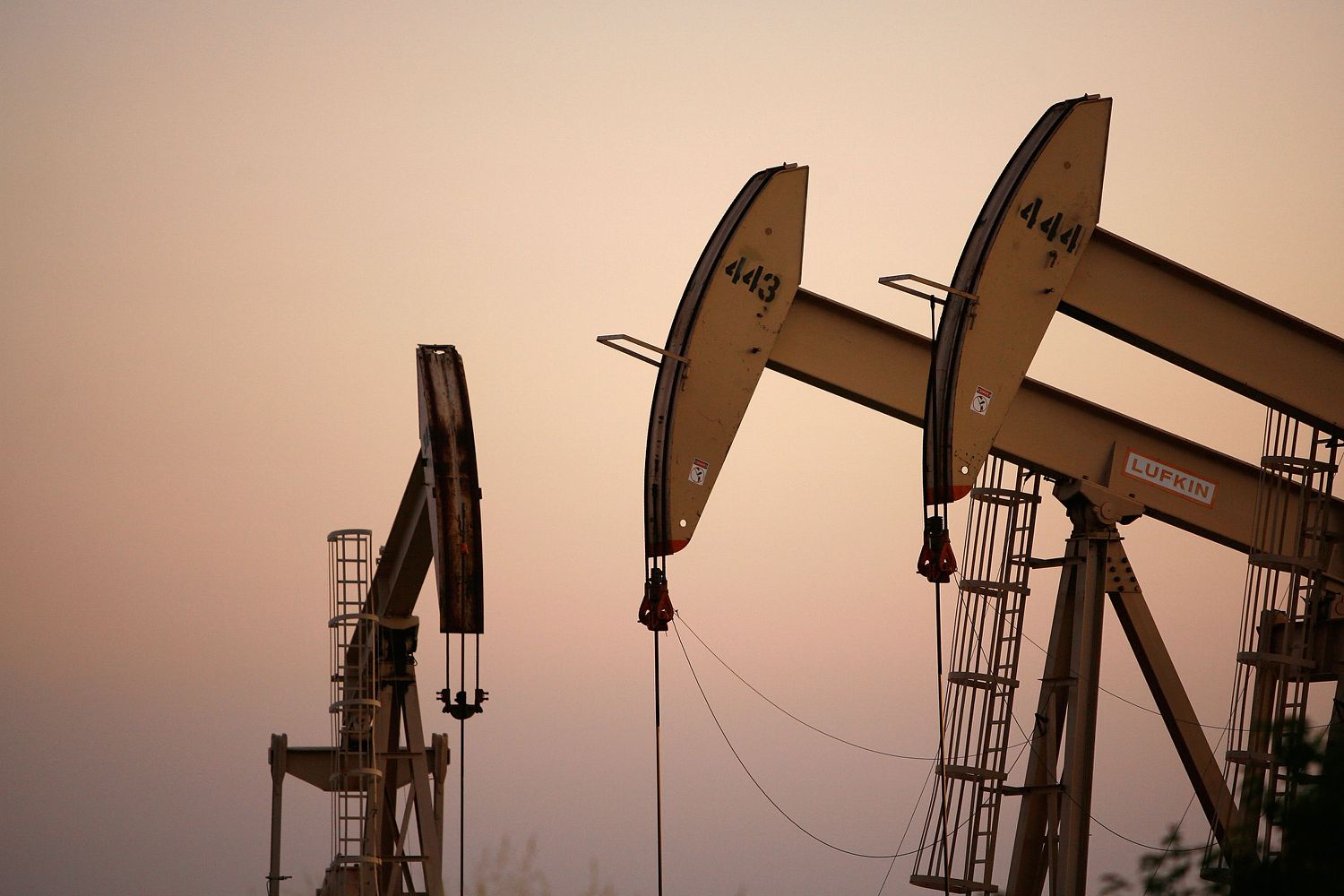
Oil prices declined on Thursday as investors weighed escalating shipping threats near the Strait of Hormuz against reports that the United States could ease restrictions on certain sanctioned oil tankers. The potential policy change raised expectations that global petroleum transportation costs might eventually decline.
Despite renewed concerns about Middle Eastern supply disruptions, crude futures came under pressure as traders assessed recovering regional exports and the possibility of improved tanker availability.
During Thursday’s morning session, Brent crude futures dropped 1% to $105.05 per barrel. Meanwhile, US West Texas Intermediate (WTI) crude fell 1% to $94.18 per barrel.
However, prices remained volatile as geopolitical tensions, shifting supply expectations and unexpectedly large US inventory declines continued to influence energy markets.
Strait of Hormuz Attacks Raise Global Oil Supply Concerns
Security conditions around the Strait of Hormuz deteriorated further following new attacks on commercial vessels.
According to maritime officials cited by Reuters, a container ship and a dry bulk carrier sank near the strategic waterway after being struck by projectiles in separate incidents.
The attacks occurred within approximately 24 hours, highlighting the growing risks facing international shipping companies operating in the Persian Gulf.
The Strait of Hormuz remains one of the world’s most important energy transportation routes, making disruptions particularly significant for global oil markets.
Attacks on commercial vessels have intensified in recent days, raising concerns that shipping interruptions could threaten the recovery in Middle Eastern petroleum exports.
Meanwhile, renewed fighting involving Saudi Arabia and Houthi militants in Yemen has increased fears that regional instability could spread to additional maritime trade routes.
Among the areas attracting attention is the Bab el-Mandeb Strait, which connects the Red Sea with the Gulf of Aden.
Further disruptions in this passage could complicate global shipping operations and increase transportation expenses for crude oil and refined petroleum products.
US Considers Easing Sanctions on Shadow Fleet Oil Tankers
Despite rising geopolitical risks, reports of a possible adjustment to US sanctions policy placed downward pressure on crude prices.
The Trump administration is reportedly considering easing restrictions on certain vessels belonging to the global shadow fleet.
These ships have previously transported crude oil and petroleum products associated with sanctioned countries, including Russia, Iran and Venezuela.
The proposal could allow some previously restricted tankers to transport legally traded oil, potentially increasing available shipping capacity.
The objective would be to ease elevated freight rates, which have become a significant contributor to global energy costs.
Higher shipping expenses have kept delivered crude oil prices elevated even as petroleum exports from several producing regions have recovered.
However, the proposed sanctions changes have not been finalized.
Furthermore, industry analysts have questioned whether relaxing restrictions would meaningfully increase tanker availability.
Many shadow fleet vessels face obstacles involving insurance, maintenance standards, ownership structures and international regulations.
Consequently, the actual impact on global transportation costs could be smaller than initially anticipated.
Middle East Oil Exports Recover Despite Regional Conflict
The recovery in Middle Eastern petroleum production and exports has also limited upward pressure on crude oil prices.
According to the International Energy Agency (IEA), crude exports from Gulf producers increased by approximately 4.4 million barrels per day in September.
This brought regional exports to around 13.9 million barrels per day, equivalent to more than 75% of their pre-war levels.
The improvement followed efforts by major producers to restore production and shipping operations disrupted by the conflict that began in late February.
Data from maritime analytics companies also suggest that tanker movements through the Strait of Hormuz recovered significantly during September.
However, the recent escalation in attacks has raised questions about whether these improvements can be sustained.
Shipping companies continue to face elevated insurance premiums, security threats and logistical challenges when operating in the region.
As a result, even a temporary decline in attacks may not immediately restore transportation costs to normal levels.
Russian Crude Production Adds to Global Supply Recovery
Higher Russian oil production has provided another source of potential relief for global energy markets.
According to figures cited from the IEA, Russian crude output increased by approximately 65,000 barrels per day in September, reaching 8.43 million barrels per day.
Nevertheless, production remained around 870,000 barrels per day below its level a year earlier.
The recovery suggests that some previously disrupted supply is gradually returning to the market.
At the same time, additional output from Middle Eastern producers has helped improve overall crude availability.
However, the global supply outlook remains vulnerable to further geopolitical disruptions, particularly as conflicts continue affecting major oil-producing regions.
IEA Warns Global Diesel Shortages Could Persist Into 2027
Although crude oil supplies have recovered in several regions, the market for refined petroleum products remains under considerable pressure.
The IEA has warned that diesel shortages could continue well into 2027 as refinery outages and disruptions to regional energy infrastructure restrict fuel availability.
These shortages have contributed to unusually high diesel prices and refining margins.
The agency also expects global oil demand to decline by approximately 2.6 million barrels per day in 2026.
Elevated fuel costs, weaker economic activity and supply constraints are among the principal factors behind the projected contraction.
Despite weaker demand, the IEA expects oil markets to remain undersupplied through the end of 2026.
This reflects the continuing impact of disruptions to production, transportation and refining capacity.
Consequently, the recent recovery in crude exports may not be sufficient to eliminate broader supply concerns.
US Crude Oil Inventories Post Massive Unexpected Decline
Meanwhile, US petroleum inventory data provided additional support for oil prices.
Figures released by the American Petroleum Institute (API) showed that domestic crude inventories declined by approximately 11.12 million barrels during the week ending October 9.
The result sharply contrasted with market expectations for an inventory increase of around 1.9 million barrels.
The substantial withdrawal suggested tighter-than-anticipated conditions in the US petroleum market.
Official data subsequently released by the Energy Information Administration (EIA) confirmed a significant decline, although the reported figure was smaller.
According to the EIA, commercial crude inventories fell by approximately 8.6 million barrels to 415.6 million barrels.
The agency’s figures indicated that inventories remained roughly 3% below their five-year seasonal average.
The unexpectedly large decline helped support WTI crude later in Thursday’s trading session.
Hurricane Isaias Disrupts US Gulf Oil Production
Recent weather-related disruptions contributed to the sharp decline in American crude inventories.
Hurricane Isaias forced energy companies to evacuate offshore facilities and temporarily suspend production across parts of the US Gulf of Mexico.
Precautionary shutdowns initially affected more than two-thirds of the region’s offshore crude production.
The disruptions reduced domestic output and complicated transportation and refinery operations.
According to official weekly figures, overall US crude production declined by approximately 300,000 barrels per day to 13.7 million barrels per day.
Lower crude imports and increased refinery processing also contributed to the inventory draw.
However, much of the affected offshore production has subsequently resumed, suggesting that some hurricane-related supply pressure could ease.
Oil Price Outlook Remains Highly Sensitive to Geopolitical Developments
The global crude oil market continues to face competing influences that could produce significant price volatility.
On one side, potential US sanctions relief, recovering Middle Eastern exports and weaker global demand expectations could limit further price increases.
On the other, continued attacks near the Strait of Hormuz, persistent diesel shortages and declining petroleum inventories present substantial upside risks.
The possibility of further shipping disruptions remains particularly important because of the strategic role of Middle Eastern energy exports.
Meanwhile, traders will closely monitor developments surrounding US sanctions policy, regional conflicts and upcoming supply data.
For now, oil prices appear caught between improving crude availability and the continuing threat of major transportation and supply disruptions.
The direction of Brent and WTI will likely depend on whether the recovery in global petroleum flows can continue without another significant escalation in Middle Eastern tensions.