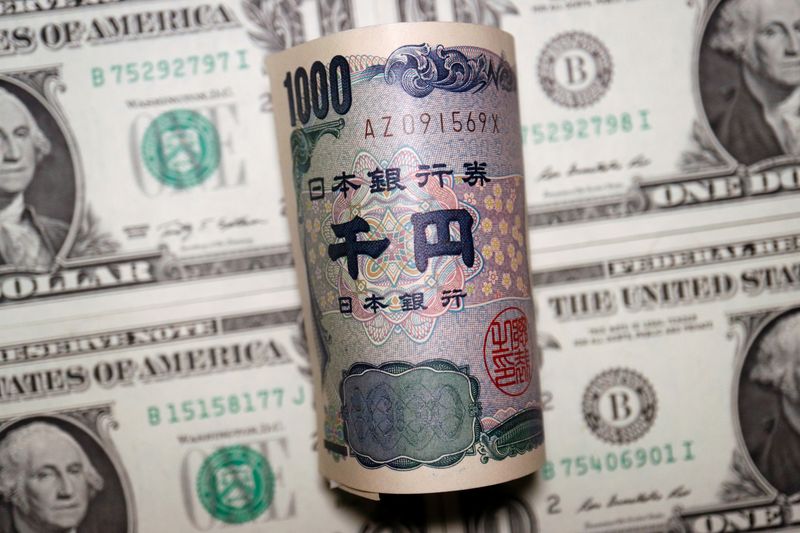
Asian currencies delivered mixed performances on Thursday as the US dollar retreated from an 18-month high. Investors reassessed expectations for Federal Reserve interest rates following stronger-than-anticipated US inflation figures.
The US Dollar Index, which measures the greenback against a basket of major currencies, declined 0.6% to 101.96 by 23:50 ET (03:50 GMT).
The decline followed a 0.4% advance on Wednesday, when unexpectedly high inflation data initially strengthened the dollar and increased expectations of further monetary tightening.
US Inflation Fuels Uncertainty Over Federal Reserve Policy
The latest US Consumer Price Index (CPI) report revealed that annual inflation accelerated to 3.7% in September, up from 3.4% in August.
The reading exceeded economists’ expectations of 3.6%, raising concerns about persistent inflationary pressures across the American economy.
Meanwhile, core inflation, which excludes volatile food and energy prices, increased 2.6% year-on-year. This also surpassed market forecasts of 2.5%.
The stronger inflation figures initially encouraged investors to increase their expectations of another Federal Reserve interest rate hike.
However, subsequent comments from Fed policymakers suggested that the central bank may adopt a more cautious approach before tightening monetary policy further.
Federal Reserve Vice Chair Michelle Bowman and San Francisco Fed President Mary Daly indicated that officials could wait for additional economic evidence before making another interest rate decision.
Consequently, expectations of a rate increase at the October 27–28 Federal Reserve meeting eased after initially rising following the inflation report.
Falling US Treasury yields also contributed to the dollar’s retreat, reducing some of the support the currency had received from expectations of higher interest rates.
Investors are now awaiting additional economic indicators, including US producer price inflation and retail sales data.
Upcoming remarks from Federal Reserve officials could also provide important clues about the central bank’s next monetary policy decisions.
Japanese Yen Strengthens Following Intervention Warnings
The Japanese yen gained ground against the US dollar after Japanese authorities renewed warnings about excessive foreign exchange market volatility.
The USD/JPY currency pair declined 0.4% after Finance Minister Satsuki Katayama reiterated concerns about unusually sharp currency movements.
Her comments increased market attention on the possibility of official intervention to stabilize the yen if exchange rate fluctuations become excessive.
Meanwhile, the Chinese yuan showed limited movement against the greenback.
Both the onshore USD/CNY and offshore USD/CNH currency pairs remained relatively unchanged during Thursday’s trading session.
South Korean Won Weakens as Asian Markets Face Pressure
The South Korean won was among the weakest major Asian currencies during the session.
The USD/KRW exchange rate climbed 0.8%, reflecting a decline in the won as regional equity markets faced renewed selling pressure.
The currency’s weakness highlighted the cautious sentiment affecting Asian financial markets amid uncertainty over US monetary policy.
Elsewhere, the Indian rupee weakened slightly, with USD/INR advancing 0.1%.
In contrast, the Singapore dollar strengthened against the greenback, pushing the USD/SGD pair down 0.2%.
Australian Dollar Falls After Disappointing Employment Data
The Australian dollar declined following weaker-than-expected domestic labor market figures.
The AUD/USD currency pair slipped 0.3% after official data revealed an unexpected reduction in Australian employment during September.
The economy lost 39,300 jobs during the month, sharply contrasting with economists’ forecasts for an increase of 20,000 positions.
Despite the employment decline, Australia’s unemployment rate remained unchanged at 4.7%, its highest level in five years.
The deterioration was largely driven by a substantial reduction in part-time employment, which fell by 73,700 positions.
The disappointing figures weakened expectations that the Reserve Bank of Australia (RBA) would introduce additional interest rate increases in the near term.
Financial markets subsequently assigned approximately a 90% probability to the RBA maintaining its benchmark interest rate at 4.6% during its November monetary policy meeting.
Asian Forex Outlook Hinges on US Interest Rates and Economic Data
The latest currency movements highlight the influence of US monetary policy expectations on Asian foreign exchange markets.
Although stronger US inflation initially supported the dollar, cautious Federal Reserve commentary and declining Treasury yields subsequently reduced its momentum.
At the same time, domestic economic developments continued to influence individual currencies.
Japan’s intervention warnings supported the yen, while disappointing Australian employment figures weighed on the Australian dollar.
Looking ahead, investors will closely monitor upcoming US inflation indicators, retail sales figures and Federal Reserve statements for additional guidance.
These developments could determine whether the US dollar resumes its recent rally or experiences further weakness against major Asian currencies.