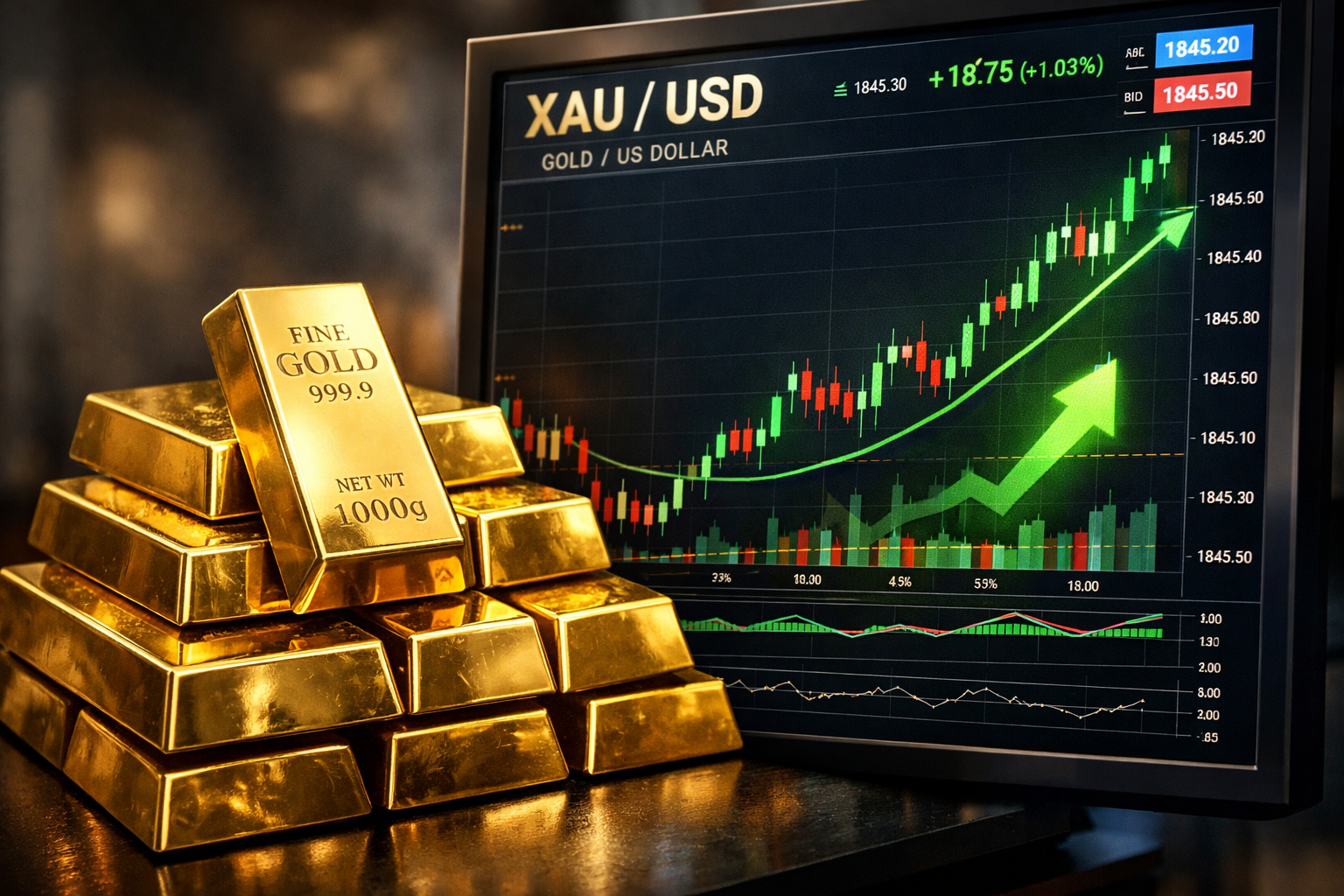
Gold prices moved higher on Tuesday but remained close to a seven-week low as tensions between the United States and Iran continued to support energy prices and inflation concerns.
At 09:33 ET, spot gold was up 0.9% at $4,153.57 an ounce. Gold futures also gained 0.4% to $4,186.55 an ounce.
The modest rebound followed a sharp 4% decline in gold prices during the previous session.
Oil Prices Keep Inflation Concerns Elevated
Oil prices extended their gains as Iran maintained its conditions for reopening the Strait of Hormuz.
The continued disruption has raised concerns that elevated energy costs could keep inflation under pressure and force central banks to maintain tighter monetary policy.
Higher interest rates are generally negative for gold because the precious metal does not generate interest income.
US-Iran Tensions Remain in Focus
Iranian officials have reportedly expressed doubts that an agreement with Washington will be reached before the US midterm elections in November.
The comments followed President Donald Trump’s rejection of Tehran’s latest proposal to reopen the Strait of Hormuz within seven days.
The US-Iran conflict has now continued for eight months, placing additional pressure on global energy supplies and inflation expectations.
Treasury Yields Add Pressure on Gold
The latest rise in oil prices also contributed to renewed selling in the US Treasury market.
The benchmark 10-year Treasury yield climbed to a fresh 19-year high on Monday.
Higher bond yields increase the opportunity cost of holding gold, making interest-bearing assets relatively more attractive.
This combination of rising yields and inflation concerns contributed to gold’s 4% decline on Monday.
Gold Has Fallen Around 7% Over the Past Month
Gold prices have now dropped by approximately 7% over the past month.
The decline has coincided with the Federal Reserve’s first interest rate increase since 2023.
Policymakers have also kept the possibility of additional rate hikes open, adding further pressure to the precious metals market.
Financial markets currently see around a 70% probability of another Federal Reserve rate increase in October.
Higher Rates Remain a Challenge for Gold
Analysts at ANZ said the near-term macroeconomic environment remains difficult for gold.
Elevated Treasury yields, persistent inflation risks and expectations of tighter monetary policy continue to create headwinds for the metal.
However, geopolitical uncertainty and ongoing energy market disruption may still provide some safe-haven support.
US Inflation and Jobs Data Could Drive the Next Move
Investors are now turning their attention to several important US economic reports.
The Personal Consumption Expenditures price index is due on Wednesday. The PCE report is closely watched because it is the Federal Reserve’s preferred inflation measure.
Markets will then focus on Friday’s nonfarm payrolls report.
Stronger-than-expected inflation or employment data could reinforce expectations for additional Federal Reserve rate hikes. That could keep pressure on gold prices, while weaker data may provide the metal with some support.