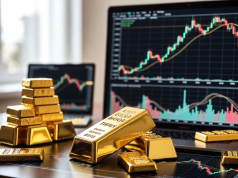
Gold prices moved lower on Monday as investors turned cautious ahead of upcoming U.S.-China talks, while tensions in the Middle East continued to influence market sentiment.
The precious metal pulled back after posting modest gains last week. Treasury yields had declined following the Federal Reserve’s latest interest-rate decision, helping gold recover some ground.
Gold Prices Retreat After Weekly Gain
Spot gold fell 0.7% to $4,348.83 an ounce by 02:24 ET, or 06:24 GMT.
Gold futures also moved lower, dropping 0.9% to around $4,347.28 an ounce.
Despite Monday’s decline, gold gained approximately 0.6% during the previous week.
The advance came as U.S. Treasury yields moved lower, even after the Federal Reserve delivered relatively hawkish signals on monetary policy.
Federal Reserve Policy Remains in Focus
The Federal Reserve raised interest rates by 25 basis points, marking its first rate increase in three years.
Fed Chair Kevin Warsh also reiterated the central bank’s commitment to returning annual inflation to its 2% target.
That position suggested additional interest-rate increases could remain possible if inflationary pressures persist.
However, Treasury yields still declined following the decision. Investors appeared to welcome greater clarity about the Fed’s expected policy direction over the coming months.
Stronger Dollar Pressures Gold and Precious Metals
The U.S. dollar edged higher on Monday after gaining more than 1% over the previous week.
A stronger dollar can weigh on gold because the metal is priced in U.S. currency, making it more expensive for buyers using other currencies.
Other precious metals also declined.
Spot silver fell 0.4% to $65.9775 an ounce, while spot platinum slipped 0.3% to $1,796.73 an ounce.
Trump-Xi Summit Takes Center Stage
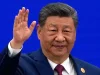
Investors are now closely watching an upcoming meeting between U.S. President Donald Trump and Chinese President Xi Jinping in Washington.
The summit will mark Xi’s first top-level state visit during Trump’s second term and follows a meeting held in Beijing earlier this year.
Trade policy and artificial intelligence are expected to be among the main topics under discussion.
Relations between the United States and China remain strained by tariffs, while the existing trade truce between the two countries is due to expire in November.
Any progress on trade could influence the dollar, Treasury yields and broader risk sentiment, all of which are important drivers for gold prices.
Middle East Tensions Continue to Support Caution
Geopolitical risks also remain an important factor for precious-metal markets.
Yemen’s Iran-backed Houthi movement launched further attacks on Saudi Arabia over the weekend, keeping regional tensions elevated.
However, a New York Times report said Trump had declined to participate in Saudi military operations against Yemen, while a ceasefire between the United States and the Houthis remained in place.
U.S. and Iran Exchange Fresh Warnings
Washington and Tehran also exchanged renewed warnings over the weekend amid reports of possible further military action involving Iran.
At the same time, Trump reportedly said he would be open to meeting Iranian President Masoud Pezeshkian during the United Nations General Assembly in New York this week.
Those comments raised some expectations that diplomatic talks could still be possible.
The prospect of dialogue contributed to weaker oil prices and a modest improvement in risk appetite.
For gold investors, attention is likely to remain centered on the U.S.-China summit, Federal Reserve policy, movements in the U.S. dollar and any further escalation or diplomatic progress in the Middle East.